

More
Checking your session
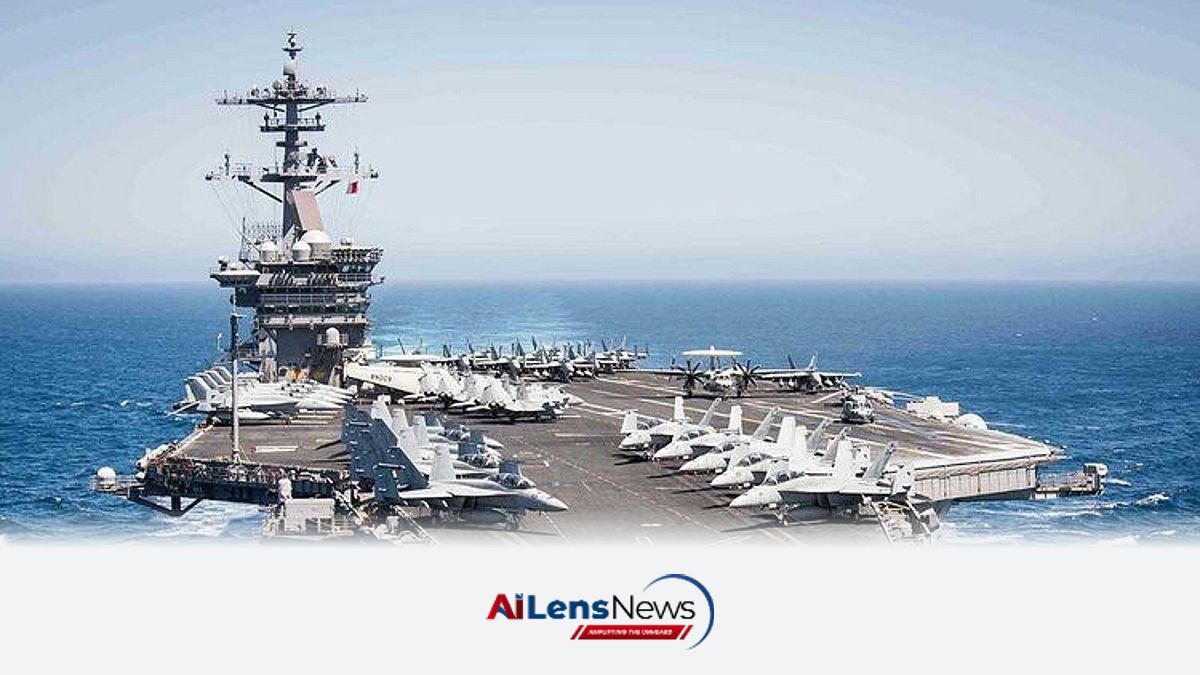



The USS Theodore Roosevelt strike group is set to deploy to the Middle East, relieving the USS George Washington as tensions with Iran escalate.
Riyadh, Saudi Arabia Aug 28, 2026 ALN: The deployment of the USS Theodore Roosevelt to the Middle East marks a significant moment in the ongoing military strategy of the United States in the region, particularly in light of the rising tensions with Iran. The USS Theodore Roosevelt is set to replace the USS George Washington, which recently arrived in the Arabian Sea. This strategic move is emblematic of the US Navy's efforts to sustain a continuous naval presence amid a backdrop of heightened military activity and geopolitical instability.
The USS Theodore Roosevelt strike group is expected to leave San Diego, California, in the coming weeks for a deployment that will last over seven months. This extended deployment underscores the US commitment to maintaining a robust naval force in the Arabian Sea. Such a presence is crucial, especially as tensions with Iran have escalated since February, a period marked by increased military confrontations and diplomatic challenges.
The USS George Washington was previously stationed in Japan before being redeployed to the Middle East to take over from the USS Abraham Lincoln, which has been on station since November 2025. The prolonged deployment of the Lincoln has reportedly led to difficult living conditions for its crew, highlighting the toll that extended naval operations can take on personnel and their families.
In light of these challenges, senior officials within the Navy, including Chief of Naval Operations Admiral Daryl Caudle, have acknowledged the need to address the welfare of sailors and their families. The Navy has been actively working to alleviate the pressures associated with long deployments, recognizing that the well-being of service members is paramount to maintaining operational readiness.
The USS Lincoln is currently en route to Thailand for a scheduled port call, which is intended to provide a respite for its approximately 5,000 sailors after a grueling deployment. This break is critical, as the US has maintained a carrier presence in the Arabian Sea for strike missions against Iran since the conflict escalated, which includes enforcing a naval blockade of Iranian ports.
The deployment of the George Washington from Japan has also created a notable strategic shift in the Pacific region, as it leaves the area without a US aircraft carrier. This absence is significant, given the US's ongoing efforts to counter China's growing influence in the Pacific. Traditionally, the US Navy aims to keep at least one aircraft carrier in the region to project power and ensure stability in the face of potential threats.
Originally, the USS Lincoln was tasked with operations in the South China Sea but was redirected to the Middle East in response to the US-Israeli military actions against Iran that began approximately six months ago. This shift in focus illustrates the dynamic nature of military operations and the necessity for the US to adapt its naval deployments based on evolving geopolitical circumstances.
The implications of these deployments extend beyond immediate military strategy; they also reflect the broader geopolitical landscape in which the US operates. The ongoing tensions with Iran have prompted the US to bolster its military presence in the region, which can be seen as a deterrent against Iranian aggression and a means to reassure allies in the Gulf. The presence of aircraft carriers like the USS Theodore Roosevelt and the George Washington serves as a powerful symbol of US commitment to regional security.
Moreover, the ongoing situation in the Middle East is further complicated by the intricate web of alliances and rivalries that characterize the region. The US's relationship with Israel, for instance, plays a crucial role in shaping its military posture and responses to Iranian activities. As the US continues to engage in military operations aimed at curbing Iranian influence, it will need to navigate the delicate balance of maintaining its commitments to allies while managing the risks of escalation.
In conclusion, the deployment of the USS Theodore Roosevelt to the Middle East signifies a continuation of the US Navy's strategy to maintain a strong presence in a volatile region. As the US navigates its military commitments in the context of ongoing tensions with Iran, the welfare of its sailors remains a critical concern. The evolving geopolitical landscape necessitates a flexible and responsive military posture, underscoring the importance of naval power in addressing contemporary security challenges.
To learn more about the latest developments in World News & International Affairs, stay updated with our exclusive reports and analyses on AILensNews.

Rescue teams in Nepal are racing against time as a second wave of flash floods t…

The devastating flash floods in Nepal have left over 1,000 people missing, with …

The death toll from devastating floods in Nepal has risen to 469, with extensive…

Ratko Mladić, known as the 'Butcher of Bosnia,' has died in prison at the age of…

The devastating floods in Nepal have resulted in at least 469 deaths and left ar…