

More
Checking your session
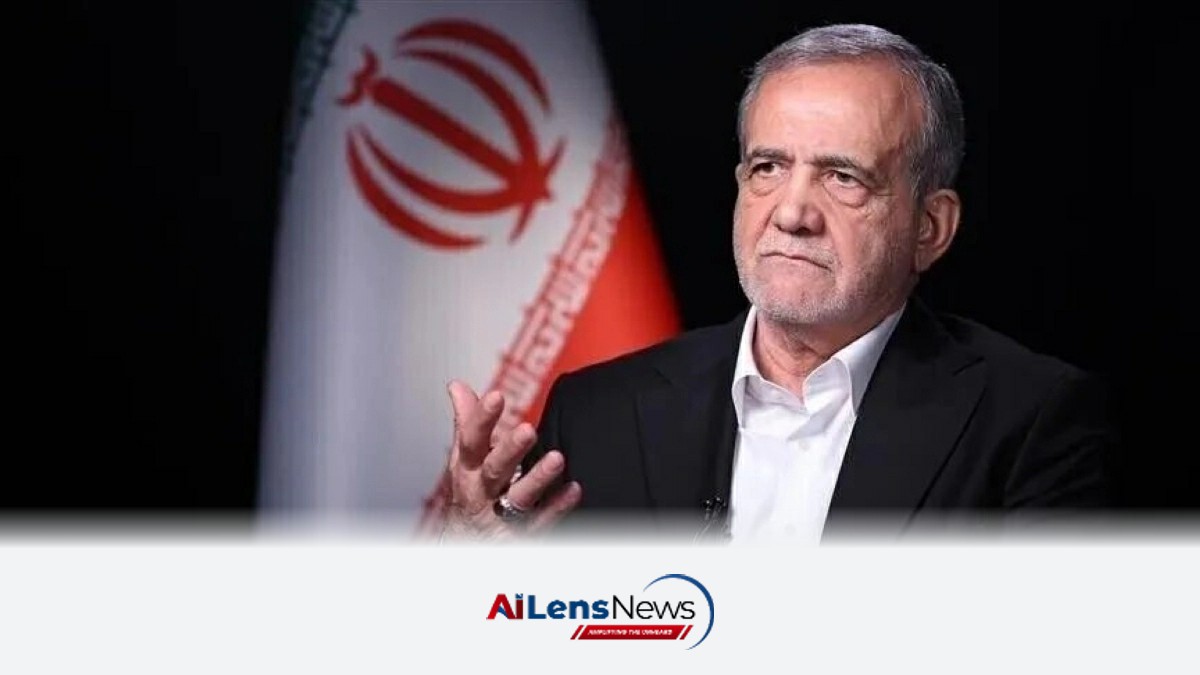



In a recent address, Iranian President Masoud Pezeshkian called on Muslim countries to ensure their territories are not used for attacks against fellow Muslim nations, emphasizing unity and economic cooperation.
Riyadh, Saudi Arabia Aug 28, 2026 ALN: Iranian President Masoud Pezeshkian stated on Thursday that Muslim states must not permit their territories to be utilized for launching attacks against other Muslim nations.
“Defending Iran does not mean hostility toward Muslim nations or neighboring countries,” Pezeshkian asserted during a broadcast address at the 40th International Islamic Unity Conference in Tehran. This annual conference serves as a platform for Muslim leaders and scholars to discuss unity among Islamic nations, addressing the challenges faced by these countries in the contemporary geopolitical landscape.
Pezeshkian emphasized, “No Islamic country should allow its territory to be used as a launchpad for aggression against another Islamic country. No Islamic country should seek its own security through the insecurity of its neighbors.” His remarks reflect a broader concern within the Muslim world regarding the fragmentation and conflicts that have arisen due to external influences and regional rivalries.
In recent years, the Middle East has been characterized by a series of conflicts, many of which have drawn in external powers. The Iranian leadership has consistently argued that these conflicts undermine the security and unity of Muslim nations. The President's call for solidarity among Islamic countries resonates with longstanding sentiments that emphasize the need for collective security and mutual respect among nations sharing a common faith.
Pezeshkian highlighted that the 57 member countries of the Organisation of Islamic Cooperation (OIC), spanning from Southeast Asia to Africa, are strategically located along vital sea and land routes rich in energy resources, with youthful populations and significant markets. The OIC represents a diverse group of nations, each with its own unique challenges and opportunities, yet united by their Islamic identity. The potential for economic collaboration among these countries is significant, given their combined resources and demographic advantages.
He projected that the collective economy of these nations would reach approximately $9.2 trillion in 2024, representing only 8.3 percent of the global economy. This figure underscores the economic potential of the OIC, yet also highlights the need for greater integration and cooperation to enhance the economic standing of its member states on the world stage. Currently, many OIC countries rely heavily on trade with non-Muslim nations, which raises questions about the effectiveness of intra-OIC trade agreements and partnerships.
Moreover, he pointed out that a mere 19 percent of the exports from OIC member countries remain within the group, urging for enhanced trade among Muslim nations. This statistic indicates a significant opportunity for growth and development, suggesting that a more collaborative approach to trade could yield substantial benefits for the economies of member states.
Addressing the ongoing conflict with the US, Pezeshkian noted that extensive military actions by the US and Israel against Iran commenced while diplomatic discussions between Tehran and Washington were still in progress. This assertion reflects Iran's perspective on its adversarial relationship with the US, particularly in light of the complex history of negotiations surrounding Iran’s nuclear program and the broader geopolitical tensions in the region.
He remarked that negotiations aimed at a diplomatic resolution had resumed that same month, coinciding with the onset of attacks that resulted in casualties among Iranian commanders, officials, scientists, students, schoolchildren, and civilians, as well as damage to cities and infrastructure. The Iranian government has frequently criticized the US and its allies for what it perceives as aggressive posturing and military interventions that exacerbate regional instability.
The Iranian president asserted that Iran did not initiate the conflict in the region but has “stood firmly against the aggressors.” This statement is indicative of Iran's broader narrative that positions the country as a defender of sovereignty against foreign intervention. The framing of the conflict as one of resistance against aggressors is a central theme in Iranian rhetoric, particularly in the context of its relationships with Western powers and regional adversaries.
“The US and the Zionist entity launched a war on Iran,” he declared. This reference to the US and Israel reflects a longstanding animosity that has shaped Iran's foreign policy and its relationships with other countries in the region. The Iranian leadership often uses the term "Zionist entity" to refer to Israel, emphasizing its stance against what it views as occupation and aggression.
According to Iran’s state-run IRNA news agency, approximately 600 domestic and international guests from 40 countries, including Iraq, Pakistan, Turkey, Lebanon, and Afghanistan, are participating in the conference. The presence of such a diverse group of attendees underscores the importance of the event as a gathering for dialogue and cooperation among Muslim nations.
The conference is set to continue through Sunday, featuring events in Tehran, Qom, and Mashhad, along with four specialized meetings in the provinces of West Azerbaijan, Kordestan, Golestan, and Razavi Khorasan. These locations were chosen not only for their significance in Iranian culture and history but also to facilitate discussions on the various issues facing the Islamic world today, including economic development, social justice, and political stability.
The implications of Pezeshkian's address extend beyond the immediate context of the conference. His call for unity among Muslim nations serves as a reminder of the challenges posed by sectarian divisions, geopolitical rivalries, and external interventions that have historically plagued the region. As the conference progresses, it will be crucial for the participating nations to engage in meaningful dialogue that addresses these challenges and seeks to foster a more cooperative and peaceful future for the Islamic world.
To learn more about the latest developments in Culture & Society, stay updated with our exclusive reports and analyses on AILensNews.

Catastrophic flash floods in a border area of China and Nepal have killed at lea…

President Trump has announced the renaming of Lake Ontario to Lake America, esca…

Rescue operations are underway as catastrophic floods have left over 390 dead an…

Iran and Oman have agreed on a temporary maritime route for ships in the Strait …

The devastating floods in Nepal's Rasuwa district have claimed 165 lives, with h…