

More
Checking your session
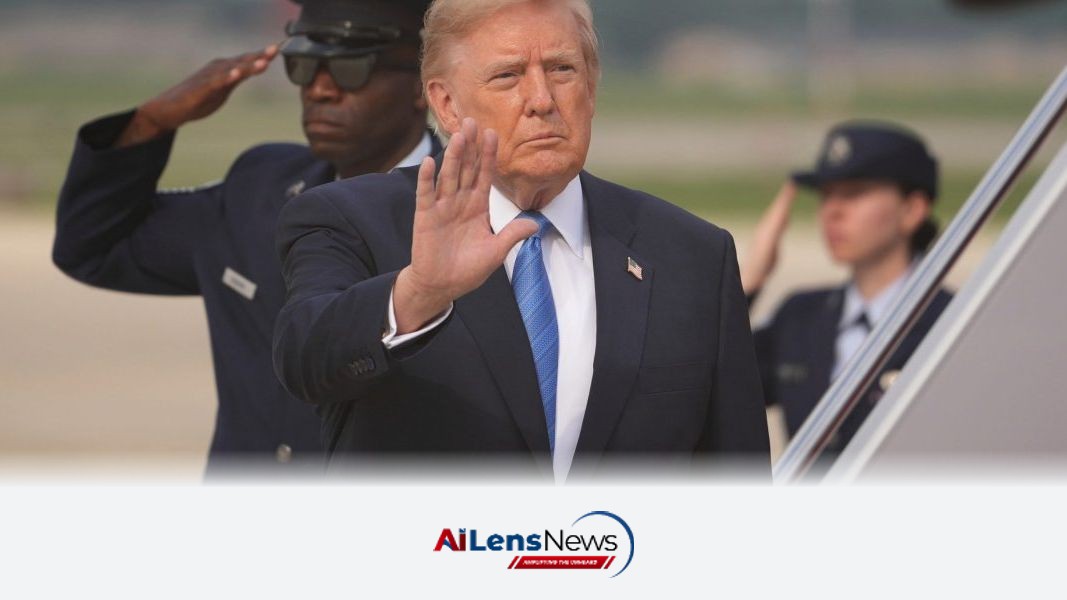



In a significant move, President Trump has announced an agreement for the U.S. to take control of 65 billion barrels of Venezuelan oil reserves, aiming to address soaring gas prices.
Washington DC, United States Aug 29, 2026 ALN: President Donald Trump on Friday revealed that the U.S. has entered into an agreement with Venezuela to take control of 65 billion barrels of the South American country’s oil reserves. This announcement marks a significant pivot in U.S.-Venezuela relations, which have been fraught with tension for years, particularly under the Trump administration. The deal is seen as an attempt to stabilize the U.S. energy market amidst rising gas prices and geopolitical instability in other oil-producing regions.
Trump made the announcement via social media, stating that the deal was negotiated by Secretary of State Marco Rubio, Defense Secretary Pete Hegseth, and Venezuela’s interim President Delcy Rodriguez. The involvement of high-profile officials indicates the strategic importance of this agreement, as it not only affects energy prices but also has implications for U.S. foreign policy in Latin America.
“The United States of America has just entered into an Agreement with the Country of Venezuela on, THE BIGGEST OIL DEAL IN WORLD HISTORY!” Trump wrote, emphasizing the scale of the agreement. The phrase "biggest oil deal in world history" reflects not only the quantity of oil involved but also the potential impact on global oil markets.
The announcement comes nearly nine months after the U.S. military, under Trump’s direction, attempted to capture Venezuela’s president Nicolás Maduro to face federal narcoterrorism and drug trafficking charges. The failed operation highlighted the lengths to which the Trump administration was willing to go to change the regime in Venezuela, which it has accused of corruption and human rights abuses. This latest development suggests a shift from direct military intervention to economic engagement, as the U.S. seeks to leverage Venezuela's oil wealth to its advantage.
Amid rising gas prices and ongoing tensions in Iran, Trump faces increasing pressure to find solutions that can alleviate consumer costs and stabilize the energy market. The U.S. has depleted its strategic petroleum reserves, which fell below 300 million barrels in early August, a decrease of over 100 million barrels since the start of 2026. This depletion raises concerns about the U.S.'s ability to respond to future supply disruptions, making the Venezuelan oil deal even more critical.
Following Maduro’s ouster in January, Trump had suggested that U.S. oil companies could return to Venezuela to access its vast oil reserves. He has argued that Venezuela wrongfully seized U.S. oil assets when former President Hugo Chavez nationalized foreign-owned properties decades ago. This historical context is essential, as it frames the current negotiations within a broader narrative of U.S.-Venezuelan relations, which have oscillated between cooperation and conflict over the past two decades.
Venezuela boasts one of the largest oil reserves globally, with an estimated 303 billion barrels of crude oil, accounting for about 17% of the world’s supply, according to the U.S. Energy Information Administration. Despite this vast potential, experts note that while the reserves are well-mapped, the country’s dilapidated infrastructure limits its production to roughly 1% of the world’s oil. This presents both a challenge and an opportunity for the U.S., as revitalizing Venezuela's oil industry could require substantial investment and expertise from American companies.
As the situation develops, the implications of this agreement could significantly impact global oil markets and U.S. energy policies. If successfully implemented, it could lead to a decrease in gas prices domestically, which would be a welcome relief for consumers and a potential boost for Trump's approval ratings as he heads into a critical election year. However, the deal could also provoke backlash from various stakeholders, including environmental groups concerned about the ecological impact of increased oil extraction and production.
Furthermore, the agreement could alter the geopolitical landscape in Latin America. Countries like Russia and China, which have historically supported Maduro's regime, may view this deal as a direct threat to their interests in the region. The U.S. may need to navigate complex diplomatic waters to ensure that this agreement does not escalate tensions with these nations.
In conclusion, while the deal with Venezuela represents a bold move by the Trump administration to secure energy resources and mitigate rising gas prices, it also carries significant risks and uncertainties. The success of this agreement will depend on various factors, including the willingness of U.S. oil companies to invest in Venezuela, the stability of the Venezuelan political landscape, and the response of the international community. As the U.S. embarks on this new chapter in its relationship with Venezuela, the eyes of the world will be watching closely to see how this unfolds and what it means for global energy dynamics.
To learn more about the latest developments in Political Controversies, stay updated with our exclusive reports and analyses on AILensNews.

President Trump has officially renamed Lake Ontario as 'Lake America' in a move …

US Central Command has redirected 82 vessels and disabled three to enforce a blo…

Scottish ministers face backlash over proposed public sector reforms that could …

As the war with Iran continues, Gulf states are reshaping their security strateg…

President Trump reveals a plan for the US to take control of a significant porti…