

More
Checking your session
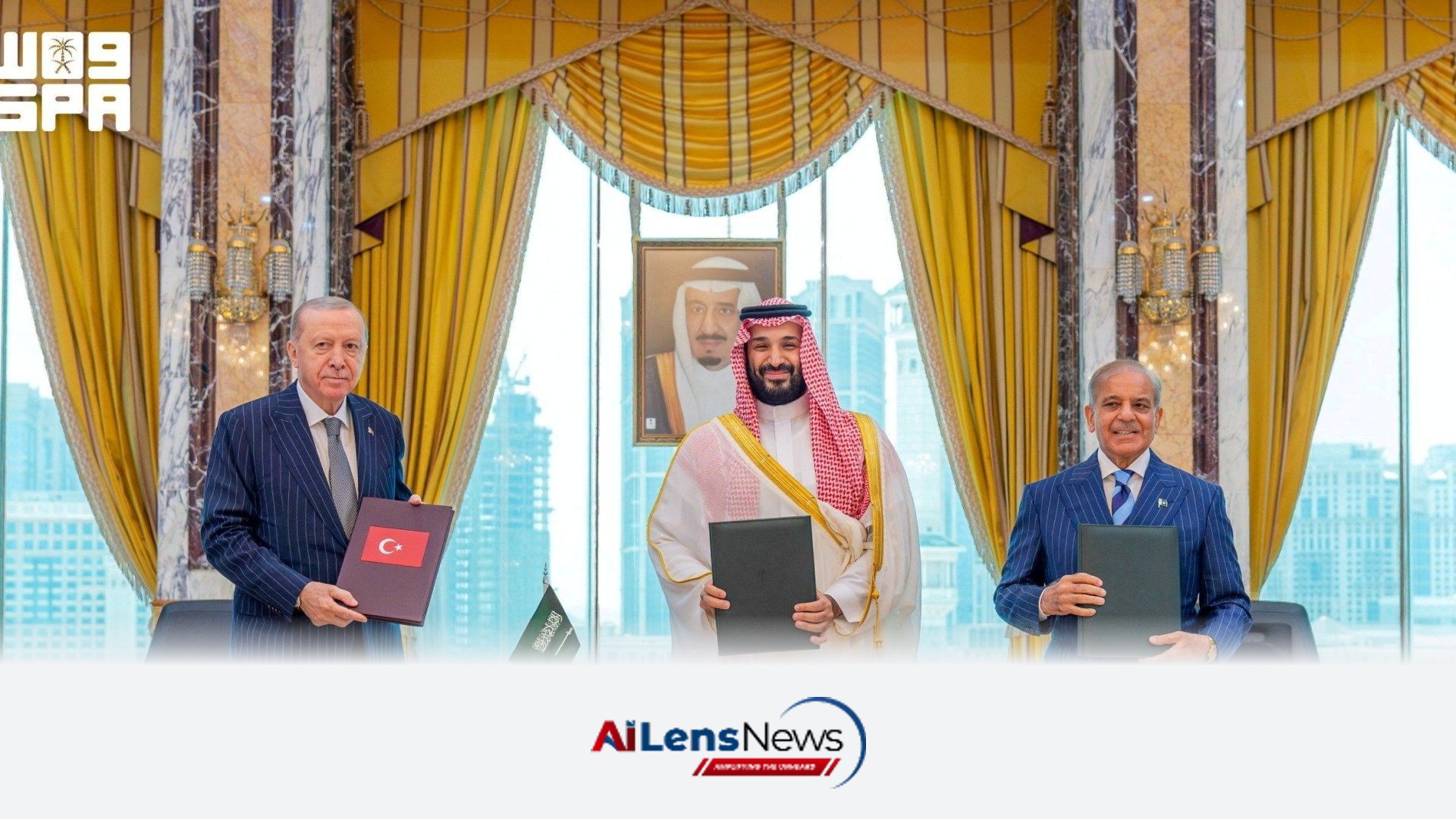



As the war with Iran continues, Gulf states are reshaping their security strategies, fostering new partnerships and enhancing regional cooperation.
Doha, Qatar Aug 29, 2026 ALN: Six months into the war with Iran, it is worth taking stock of what has actually changed around the Gulf.
After Iran’s June 2025 missile strike on Al Udeid Air Base in Qatar, I argued that the years ahead would be more perilous for the Gulf and that deeper defence cooperation and integration would eventually become unavoidable. Earlier this month, I wrote here that the Gulf could no longer rely entirely on the old security toolkit and would need to build more of a security ecosystem of its own. So far, events have borne out the broad direction of both arguments.
What has become clearer over the past six months is that the war is not simply changing defence budgets or generating new security agreements. It is beginning to change how Gulf states think about security itself: who they should work with, what they should expect from their partners and what cooperation needs to look like when a crisis actually begins.
Some of these changes are obvious. The war has demonstrated, in the most direct possible way, the vulnerability of cities, energy infrastructure, airports, ports and shipping lanes to missiles, drones and other forms of disruption. Threats that were often discussed in exercises and planning documents have become immediate operational problems.
For decades, Gulf security rested on a familiar structure: the United States provided the main external security umbrella, Gulf states maintained bilateral relationships with Washington and other Western capitals, and the GCC provided a regional framework in which defence integration remained uneven.
That system has not disappeared. Nor should it. The US remains indispensable to Gulf security and will continue to play a central role for the foreseeable future. What is changing is the assumption that this structure, by itself, is enough.
The war has accelerated the move towards a more layered security system. Gulf states are strengthening cooperation among themselves while deepening relationships with a wider range of partners. Turkiye is becoming more important. European states have greater potential to play an operational role. Existing bilateral military relationships are being asked to deliver more, while new regional arrangements are emerging alongside older ones.
The Mecca Joint Defence Agreement between Saudi Arabia, Turkiye and Pakistan is perhaps the clearest recent example. Its declaration that an armed attack on one would be treated as an attack on all immediately invited comparisons with NATO.
The principle itself is not new to Gulf security. The GCC’s existing Joint Defence Agreement already treats an attack on one member as an attack on all, a commitment GCC states have repeatedly reaffirmed during the current war. What makes the Mecca agreement different is that it extends this collective-defence logic beyond the GCC, linking Saudi Arabia to Turkiye and Pakistan.
The comparison with NATO is understandable, but it can also distract from what is actually happening. The Gulf does not need to reproduce NATO, nor is the wider Middle East particularly suited to one large security alliance built around a single hierarchy and a single understanding of threat.
The threat facing a Gulf state may come from a state one day and a non-state actor the next. Countries that see one threat in much the same way may have very different views of another. And no regional state, however capable, is likely to be accepted as the permanent political and military leader of every possible coalition.
What appears to be emerging instead is a system of overlapping partnerships rather than one grand alliance. Different countries will work together against different threats. Some arrangements will be Gulf-led; others will bring in regional or Western partners.
Such a system also requires a different way of thinking about leadership. A regional security architecture built around permanent hierarchy will always face resistance. Gulf and Middle Eastern states are protective of their sovereignty and bring very different capabilities to the table.
Leadership should therefore follow the threat. The state facing the immediate danger should have the leading political voice in setting the objectives of the response, the acceptable level of escalation and the use of its territory. But operational leadership need not mirror political hierarchy.
A maritime crisis may be best handled by the partner with the strongest naval capability. An air defence crisis may require the partner with the most relevant capabilities to take a larger operational role.
This kind of flexibility may be the only realistic basis for deeper security cooperation. But it depends on whether these overlapping relationships can connect when they need to.
This is where interoperability becomes important. If several countries agree that they will support one another in a crisis, can they actually do it? Can they share information quickly, communicate across their militaries, coordinate decisions and know in advance who is authorised to do what?
An attack on one country does not necessarily mean every partner must respond in exactly the same way. Support can take many forms, from intelligence, air defence and logistics to maritime protection or, in the most serious circumstances, direct military action. The clearer these expectations are before a crisis, the more credible the commitment becomes when one occurs.
To learn more about the latest developments in Political Controversies, stay updated with our exclusive reports and analyses on AILensNews.

President Trump has officially renamed Lake Ontario as 'Lake America' in a move …

US Central Command has redirected 82 vessels and disabled three to enforce a blo…

Scottish ministers face backlash over proposed public sector reforms that could …

President Trump reveals a plan for the US to take control of a significant porti…

Prime Minister Sheikh Mohammed bin Abdulrahman al-Thani and Kuwaiti FM Sheikh Ja…