

More
Checking your session
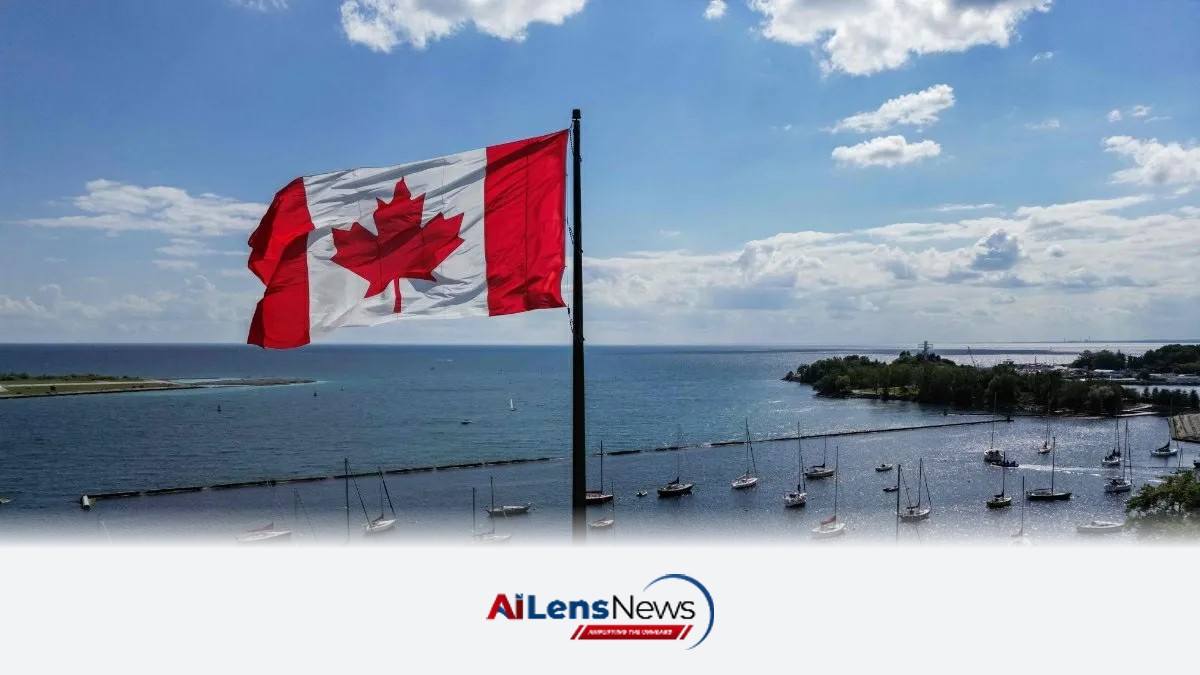



President Trump has officially renamed Lake Ontario as 'Lake America' in a move that escalates tensions with Canada, following recent trade disputes.
Riyadh, Saudi Arabia Aug 29, 2026 ALN: President Donald Trump announced on Thursday that he is renaming Lake Ontario as “Lake America” amid escalating tensions between Canada and the United States. This announcement comes at a time when the relationship between the two neighboring countries has become increasingly strained, particularly in the context of trade negotiations and diplomatic interactions.
President Trump signed an executive order directing the Interior Department to update the lake’s name in the U.S. geographic naming service. However, it is important to note that this action does not compel Canada to adopt his preferred naming convention, as naming rights for geographic features are not governed by a single international authority. This means that while the U.S. may recognize the lake as “Lake America,” Canada will continue to refer to it as Lake Ontario, a name that has historical significance and roots in Indigenous culture.
In recent days, the U.S. has imposed 50 percent tariffs on $20 billion worth of Canadian goods after negotiations between the two countries broke down. This move has led to heightened tensions, with both sides engaging in a war of words. The tariffs are part of a broader strategy by the Trump administration to address what it perceives as unfair trade practices by Canada, particularly in sectors such as lumber and dairy. The tensions have been further exacerbated by Trump's comments suggesting that Canada should be treated like a U.S. state, a notion that has been met with widespread criticism from Canadian officials.
Since returning to the White House last year, Trump has been vocal in his criticism of Canada, suggesting that the ally with whom the U.S. once had warm relations should be absorbed as the 51st state. This rhetoric has drawn ire from Canadian leaders, who have emphasized the importance of maintaining a respectful and cooperative relationship between the two nations. While signing the order at the Resolute Desk in the Oval Office, a large sign behind him displayed a map of the Great Lakes, prominently labeling Lake Ontario as “Lake America” in bold red letters. On the opposite side of the president was another map reading, “MAKING THE GREAT LAKES EVEN GREATER.”
Canadian Prime Minister Mark Carney rejected the name change, emphasizing the lake’s Indigenous roots and pointing out that the name predates both Canadian Confederation and the U.S. Declaration of Independence. Carney’s remarks highlight the significance of Lake Ontario not only as a geographical feature but also as an integral part of Indigenous heritage and identity. “Canadians also know that naming reality means calling it Lake Ontario — then, now and always,” he stated, reinforcing the idea that names carry historical and cultural weight.
Nova Scotia Premier Tim Houston dismissed Trump’s announcement on social media, stating: “We’re into some real foolishness now. It’s Lake Ontario, buddy.” This sentiment reflects a broader frustration among Canadian politicians regarding the perceived triviality of Trump’s actions in light of serious economic and diplomatic issues that require attention. The lake is one of the Great Lakes shared by the U.S. and Canada, and its name is not merely a matter of semantics; it represents a shared history and geography that both countries value.
New York Governor Kathy Hochul, a Democrat whose state borders the lake, responded on X, saying, “New York won’t be calling it that.” This statement underscores the division within U.S. states regarding the name change and suggests that many Americans may not support Trump's unilateral decision. The lack of consensus among U.S. leaders further complicates the situation, as regional identities and historical connections to the lake play a significant role in how its name is perceived.
Ontario Premier Doug Ford, who has exchanged barbs with Trump in the past, dismissed the name change as “a lot of rhetoric.” Ford’s comments highlight the skepticism that many Canadian leaders have toward Trump’s motivations and actions. The name Lake Ontario originates from the Huron Indigenous word “oniatarí:io,” meaning “lake of shining waters.” The province of Ontario, established in 1867, derives its name from the lake, further emphasizing the deep historical ties between the region and the Indigenous peoples who have inhabited it for centuries.
Trump stated that while his action was not intended to convey a specific geopolitical message, “Canada’s been ripping us off for a long time” concerning trade and military issues. This assertion reflects the president’s ongoing narrative that the U.S. is at a disadvantage in its dealings with Canada, a sentiment that resonates with his supporters who advocate for a more protectionist trade policy. “They wanted to be treated like a state and they’re not a state,” the president remarked. “We just can’t do that anymore.” This statement underscores the administration's desire to redefine the U.S.-Canada relationship in a way that prioritizes American interests.
“We love the people of Canada,” Trump added. “I don’t think their representatives do an appropriate job. Maybe they’ll change. I really don’t know. It doesn’t make much difference.” This comment reflects the president’s ambivalence toward Canadian leadership and the complexities of international diplomacy, where personal relationships between leaders can significantly impact bilateral relations.
This move echoes his previous attempt to rename the Gulf of Mexico as the “Gulf of America,” which was met with similar backlash and criticism. Such actions raise questions about the motivations behind renaming geographic features and the implications for international relations. As the U.S. and Canada navigate their ongoing trade disputes and diplomatic challenges, the renaming of Lake Ontario may serve as a symbolic gesture that further complicates efforts to reach a resolution. The situation highlights the importance of historical context and cultural sensitivity in discussions of geography and identity, particularly in regions with shared histories and diverse populations.
To learn more about the latest developments in Political Controversies, stay updated with our exclusive reports and analyses on AILensNews.

US Central Command has redirected 82 vessels and disabled three to enforce a blo…

Scottish ministers face backlash over proposed public sector reforms that could …

As the war with Iran continues, Gulf states are reshaping their security strateg…

President Trump reveals a plan for the US to take control of a significant porti…

Prime Minister Sheikh Mohammed bin Abdulrahman al-Thani and Kuwaiti FM Sheikh Ja…