

More
Checking your session
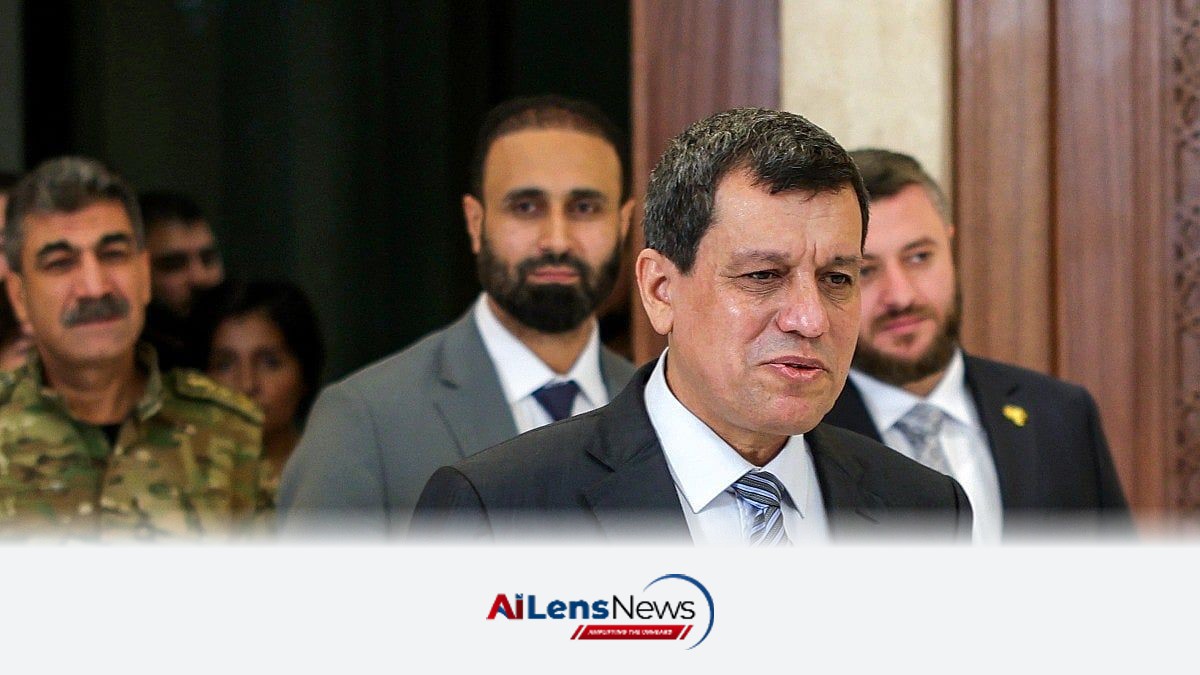



Syrian President Ahmed al-Sharaa has appointed Kurdish leader Mazloum Abdi as a presidential adviser, marking a significant shift in Kurdish governance amid integration efforts with Damascus.
Doha, Qatar Aug 28, 2026 ALN: Syrian President Ahmed al-Sharaa has appointed Kurdish leader Mazloum Abdi as a presidential adviser, according to state media reports on Friday. This announcement follows Abdi's declaration of the dissolution of his Kurdish forces, a significant move tied to an integration deal with the Syrian government that has been developing over the past several months.
The decree, signed by Sharaa and published by the state news agency SANA, states, "Mustafa Khalil Abdi is appointed as adviser to the presidency of the republic." Abdi, who is known by various names, previously led the Kurdish-led Syrian Democratic Forces (SDF), a group that has received substantial support from Washington due to its pivotal role in combating the Islamic State (IS) jihadist group.
This appointment marks a notable shift in the political landscape of Syria, particularly in relation to the Kurdish population, which has long sought greater autonomy within the Syrian state. The SDF, established in 2015, emerged as a key military force in the fight against IS, notably in battles such as the defense of Kobane. The group has effectively served as the de facto military for the semi-autonomous Kurdish administration in northern and northeastern Syria, which was formed during the civil war against IS.
On Tuesday, Abdi announced the SDF's dissolution, a development that aligns with an agreement made with Sharaa in January to integrate Kurdish forces and civilian administration into the Syrian state framework. This integration deal represents a significant victory for Sharaa, reflecting the government's efforts to reassert control across the country following years of civil war and fragmentation.
Since the overthrow of longtime ruler Bashar al-Assad in December 2024, the new Islamist authorities in Syria have been working diligently to extend state control throughout the nation. The integration of Kurdish forces into the Syrian army signifies a potential end to Kurdish aspirations for autonomy, which had previously been a central demand of the Kurdish political movement in Syria.
U.S. special envoy to Syria, Tom Barrack, commented on the integration, stating, "This is what real integration looks like... former counterparts with differing points of view crafting a diplomatic solution to strengthen the sovereign nation of Syria." His remarks underscore the significance of securing roles for valued partners like Abdi within the government, recognizing their contributions to regional stability and the fight against extremist groups.
Abdi's agreement to the integration deal came after clashes in January resulted in substantial territorial losses for Kurdish forces to government troops. These developments coincided with a shift in U.S. support towards the new authorities in Damascus, further complicating the Kurdish position in the region. The U.S. had previously been a key ally to the SDF, providing military support and resources in the fight against IS.
In a noteworthy move, Sharaa enacted a decree recognizing the national rights of the Kurds and acknowledged Kurdish as a national language—an unprecedented step since Syria's independence in 1946. This decree is seen as an attempt to placate Kurdish aspirations and integrate them more fully into the national framework, although many Kurds remain skeptical about the government's intentions.
Last week, Abdi confirmed that the integration of the Kurdish administration with the Syrian state was complete. He stated, "Our struggle will continue, to cement our people's rights in the constitution." This statement reflects the ongoing tensions and challenges that the Kurdish population faces in balancing their quest for rights and recognition within a state that has historically marginalized them.
The implications of this integration deal are profound, not only for the Kurdish community but also for the broader geopolitical landscape in Syria and the region. The Kurdish forces have been a crucial player in the fight against IS, and their integration into the Syrian state raises questions about the future of security and governance in areas previously controlled by the SDF. Moreover, this development could impact U.S. foreign policy in the region, as the U.S. has been closely monitoring the situation and its relationship with Kurdish forces.
As the Syrian government seeks to consolidate its power and re-establish control, the fate of the Kurdish population remains uncertain. The integration deal may provide some level of recognition and rights for Kurds within the Syrian constitution, but the effectiveness and sincerity of these measures will likely be scrutinized in the months and years to come. The Kurdish community, while facing significant challenges, continues to advocate for its rights and representation, highlighting the complexities of governance and identity in a post-war Syria.
To learn more about the latest developments in Political History & Legacy, stay updated with our exclusive reports and analyses on AILensNews.

The 95th Martyrs’ Day honoring unsung freedom fighter Haipou Jadonang was observ…

In an exclusive interview, former UK Prime Minister Gordon Brown shares insights…

The Supreme Court's recent ruling clarifies the definition of 'industry' in Indi…

Mitsugu Saito, ex-Japanese Ambassador to Iran, explores the misjudgments of U.S.…
The events of August 19, 1953, significantly shaped Iran's national identity and…