

More
Checking your session
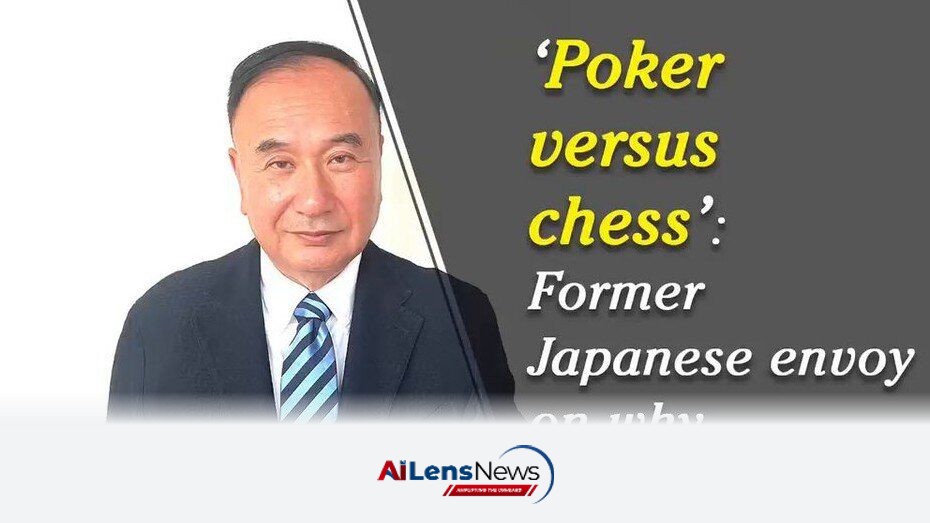



Mitsugu Saito, ex-Japanese Ambassador to Iran, explores the misjudgments of U.S. strategy in his new book, 'Why the United States Lost to Iran,' emphasizing the importance of understanding asymmetric warfare.
Tehran, Iran Aug 29, 2026 ALN: Mitsugu Saito, the former Japanese Ambassador to Iran from October 2018 to October 2020, has dedicated decades to studying the Middle East. His latest book, Why the United States Lost to Iran (Bungeishunju Ltd., July 2026), argues that Washington misjudged its political objectives in the recent conflict with Iran. The book, which has an initial print run of 10,000 copies—a significant figure for a specialized foreign-policy title in Japan—follows his 2022 work, Is Iran a Threat? — A Regional Power on the Strait of Hormuz and Japan's Diplomacy (Iwanami Shoten).
Saito currently serves as a Guest Professor at Kwansei Gakuin University, where he teaches modern Middle Eastern history post-World War I. He is also a commentator on Middle East affairs at the Okazaki Institute, a Tokyo-based think tank. Since the onset of the Iran conflict, he has become a prominent voice in Japanese media, providing analysis on the situation.
In an interview with Tehran Times, Ambassador Saito discussed the strategic miscalculations behind the war, Iran's asymmetric leverage, the shifting trust of Persian Gulf states in the United States, and Japan's unique relationship with Iran. Before delving into the interview, Saito made a statement regarding his impartiality:
“First of all, I served in seven countries in the region, including Iran and Oman as ambassador. Based on over twenty years of experience, I strive to provide an impartial analysis without ideological bias. I left the Japanese Ministry of Foreign Affairs six years ago and currently have no ties to the government. My critiques of U.S. President Donald Trump stem from my belief that he has confused the political objectives of the war with Iran.”
Saito characterizes the conflict as a clash between two fundamentally different strategic cultures, likening President Trump’s approach to “poker” while Iran plays “chess.” This metaphor highlights the contrasting methodologies that each side employs in their diplomatic and military strategies. The poker analogy suggests a more risk-oriented, high-stakes approach, while the chess reference indicates a more calculated, long-term view of conflict resolution.
He elaborates on the key miscalculations that arose from this strategic mismatch, asserting that military superiority does not guarantee strategic victory. This assertion is supported by historical precedents, such as the Vietnam War, where the United States, despite its overwhelming military power, failed to achieve its political objectives. Saito emphasizes that confusion over America’s political objectives contributed significantly to its perceived defeat by Iran, suggesting a need for clearer strategic goals in international conflicts.
“Iran’s sophisticated asymmetric strategy is a key reason for its resilience against U.S. military superiority,” he states. This underscores the importance of understanding the nature of modern warfare, where conventional military strength can be countered by unconventional tactics. Saito draws on the historical example of Nader Shah, an 18th-century Persian ruler, to illustrate that military victories without clear political objectives yield little lasting value. This historical context adds depth to his argument, suggesting that lessons from the past are often overlooked in contemporary conflicts.
Regarding the metaphors he previously mentioned, Saito believes that differing understandings of the world and warfare have exacerbated the conflict, making it challenging for both sides to reach a resolution. He posits that this war will not end until both parties can preserve their dignity, emphasizing that there can be no one-sided victory. This perspective highlights the complexities of international relations, particularly in conflicts where national pride and historical grievances play a significant role.
Saito notes that while Iran is currently in a stronger position, the U.S. military's inability to conquer Iran due to its geographical advantages complicates the situation. The rugged terrain, coupled with Iran's strategic depth and the loyalty of its military and paramilitary forces, presents significant challenges for any foreign military intervention. Saito asserts that acknowledging Iranian dignity is essential for a long-term resolution, suggesting that diplomatic efforts must be grounded in mutual respect and understanding.
On the topic of Iran's leverage, he states that while the Strait of Hormuz is a significant tool for Iran to exert pressure, it is not the sole factor. The Strait, a critical chokepoint for global oil shipments, has been a focal point of tensions between Iran and the West. However, Saito emphasizes the importance of military capabilities, asymmetric strategies, and political will in determining the outcomes of such conflicts. He argues that “The Islamic Republic of Iran possesses a strong political will that it will not be defeated. This is crucial.” This assertion highlights the resilience of the Iranian state and its determination to assert its sovereignty in the face of external pressures.
In conclusion, Saito emphasizes that achieving a resolution that respects both parties' dignity is the only viable path to ending the conflict. His insights reflect a broader understanding of the intricacies of international diplomacy, particularly in the context of the Middle East, where historical grievances, national identities, and strategic calculations intertwine. As the global community continues to grapple with the implications of the U.S.-Iran conflict, Saito's analysis serves as a reminder of the importance of nuanced understanding and the need for diplomatic engagement grounded in respect for all parties involved.
To learn more about the latest developments in Political History & Legacy, stay updated with our exclusive reports and analyses on AILensNews.

The 95th Martyrs’ Day honoring unsung freedom fighter Haipou Jadonang was observ…

In an exclusive interview, former UK Prime Minister Gordon Brown shares insights…

The Supreme Court's recent ruling clarifies the definition of 'industry' in Indi…
The events of August 19, 1953, significantly shaped Iran's national identity and…
Syrian President Ahmed al-Sharaa has appointed Kurdish leader Mazloum Abdi as a …