

More
Checking your session




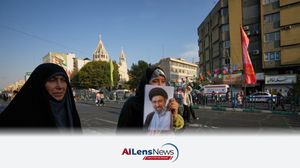
In a recent address, Iran's Supreme Leader Mojtaba Khamenei called for unity among Muslim nations against the United States and Israel, emphasizing cooperation to resolve regional issues.
Kuwait City, Kuwait Aug 30, 2026 ALN: Iran's supreme leader Mojtaba Khamenei on Sunday called on Muslim countries in the region to unite against the United States and Israel, in a written message issued six months after the onset of the Middle East war. Khamenei, who has been in power since his father Ali Khamenei was killed at the start of the conflict on February 28, has not been seen in public since his appointment, and authorities have not released any video or audio of him. This lack of visibility raises questions about the leadership dynamics within Iran during this critical period.
"The solution to the problems of the Islamic nations is unity of words, friendship, and cooperation on the path of goodness," he stated, according to his official website. This message of unity reflects a longstanding theme in Iranian foreign policy, which emphasizes solidarity among Muslim nations as a counterbalance to perceived external threats, particularly from Western powers.
The call for unity comes amid rising tensions following a series of military actions that have significantly escalated the conflict between Iran and the United States. Iran reportedly launched ballistic missile attacks against a US military position in Jordan shortly after American forces struck Iranian launchers on Larak Island near the Strait of Hormuz. This escalation raises concerns about a potential confrontation in one of the world's most critical energy chokepoints, where a significant percentage of global oil trade passes through.
Video footage circulating online appeared to show air-defense interceptors being launched over Jordan, targeting the Muwaffaq Salti Air Base, which hosts US forces. Although the US Central Command has not confirmed the attacks, a source indicated that nearly all incoming missiles were intercepted. This incident underscores the heightened military readiness on both sides and the increasing risk of miscalculations that could lead to broader conflict.
The United States conducted strikes on two Iranian rocket launchers that were allegedly preparing to deploy rockets carrying sea mines into the strategic Strait of Hormuz. This marked the first known direct US attack on Iranian forces since late July, heightening the risk of renewed confrontation. The Strait of Hormuz is a vital corridor for oil shipments, and any escalation in military activities in this region could have significant implications for global energy markets and shipping routes.
A classified Pentagon assessment has warned that extending the conflict could leave the US military dangerously weakened, with munitions stockpiles critically depleted and logistics stretched to their limits. This situation raises questions about the sustainability of US military engagement in the region and the potential need for a reassessment of strategy, especially as the conflict shows no signs of abating.
In a related development, Turkey is set to host Saudi Arabia and Pakistan for the first ministerial meeting of their new regional defense grouping, following the signing of the Mecca Joint Defence Agreement. This pact commits the three nations to mutual defense in the event of an attack, amid ongoing tensions in the region. The formation of such alliances indicates a shifting geopolitical landscape in the Middle East, where nations are increasingly seeking collaborative approaches to security challenges posed by regional adversaries.
Iranian President Masoud Pezeshkian emphasized that a peace memorandum of understanding (MoU) signed with the United States is in the interests of Iran and the broader region. He asserted that the implementation of this MoU would prevent chaos and insecurity, allowing regional states to pursue stability and development. This statement highlights Iran's attempt to project a narrative of peace while simultaneously preparing for potential conflict, reflecting the complexities of its strategic calculus.
Pezeshkian also highlighted the need for unity among Muslim states to counteract the "enemies' sinister plots," reinforcing Iran's stance against aggression. This rhetoric serves to galvanize support domestically and regionally, as Iran seeks to position itself as a leader of the Muslim world in opposition to Western influence.
As the conflict continues, Iran's leadership appears resolute in its approach, signaling a readiness for a prolonged confrontation with the United States while advocating for solidarity among Muslim nations to address shared challenges. The implications of this conflict extend beyond the immediate region, affecting global political dynamics and economic stability. The call for unity among Muslim countries underscores the complexities of regional alliances and the potential for increased militarization as nations respond to perceived threats. The evolving situation continues to pose significant risks not only for the countries directly involved but also for international peace and security.
To learn more about the latest developments in Political Controversies, stay updated with our exclusive reports and analyses on AILensNews.

Michelle O’Neill emphasizes Sinn Féin's commitment to maintaining Stormont, crit…
Iran’s Supreme Leader Ali Khamenei has called for solidarity among Muslim nation…

In a recent seminar, Prof. Shantanu Chakravarty emphasized the importance of the…

Union Minister Kiren Rijiju criticized protesters for desecrating the Indian fla…

Ardent Miller Basaiawmoit expresses disappointment over the Assembly's failure t…