

More
Checking your session
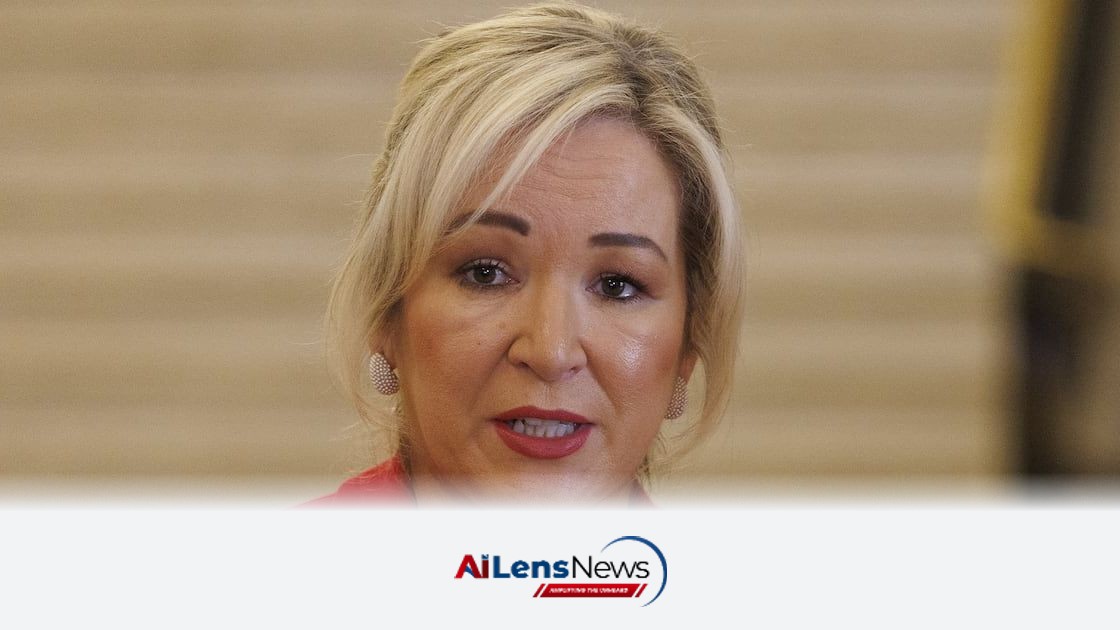



Michelle O’Neill emphasizes Sinn Féin's commitment to maintaining Stormont, criticizing the DUP for obstructing progress and calling for a united Ireland.
London, United Kingdom Aug 31, 2026 ALN: First Minister Michelle O’Neill has stated that collapsing Stormont would be “disastrous” and affirmed that Sinn Féin will not take such a step. The Northern Ireland Assembly, commonly referred to as Stormont, has faced significant challenges in recent years, leading to concerns about its stability and functionality. The Assembly was established as part of the Good Friday Agreement in 1998, a pivotal moment in Northern Ireland's history that aimed to bring an end to decades of conflict known as The Troubles. This agreement created a devolved government and established mechanisms for power-sharing among different political parties, particularly between unionist and nationalist factions.
O’Neill expressed “deep frustration at the ongoing obstruction and unnecessary deadlock.” She remarked, “Politics should improve people’s lives, but time and time again we see the mechanisms that were designed to protect rights and equality being misused by the DUP and wider unionism to block progressive change and to delay and obstruct delivery.” The Democratic Unionist Party (DUP), a major unionist political party in Northern Ireland, has been at the center of many of these political tensions, often accused by nationalist parties of using their influence to obstruct initiatives that could benefit the broader population.
Despite concerns that Stormont may collapse once again, Ms. O’Neill stated: “Let me say very clearly. Sinn Féin is not walking away.” This statement underscores Sinn Féin's commitment to remaining engaged in the political process, despite the challenges they face. The party's leadership has emphasized the importance of maintaining a functioning government to ensure that public services continue to operate effectively and that the needs of the citizens are met.
“Walking away would mean handing control of our public services over to British Government ministers,” she added. “That would be disastrous and Sinn Féin is not going to do that.” This statement reflects a broader sentiment among nationalist parties that any loss of local governance could lead to a deterioration in the quality and accessibility of public services, which are seen as vital to the well-being of the community.
Ms. O’Neill made these comments on Sunday at an event in Ballina, Co Mayo, marking 45 years since the 1981 republican hunger strikes, a significant moment in Irish history. The hunger strikes were a series of protests by Irish republican prisoners in Northern Ireland who were seeking political status. They became a focal point for the republican movement and had lasting implications for both public opinion and political action in Ireland. O’Neill highlighted the first-ever Fleadh held in Belfast and the attendance of over 1.6 million visitors this summer as symbols of the “enormous positive and progressive change in Irish society.” The Fleadh Cheoil is an annual festival of Irish music and culture, and its success in Belfast is seen as indicative of a growing acceptance and celebration of Irish culture in Northern Ireland.
She also accused Taoiseach Micheál Martin of avoiding the responsibility of preparing for a united Ireland. The issue of Irish unity remains a contentious topic in Northern Ireland, particularly in the context of Brexit, which has reignited discussions about the potential for a referendum on the unification of Ireland. O’Neill criticized UK Prime Minister Andy Burnham as “divisive, arrogant and ill-informed” for stating that a border poll was “off the table.” This comment reflects a broader frustration among nationalist leaders regarding the perceived reluctance of British politicians to engage with the question of Irish unity seriously.
“The right to a referendum on Irish unity is a key part of the Good Friday Agreement,” she emphasized. The agreement not only established the framework for devolved government but also included provisions for a potential referendum on Irish unity, should it be deemed appropriate by the Secretary of State for Northern Ireland. O’Neill further stated, “A unity referendum is not a concession to be gifted to the people of Ireland by any politician.” This assertion highlights Sinn Féin's position that the right to self-determination should be inherent and not subject to political negotiation.
Regarding a recent High Court decision that quashed a Parades Commission decision on the nationalist Garvaghy Road, she remarked, “Nobody should seek to reopen wounds which have still not fully healed.” The Garvaghy Road has been a focal point of sectarian tensions, particularly during the marching season in Northern Ireland, when unionist groups often seek to parade through predominantly nationalist areas. O’Neill condemned the sectarianism and violence that had affected the Garvaghy Road community, asserting, “This community should not be forced to live under a cloud of fear or intimidation.” This sentiment resonates with many in Northern Ireland who have experienced the divisive impact of sectarianism and the need for reconciliation and healing.
“The Garvaghy Road residents deserve to live in peace. And Sinn Féin will stand with them every step of the way,” she added. This statement reaffirms Sinn Féin's commitment to advocating for the rights and safety of communities that have been historically marginalized or affected by violence. It also reflects the party's broader agenda of promoting equality and justice in Northern Ireland.
“Despite the desperate attempts by unionism to slow down and frustrate progress, Sinn Féin is looking to the future with confidence - Irish unity is now within touching distance.” This forward-looking perspective is indicative of Sinn Féin's strategic approach as they navigate the complex political landscape of Northern Ireland, where issues of identity, governance, and community relations continue to evolve. The implications of O’Neill's statements and the ongoing political dynamics in Northern Ireland will be closely monitored, as they have the potential to influence the future of the Assembly, the relationship between the UK and Ireland, and the broader discourse surrounding Irish unity.
To learn more about the latest developments in Political Controversies, stay updated with our exclusive reports and analyses on AILensNews.
Iran’s Supreme Leader Ali Khamenei has called for solidarity among Muslim nation…
In a recent seminar, Prof. Shantanu Chakravarty emphasized the importance of the…

Union Minister Kiren Rijiju criticized protesters for desecrating the Indian fla…

Ardent Miller Basaiawmoit expresses disappointment over the Assembly's failure t…

VPP leader Ardent Miller Basaiawmoit emphasizes the need for concrete actions fo…