

More
Checking your session
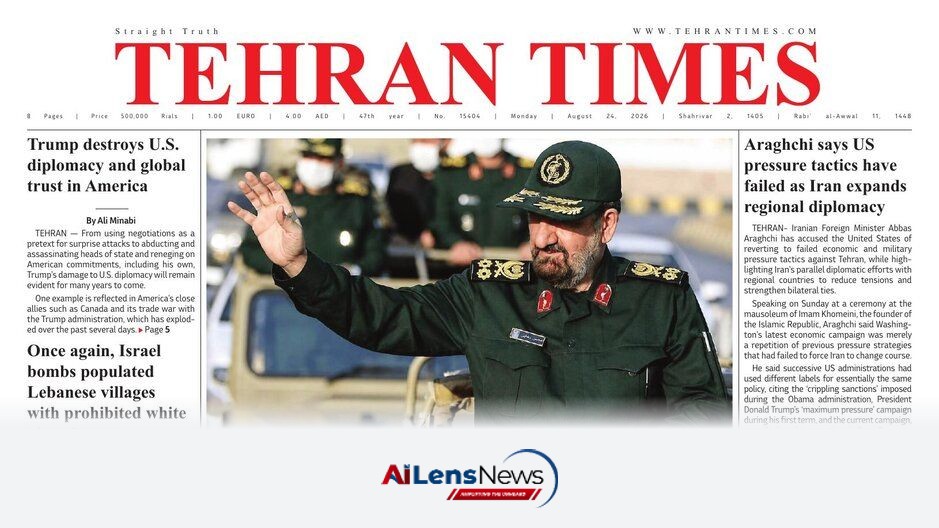



Iran's military chief, Major General Mohsen Rezai, emphasizes a new offensive strategy to safeguard national interests amid regional tensions.
Tehran, Iran Aug 24, 2026 ALN: In a significant shift in military strategy, Iran's security chief, Major General Mohsen Rezai, has announced a transition towards a more offensive posture. This change aims to bolster Iran's defense capabilities and assert its influence in the region, particularly in light of escalating tensions with the United States and its allies. The announcement is not merely a reaction to current events but a reflection of Iran's long-standing geopolitical aspirations and security concerns.
Rezai's statements come amidst a backdrop of heightened military activities and strategic maneuvers by Iran, which he claims are necessary to protect the nation’s interests. He highlighted the importance of readiness to respond to any potential threats, underscoring that Iran will not hesitate to take decisive action if provoked. This declaration signals a shift from a primarily defensive military stance to one that may involve proactive measures, potentially expanding Iran's military engagements beyond its borders.
The announcement reflects Iran's growing concerns over U.S. military presence in the region and its implications for national security. The U.S. has maintained a significant military footprint in the Middle East, with bases in countries such as Iraq, Saudi Arabia, and Qatar. This presence is perceived by Iran as a direct threat to its sovereignty and regional ambitions. In recent years, Iran has faced increasing pressure from sanctions and military threats, prompting a reassessment of its defense strategies.
Moreover, the ongoing tensions surrounding Iran's nuclear program have exacerbated these concerns. The U.S. withdrawal from the Joint Comprehensive Plan of Action (JCPOA) in 2018 and the subsequent reimposition of sanctions have further isolated Iran economically and politically. In this context, the shift to an offensive military posture can be seen as a desperate attempt to regain leverage in negotiations and assert Iran's role as a dominant regional power.
As part of this new strategy, Iran is reportedly enhancing its military capabilities, including advancements in missile technology and naval power. The Iranian leadership has emphasized the need for a robust military to deter adversaries and maintain regional stability. Recent reports suggest that Iran is investing in asymmetric warfare capabilities, including drone technology and cyber warfare, which could allow it to project power without engaging in traditional military confrontations.
Additionally, Iran's naval capabilities are being upgraded, particularly in the Persian Gulf, a vital waterway for global oil shipments. The Islamic Revolutionary Guard Corps (IRGC) has been increasingly active in conducting naval exercises and showcasing its capabilities, which could serve as a deterrent against perceived threats from the U.S. and its allies. This focus on enhancing military readiness reflects a broader strategy to counteract the influence of adversaries and assert Iran's sovereignty over its territorial waters.
This shift could have significant implications for regional dynamics, especially in relation to Israel and Gulf Arab states. Iran's military maneuvers may provoke responses from neighboring countries, potentially escalating tensions further. Israel, in particular, has expressed concerns about Iran's growing military capabilities and has vowed to take preemptive action if it believes its security is threatened. The ongoing conflict in Syria, where Iran has established a military presence, adds another layer of complexity to regional security dynamics.
Gulf Arab states, which have historically viewed Iran with suspicion, may feel compelled to bolster their own military capabilities in response to this shift. This could lead to an arms race in the region, as countries seek to counterbalance Iran's growing influence. The potential for miscalculation and conflict is heightened, as both sides may interpret military posturing as a precursor to actual hostilities.
Internationally, the announcement has drawn mixed reactions. While some countries express concern over Iran's military ambitions, others view it as a legitimate response to perceived threats. The U.S. has reiterated its commitment to countering Iranian influence in the region, emphasizing its support for allies such as Israel and Saudi Arabia. The Biden administration has continued to pursue a strategy of containment, which includes sanctions and military readiness.
European nations have taken a more cautious approach, advocating for dialogue while also expressing concern over Iran's military developments. The potential for diplomatic negotiations remains, but the success of such efforts may depend on Iran's willingness to engage constructively and the international community's ability to address its security concerns.
As Iran embarks on this new military strategy, the international community will be closely monitoring developments. The effectiveness of this shift in posture will depend on Iran's ability to navigate the complex geopolitical landscape while safeguarding its national interests. The move towards an offensive military strategy may provide Iran with a sense of security and deterrence, but it also risks exacerbating tensions with neighboring countries and the West.
The implications of this strategy extend beyond immediate military concerns, as it may influence diplomatic relations, economic stability, and regional security frameworks. The coming months will be critical in determining whether this shift leads to increased conflict or opens pathways for negotiation and stability in a historically volatile region.
To learn more about the latest developments in Political Controversies, stay updated with our exclusive reports and analyses on AILensNews.

Michelle O’Neill emphasizes Sinn Féin's commitment to maintaining Stormont, crit…

Iran’s Supreme Leader Ali Khamenei has called for solidarity among Muslim nation…

In a recent seminar, Prof. Shantanu Chakravarty emphasized the importance of the…

Union Minister Kiren Rijiju criticized protesters for desecrating the Indian fla…

Ardent Miller Basaiawmoit expresses disappointment over the Assembly's failure t…