

More
Checking your session
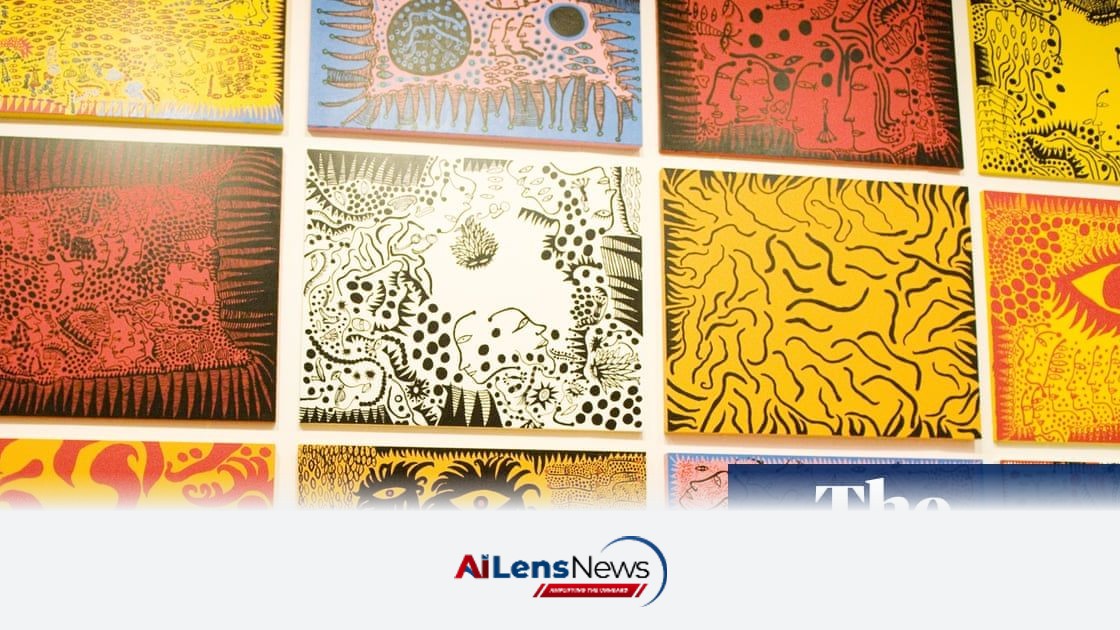



Yayoi Kusama, who passed away at 97, used her art to navigate her mental health challenges, influencing a new generation of neurodivergent artists.
London, United Kingdom Aug 27, 2026 ALN: Yayoi Kusama, the pioneering Japanese artist who passed away at the age of 97, began experiencing vivid hallucinations at the tender age of 10. These hallucinations included visual and aural disturbances, which she described as "flashes of light, auras, or dense fields of dots." A drawing from 1939 depicts a woman in a kimono, presumably her mother, engulfed by these dots, which would later become Kusama's artistic obsession. She also hallucinated flowers, recalling a moment when she looked at a red flower-patterned tablecloth and saw the same design enveloping the entire room, including her own body. This experience made her feel as though she was beginning to "self-obliterate" and dissolve into the universe.
For Kusama, creating art was not just a passion but a vital means of survival. In a 2012 interview, she stated, "I fight pain, anxiety, and fear every day, and the only method I have found that relieved my illness is to keep creating art. I followed the thread of art and somehow discovered a path that would allow me to live." Through her relentless creativity, she emerged as one of the most celebrated contemporary artists, influencing the pop art movement and becoming a key figure in the New York avant-garde scene. Her exhibitions, particularly her Infinity Mirror Rooms, have drawn massive crowds, leading to the Tate Modern in London extending her show due to overwhelming public demand.
Kusama's legacy extends beyond her art; she leaves behind a world that is increasingly aware of mental illness and neurodivergence. The art community is beginning to embrace diverse perspectives, recognizing how the unique experiences of neurodivergent individuals can enrich artistic expression. Last year, Turner Prize winner Nnena Kalu, who is autistic and has a learning disability, exemplified this shift. Artists like Louis Wain, who struggled with schizophrenia, and Andy Warhol, who exhibited traits consistent with autism, are now being appreciated through the lens of neurodiversity.
“Artists like Kusama, much like our own Nnena Kalu, have shown that great art does not come from a single source or follow a traditional route,” said a spokesperson for ActionSpace, a London organization supporting learning-disabled artists. “The art world is richer for it, and their work continues to challenge us to recognize and celebrate the many voices that shape it.”
Despite the stigma surrounding mental illness, Kusama was open about her struggles, even voluntarily checking herself into a mental health facility in Tokyo during the 1970s. Her process of "obliteration" involved repetitive motifs—those iconic dots and flowers that adorned everything, including her clothing. Her immersive infinity room installations transformed sensory overload into a magical experience, offering viewers a glimpse into her unique perception of the world.
Kate Adams, director of Project Art Works, noted, "Kusama’s practice seemed to channel the intrinsic auditory, repetitive, and hallucinatory compulsions that she experienced. Rather than create an escape from these, her installations shaped and described for others a sometimes beautiful, sometimes overwhelming world of intensity, pattern, and form." Adams also emphasized the importance of distinguishing between mental illnesses and neurodivergence, acknowledging that while there can be overlaps, they are not synonymous.
This distinction resonates with many families, including one mother who reflects on her profoundly autistic brother, who is non-verbal and has OCD. She recalls his childhood fascination with light reflections and his fear of dark knots in wood, illustrating how sensory differences are often intertwined with neurodivergent experiences. As awareness grows, sensory rooms are becoming more common in schools, hotels, and airports, catering to those with sensory sensitivities.
Kusama often expressed gratitude for art, stating, "If it were not for art, I would have killed myself a long time ago." While disabled and neurodivergent artists continue to face significant barriers, Kusama's work and lasting influence serve as a powerful testament to the complexity and beauty of human perception and experience.
To learn more about the latest developments in Visual Arts, stay updated with our exclusive reports and analyses on AILensNews.
Yayoi Kusama, the avant-garde artist celebrated for her polka dots and pumpkin s…
Japanese artist Yayoi Kusama has passed away at 97, leaving behind a remarkable …

The popular cartoon character has become a vehicle for political satire in Egypt…
For the Rabha community in Assam, the Indian Black Earth Tiger Spider is not jus…
TEHRAN – The play “The Suicide Shop,” based on the book by French novelist Jean …