

More
Checking your session
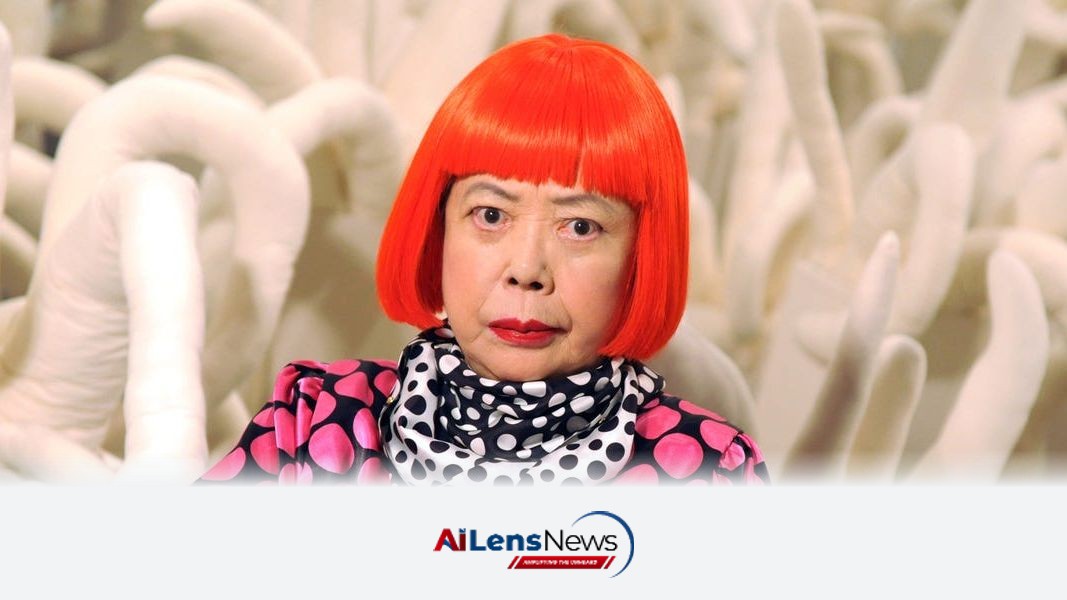



Japanese artist Yayoi Kusama has passed away at 97, leaving behind a remarkable legacy of creativity and resilience.
Washington DC, United States Aug 27, 2026 ALN: Japanese artist Yayoi Kusama, renowned for her vibrant, polka-dot artwork and immersive Infinity Mirror Rooms, has passed away at the age of 97. Her official website announced her death on August 14, 2023, in a Tokyo hospital, though the cause of death was not disclosed. Kusama's passing marks the end of an extraordinary life dedicated to exploring the boundaries of art, mental health, and personal expression.
The statement from her website emphasized her unwavering dedication to art: "She continued to paint until her final days, never setting aside her brush, and continued exploration of forever love and eternal soul." This sentiment encapsulates Kusama's lifelong commitment to her craft, which she often described as a crucial part of her identity and survival. Born in Matsumoto, Japan, in 1929, Kusama's artistic journey began early, influenced by visions and hallucinations that would later become central themes in her work. Her experiences with mental health, particularly her battles with anxiety and obsessive-compulsive disorder, informed much of her artistic expression, allowing her to channel her inner turmoil into a vibrant and unique visual language.
Over the decades, Kusama's artistic repertoire expanded to include the iconic Infinity Mirror Rooms and pumpkin sculptures, solidifying her status as one of the most recognizable contemporary artists globally. These immersive installations invite viewers into a seemingly infinite space filled with light and reflection, creating a transcendent experience that blurs the lines between the self and the universe. She began exhibiting her work in Japan during the 1950s before relocating to New York in 1957, where she quickly integrated into the avant-garde scene. Her first solo exhibition featured a series of paintings known as "Infinity Nets," which showcased her unique approach to art, characterized by repetitive patterns and a sense of infinity that mirrored her own internal struggles.
Kusama's work ethic was legendary; in a 1961 article, she described her intense dedication, stating she would often work for "fifty to sixty hours at a stretch," captivated by the accumulation and repetition in her art. This tireless dedication persisted throughout her life, even after she voluntarily checked into a psychiatric hospital in Tokyo around 1977, where she lived until her death. Far from being a retreat from her creativity, her time in the hospital allowed her to focus on her art in a supportive environment, leading to the production of some of her most significant works.
Kusama's commitment to her craft remained steadfast even in her later years. In a 2014 interview with Sleek Magazine, she expressed how creating art had been a lifeline during her struggles. "Every day I am creating a new world by making artworks. I wake up early in the morning and stay up late at night, sometimes until 3 a.m., just to make art. I am fighting for my life and don't take any rest," she shared. This statement highlights the therapeutic role art played in her life, serving as both an outlet for her emotions and a means of connecting with the world around her.
Reflecting on her journey as an artist, she remarked in a 2020 interview with Phaidon that she felt compelled to give her "very best" as her time was limited. "But I kept at it and I am now at an age that I never imagined I would reach," she stated. This acknowledgment of her age and the finite nature of life fueled her desire to create, pushing her to explore new ideas and mediums even as she aged. In 2023, Kusama revealed to The Art Newspaper that she was still painting daily and aimed to "continue creating a world in awe of life." She noted that age had not diminished her creative drive, asserting, "I never run out of ideas so I shall continue to show new things. I take in everything I'm interested in. I desire to create ever more original works." This relentless pursuit of creativity underscores her belief in the transformative power of art and its ability to resonate with others.
Kusama's legacy is one of resilience, creativity, and an unyielding passion for art that will inspire generations to come. Her influence extends beyond her own works; she has been a source of inspiration for countless artists, particularly women, who see her as a trailblazer in a male-dominated art world. Her ability to turn personal struggles into universally relatable themes has created a profound connection with audiences worldwide, making her one of the most celebrated figures in contemporary art.
As the art community reflects on her life and contributions, it is essential to recognize the broader implications of her work. Kusama's exploration of mental health, identity, and the human experience resonates deeply in today's society, where discussions about mental wellness and self-expression are increasingly prominent. Her art serves as a reminder of the importance of vulnerability and authenticity in creative endeavors, encouraging others to embrace their unique perspectives and experiences.
In conclusion, Yayoi Kusama's passing is not only a loss for the world of art but also a moment to celebrate her extraordinary life and the indelible mark she has left on the cultural landscape. Through her innovative works and unwavering spirit, she has challenged conventions, inspired countless individuals, and demonstrated the power of art as a means of connection and healing. Her legacy will continue to thrive, inspiring future generations to explore the depths of their creativity and the complexities of the human experience.
To learn more about the latest developments in Visual Arts, stay updated with our exclusive reports and analyses on AILensNews.
Yayoi Kusama, the avant-garde artist celebrated for her polka dots and pumpkin s…

The popular cartoon character has become a vehicle for political satire in Egypt…

For the Rabha community in Assam, the Indian Black Earth Tiger Spider is not jus…

TEHRAN – The play “The Suicide Shop,” based on the book by French novelist Jean …

British artists in the 18th century portrayed India as an exotic land, reshaping…