

More
Checking your session
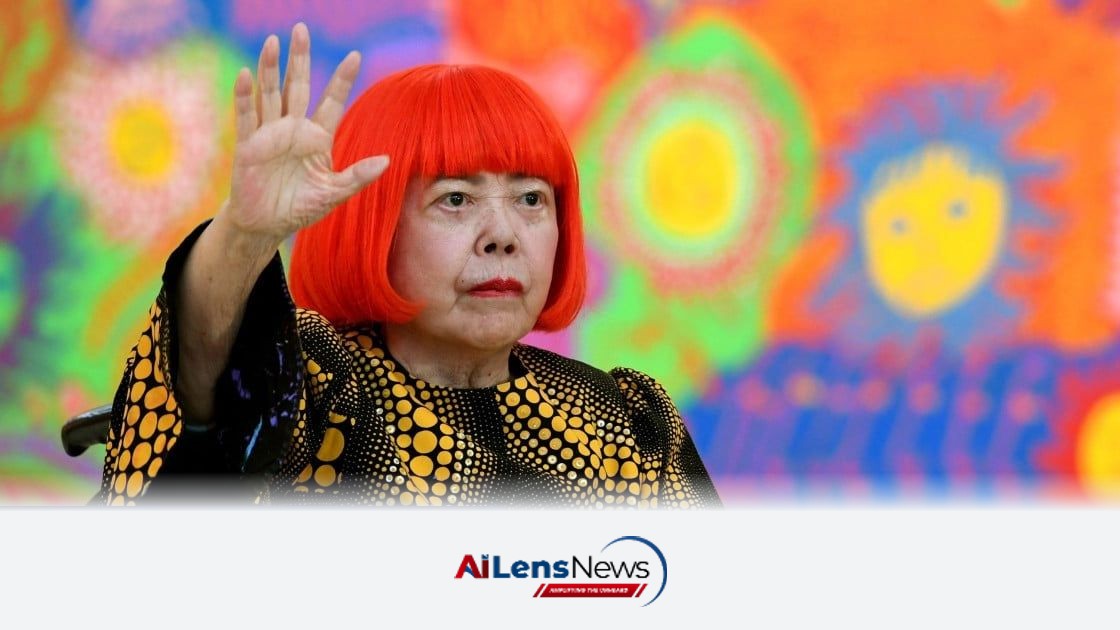



Yayoi Kusama, the avant-garde artist celebrated for her polka dots and pumpkin sculptures, has died at 97 in Tokyo due to multiple organ failure.
London, United Kingdom Aug 27, 2026 ALN: Yayoi Kusama, the Japanese avant-garde artist whose obsessive polka dots, towering pumpkin sculptures, and mesmerizing Infinity Mirror Rooms captivated audiences worldwide, has died at the age of 97. Her passing marks the end of an era for contemporary art, as Kusama was not only a prolific creator but also a significant cultural figure whose influence extended far beyond the confines of traditional art.
The artist died on August 14 at a hospital in Tokyo due to multiple organ failure. Her studio and the city’s Yayoi Kusama Museum confirmed the news on August 27, a date that has since become a moment of reflection for art lovers and admirers around the globe. The announcement of her death prompted an outpouring of tributes from fellow artists, art historians, and fans who celebrated her unique contributions to the art world.
“Throughout an extraordinary lifetime devoted entirely to artistic creation, Kusama pursued an internationally acclaimed career as a pioneering avant-garde artist whose creative practice encompassed visual art, performance, fiction, and poetry,” her studio said in a statement. This description encapsulates the multifaceted nature of Kusama's work, which often challenged the boundaries of art and engaged deeply with themes of infinity, self-obliteration, and mental health.
Kusama's art is characterized by her distinctive use of polka dots, which she referred to as "infinity nets". These patterns can be seen across various mediums, including painting, sculpture, and installation. Her iconic pumpkin sculptures, adorned with polka dots, have become emblematic of her artistic identity and are celebrated for their playful yet profound exploration of form and color. Kusama's Infinity Mirror Rooms, which invite viewers to immerse themselves in a seemingly endless space filled with reflective surfaces and lights, have garnered immense popularity, often leading to lines of visitors eager to experience the illusion of infinity.
Born in 1929 in Matsumoto, Japan, Kusama's journey as an artist began at a young age. She faced numerous challenges, including societal expectations and mental health struggles, which she openly discussed throughout her life. In the 1950s, Kusama moved to New York City, where she became involved in the avant-garde art scene, befriending influential figures such as Andy Warhol and Claes Oldenburg. Her time in the United States was marked by significant artistic output, including her participation in the feminist movement, where she used her art to address issues of identity and sexuality.
The museum added that Kusama “held fast to her belief in saving the world through love until the very end.” This statement reflects not only her artistic philosophy but also her personal ethos. Kusama often spoke about the power of love and connection, themes that permeated her work and resonated with audiences. Her art has served as a form of therapy, both for herself and for those who experience it, as it invites viewers to confront their own emotions and existential questions.
Kusama enjoyed a particularly strong following in Hong Kong, and the city functioned as her primary commercial art market across Asia. Notably, it hosted the largest retrospective of her work on the continent outside her native Japan. This highlights the global reach of her influence, as her art transcended cultural and geographical boundaries. The exhibition, “Yayoi Kusama: 1945 to Now,” was launched by Hong Kong’s M+ museum to celebrate its first anniversary in November 2022. The retrospective showcased her evolution as an artist and her enduring relevance in contemporary art, drawing thousands of visitors eager to engage with her work.
Kusama’s legacy is profound, as she has inspired countless artists and continues to influence contemporary art practices. Her ability to blend personal experience with universal themes has allowed her work to resonate with diverse audiences. As the art world reflects on her contributions, it is clear that Kusama's impact will be felt for generations to come.
In addition to her artistic achievements, Kusama's story serves as a testament to resilience and the pursuit of one's passion against all odds. Her journey from a small town in Japan to becoming a global icon is a narrative that inspires many aspiring artists. As her work continues to be exhibited and celebrated, the conversations surrounding mental health, identity, and the power of art to heal will undoubtedly persist, further solidifying her place in the annals of art history.
As the art community mourns the loss of Yayoi Kusama, it also celebrates her extraordinary life and the indelible mark she has left on the world. Her art, steeped in personal narrative and universal themes, will continue to inspire and provoke thought long after her passing. The legacy of Yayoi Kusama is not merely in her creations but in the dialogue she has initiated around the complexities of the human experience, love, and the infinite possibilities of art.
To learn more about the latest developments in Visual Arts, stay updated with our exclusive reports and analyses on AILensNews.
Japanese artist Yayoi Kusama has passed away at 97, leaving behind a remarkable …

The popular cartoon character has become a vehicle for political satire in Egypt…

For the Rabha community in Assam, the Indian Black Earth Tiger Spider is not jus…

TEHRAN – The play “The Suicide Shop,” based on the book by French novelist Jean …

British artists in the 18th century portrayed India as an exotic land, reshaping…