

More
Checking your session
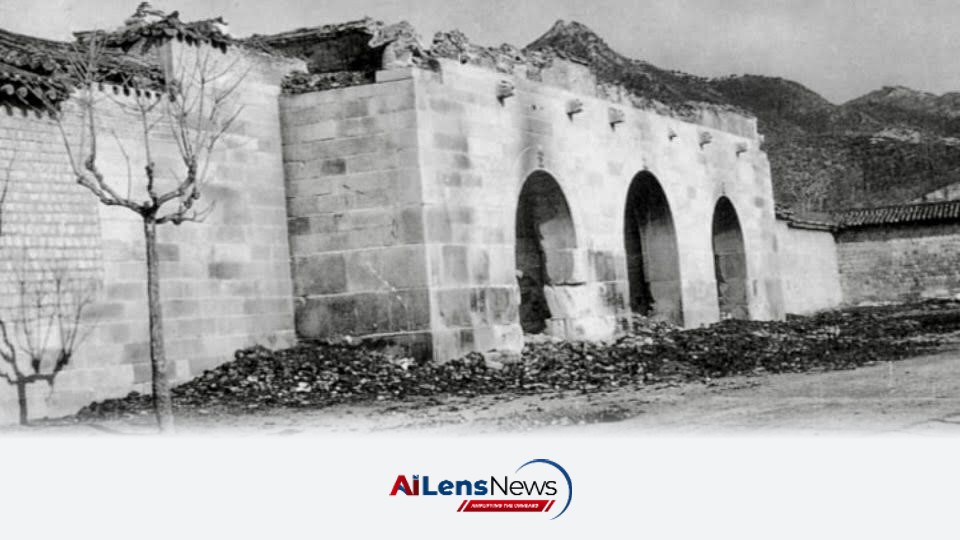



Historical monuments symbolize a nation's resilience. South Korea's approach to restoring war-damaged heritage provides valuable lessons for Iran, especially after recent conflicts.
Tehran, Iran Aug 27, 2026 ALN: Historical monuments are not merely symbols of a nation's identity; they are also testaments to that nation's resilience against the vicissitudes of history and narrators of its past experiences. Although in recent years, especially after the two World Wars, historical monuments have come under the umbrella of international protection, obligating global sensitivities for warring parties to preserve these sites in each other's territories, the inherently destructive nature of war, combined with its objectives which tend toward the annihilation of the enemy and consequently the erasure or at least weakening of their identity, has meant that this sector has not been spared from the negative effects of war damage.
Examining South Korea's approach to managing cultural heritage and reconstructing historical identity may offer a lesson for all those who have faced this predicament. This document is published as a strategic report by the Iran-South Korea Joint Chamber of Commerce, aiming to optimize and learn from this country's successful experience in overcoming the effects of war.
Rebuilding cultural heritage means clinging to history to restore the collective self-confidence of a society and holding onto a single unifying thread for social cohesion, despite all the ethnic, cultural, linguistic, and even religious diversity within a society.
In the Korean War (1950–1953), at least 351 Buddhist temples were damaged, 240 of which were completely destroyed; along with dozens of palaces, historical gates, and royal tombs. Nevertheless, seventy years later, South Korea has not only restored the vast majority of this heritage but has also turned cultural heritage preservation into an independent economic sector valued at 9.05 trillion won in 2025, with a cumulative target of 100 trillion won by 2030.
This report analyzes South Korea's strategy across five policy pillars—preventive documentation, pre-restoration engineering diagnosis, intergenerational transfer through technology, economic regeneration of ruins, and selective preservation of war scars—examining it within the context of its institutional structure, public-private financing models, and the broader vision of South Korea's Ministry of Culture, "Culture-K 2030". Subsequently, this experience is juxtaposed with the new reality confronting Iran's cultural heritage this year: damages from the recent war between the US and Israel against Iran affecting over 140 historical sites and monuments, including at least five sites inscribed on the UNESCO World Heritage List. The report concludes with six specific and adaptable lessons for cultural heritage policy, financing, and economic regeneration in Iran.
It should be noted that this document is the fifth strategic report published by the Iran-South Korea Joint Chamber of Commerce, made available to the public for the benefit of experts, researchers, policymakers, and other interested parties.
1. Introduction: Dimensions of War Damage to Korea's Cultural Heritage
The Korean War did not only devastate cities and villages; it also targeted the historical memory of a nation. Royal palaces were damaged, Buddhist temples burned, and hundreds of valuable structures were reduced to rubble. At the war's end, South Korea was one of the poorest countries in the world; a nation that had simultaneously lost its economic infrastructure and a significant part of its historical identity.
A precise and unified monetary estimate of the total cost of post-war cultural heritage reconstruction in Korea is not available in public sources; however, the indicator presented later in this report—the growth of the 'Heritage-K' industry to a value of 9.05 trillion won in 2025—shows that the country transformed reconstruction from a 'restoration cost' into a 'productive economic asset'.
Korea's seventy-year experience on this path is summarized in five policy pillars, each examined below with evidence, supporting institutional structures, and considerations applicable to Iran.
2. Institutional and Financial Architecture: The Role of Government and the Private Sector
2.1. The Central Institution: Korea Heritage Service (KHS)
The Korea Heritage Service—operating until 1999 as the 'Cultural Properties Administration' and renamed in 2024—is under the Ministry of Culture, Sports and Tourism. It plays a pivotal role in designating national treasures, financing restoration, and issuing permits for any changes to registered structures. This organization provides direct subsidies for the maintenance and restoration of 'nationally designated' properties and offers parallel financial support for seven strategic heritage regions (including the Baekje Historic Areas).
2.2. Public-Private Partnership Model
Research in cultural heritage governance identifies three contractual models in the experiences of countries like Korea, whose application varies depending on the type of asset:
In other words, South Korea firmly retains 'ownership and determination of conservation standards' in government hands but delegates 'execution, economic operation, and technological innovation' largely to the private sector, local institutions, and community participation. A prime example of this model is the regeneration of the Bukchon neighborhood, implemented through financial cooperation between the government and private owners of traditional houses.
To strategize decision-making regarding cultural heritage, understanding the institutional structure that implements these policies is crucial, because without this architecture, none of Korea's technical solutions can be understood or replicated.
3. Five Strategic Pillars of South Korea's Experience
3.1. Pillar One: Save the Memory Before Reconstruction
Since the 1990s, South Korea has initiated a national project for the digital documentation of historical monuments. Using laser scanners, drones, and photogrammetry technology, thousands of historical structures have been recorded in 3D to create a digital backup of the country's history. This approach effectively acts as a 'national historical memory insurance'.
To learn more about the latest developments in Heritage & History, stay updated with our exclusive reports and analyses on AILensNews.

The Society for Srimanta Sankaradeva has unveiled a digital archive of Assamese …

George Town balances heritage preservation with modern living, showcasing its un…

Rupsi, known for its airport, has a complex history shaped by colonialism and mi…

The fate of a once-vibrant Miami stadium, now abandoned and covered in graffiti,…

The iconic Panathenaic Stadium in Athens is receiving its first systematic clean…