

More
Checking your session
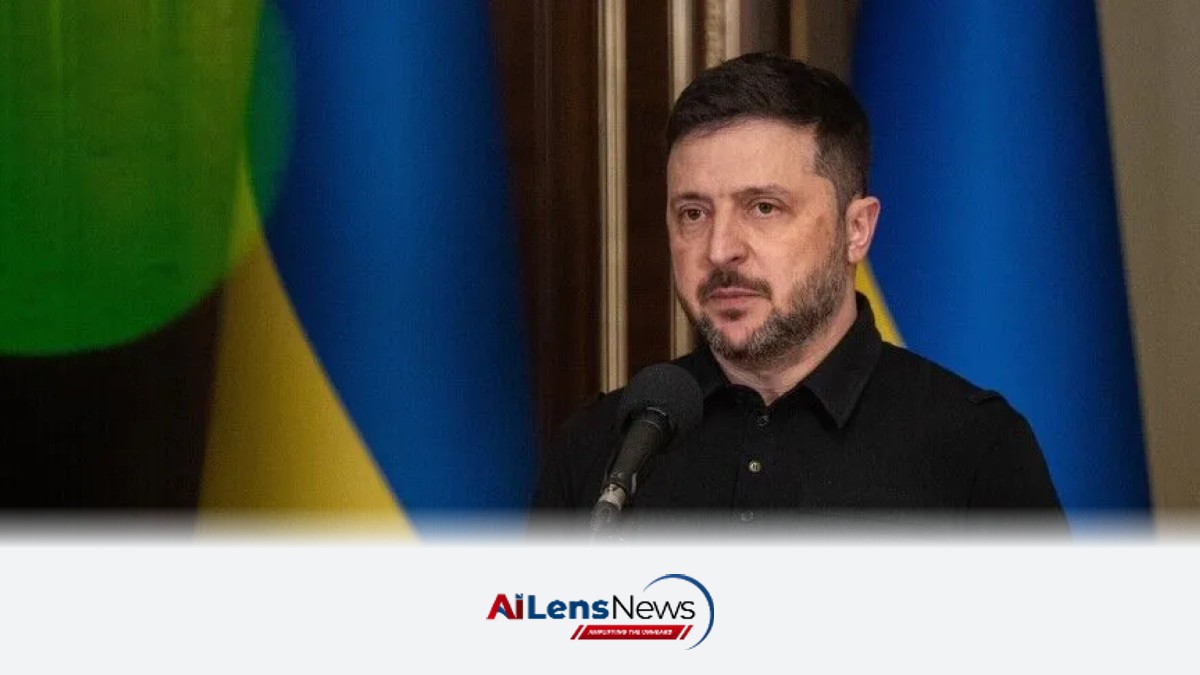



Ukrainian President Volodymyr Zelenskyy highlights late 2026 to summer 2027 as a key period for potential diplomatic solutions to the ongoing conflict with Russia.
Riyadh, Saudi Arabia Aug 24, 2026 ALN: Ukrainian President Volodymyr Zelenskyy has articulated a timeline for potential diplomatic efforts to end the ongoing conflict with Russia, identifying the period from late 2026 to the summer of 2027 as critical. This statement reflects both the urgency of the situation and the complexities involved in reaching a resolution, particularly concerning the contested region of Donbas, which has been a focal point of the conflict since its inception in 2014.
During a ceremony commemorating Ukraine’s National Flag Day in Kyiv, Zelenskyy emphasized that the current phase of negotiations could be pivotal. He stated, "We believe that this is the most active stage at which diplomacy can lead to the end of the war. It’s the end of this year and the end of summer 2027." This assertion underscores a growing recognition among Ukrainian leadership of the need for a strategic diplomatic approach, even as military confrontations continue.
The Donbas region, which includes the territories of Luhansk and Donetsk, has been under the influence of Russian-backed separatists since 2014, following Russia's annexation of Crimea. The situation has resulted in a protracted conflict that has claimed thousands of lives and displaced millions. Zelenskyy's acknowledgment of significant differences regarding the future of Donbas indicates the challenges that lie ahead in negotiations, particularly concerning the status of these territories and the rights of the local population.
Among the potential ceasefire options being discussed with the United States and European partners is a reciprocal withdrawal of military forces from Donbas, coupled with the establishment of a buffer zone that would be economically managed by a third party. This proposal reflects an understanding that any successful diplomatic resolution will require compromises from both sides to ensure lasting peace.
In addition to the territorial disputes, Zelenskyy highlighted the need for a mutual cessation of attacks on critical infrastructure, particularly energy and agricultural facilities. Such measures would be essential in alleviating the humanitarian crisis exacerbated by ongoing military operations and would signal a commitment to de-escalation.
The presence of leaders from Nordic and Baltic nations at the National Flag Day events underscores the regional support for Ukraine amidst the conflict. These nations have been vocal supporters of Ukraine's sovereignty and have provided various forms of assistance. Zelenskyy also addressed the financial challenges facing Ukraine, revealing a $27 billion shortfall in the defense budget. He pointed out an immediate requirement of $8 billion to $10 billion to cover essential needs in early 2027, alongside an additional $20 billion necessary for military salaries and other defense-related expenses.
On the military front, Zelenskyy acknowledged that Ukraine has not yet reached mass production of domestically produced ballistic missiles due to technical challenges. However, he noted that two companies are currently working on this program. The ability to produce these missiles in significant quantities would enhance Ukraine's military capabilities and provide a stronger deterrent against Russian aggression. "When there is mass production, then we will be able to deliver painful strikes against the enemy in response to their terror," he stated, indicating a focus on strengthening Ukraine’s defense capabilities.
Ukraine is also exploring joint missile production for Patriot air defense systems with the American defense contractor Raytheon. Initial technical meetings have been held, and the Ukrainian defense company Fire Point has been selected as a project partner. The outcome of this collaboration could significantly bolster Ukraine's air defense capabilities, especially in light of ongoing aerial threats.
In terms of international military support, Zelenskyy announced that Ukraine expects to receive French air defense radars and a SAMP/T system in the upcoming fall, with agreements for additional Aster 30 missiles anticipated in September. Furthermore, he confirmed an agreement with German Chancellor Friedrich Merz for the delivery of 600 PAC-2 missiles for Patriot systems in 2027 and 2028. Zelenskyy highlighted the urgency of this support, noting that Ukraine requires approximately 360 Patriot missiles for the winter alone, which is a significant portion of the annual global production of around 600 missiles.
Domestically, Zelenskyy maintains a firm stance against holding elections during the ongoing conflict, characterizing such a move as a "tsunami for the state" that could further fracture the nation. This perspective reflects the broader concern within Ukraine regarding national unity and stability amidst the war. He also emphasized the importance of preserving the independence of Ukraine’s anti-corruption agencies, which have been crucial in maintaining public trust and accountability during a time of crisis.
As for military operations, Zelenskyy confirmed that Ukrainian forces have targeted warehouses belonging to Wildberries, Russia’s largest online retailer. He explained that these targets are significant as they serve both as a supply chain for military goods and as a source of revenue for the Russian economy. This strategic targeting is indicative of Ukraine's broader military strategy to disrupt logistics and resources that support Russian military operations.
In a notable development regarding technological support, Zelenskyy revealed that SpaceX founder Elon Musk had declined a Ukrainian request to utilize Starlink satellite communications over Russian territory for defense purposes. However, he also noted that recent discussions with Musk's team have yielded more positive signals, suggesting that negotiations may continue in hopes of finding a resolution that would enhance Ukraine’s communication capabilities in the conflict.
As the situation in Ukraine continues to evolve, the timeline proposed by Zelenskyy for potential diplomatic engagement highlights both the challenges and opportunities that lie ahead. The interplay of military strategy, international support, and diplomatic negotiations will be crucial in shaping the future of Ukraine and its quest for peace and sovereignty in the face of ongoing aggression from Russia.
To learn more about the latest developments in International Politics, stay updated with our exclusive reports and analyses on AILensNews.

Iran welcomes China's rejection of new US sanctions aimed at isolating its econo…
Iran clarifies that its recent agreement with Oman does not imply the reopening …

As the US-Iran conflict continues, the Strait of Hormuz faces significant shippi…

China has condemned the US's latest sanctions against Iran, asserting its commit…

In response to US tariffs, Canada announces counter-tariffs on a range of Americ…