

More
Checking your session
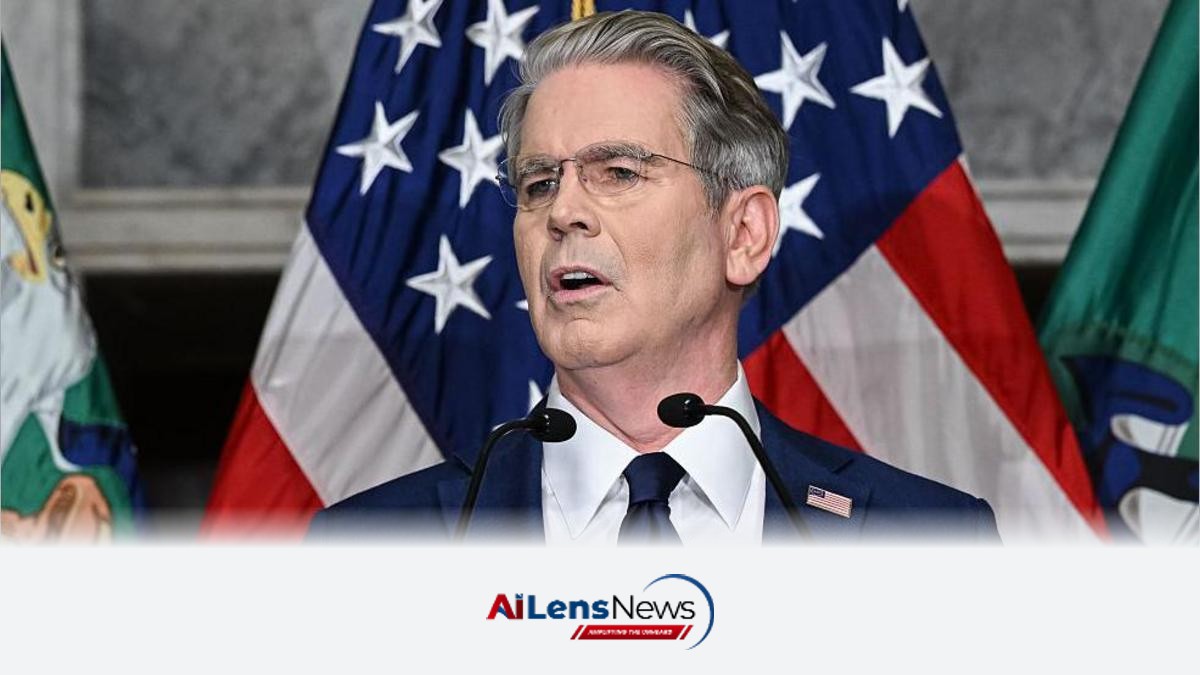



In a bold move, the US Treasury Secretary Scott Bessent announces sweeping sanctions against Iran, marking what he calls the 'greatest financial offensive ever'.
New Delhi, India Aug 25, 2026 ALN: The US announced a host of sanctions against Iran and threatened its supporters in what Treasury Secretary Scott Bessent described as "the single greatest financial offensive ever".
Labelling it an "economic D-Day" for Iran, Bessent stated that the US would sever all economic ties with the country and warned that any nation financially partnering with Iran would also face isolation. This declaration marks a significant escalation in the ongoing economic and geopolitical tensions between the United States and Iran, a relationship that has been fraught with conflict since the 1979 Iranian Revolution.
Historically, the US has imposed various sanctions on Iran, particularly following its nuclear program's advancements, which many Western nations perceive as a threat to regional and global security. The most notable sanctions were imposed in 2015 when the Joint Comprehensive Plan of Action (JCPOA) was negotiated, lifting some sanctions in exchange for Iran curbing its nuclear activities. However, the US withdrew from the JCPOA in 2018, reinstating harsh sanctions that severely impacted Iran's economy.
In response to the renewed sanctions, Iran's economy minister Ali Madanizadeh declared a two-year plan to counter the sanctions, asserting it would lead to another defeat for Washington. This declaration reflects Iran's historical resilience in the face of economic pressure, as the country has often managed to adapt to sanctions through alternative trade routes and partnerships, particularly with nations like China and Russia.
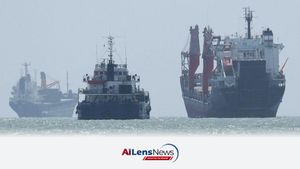
The conflict has already caused significant increases in global oil prices, a critical concern for many countries dependent on stable energy costs. Iran has threatened to halt all oil exports from the region if hostilities continue, further complicating an already volatile global oil market. The Iranian regime has also issued fresh warnings to shipping, advising against passage through the Strait of Hormuz without its permission, according to reports. This strait is a crucial maritime route through which approximately one-fifth of the 's oil and gas typically transits, making it a focal point in the geopolitical landscape.
Since the conflict escalated in late February, the flow of oil through this narrow waterway has been effectively blocked, contributing to rising oil prices globally and increasing tensions among nations reliant on these energy supplies. The Strait of Hormuz has historically been a flashpoint for military and economic conflicts, and any disruption in this area could have far-reaching implications for global energy security.
During a press conference on Monday, outlining what has been termed "Operation Economic Outcast", Bessent emphasized that the US was launching an "economic onslaught against Iran's financial connections around the globe". He stated, "Iran now faces a very clear choice with only two paths before them: complete global isolation or a path back to normalcy with an opportunity to rejoin the global economy." This stark ultimatum underscores the US's strategy of using economic pressure as a primary tool to influence Iran's behavior on the international stage.
Bessent asserted that America was "no longer managing the Iranian threat; we are ending it". This statement signifies a shift in the US approach, moving from a strategy of containment to one aimed at fundamentally altering the Iranian regime's capacity to operate on the stage. The Treasury Department has identified networks, facilitators, and financial channels used by Iran to evade sanctions related to oil trade, a move that could significantly limit the regime's financial resources.
The recent sanctions target five sectors: digital assets, technology, gold, aviation, and shipping. The Treasury has also imposed sanctions on nearly 60 entities, individuals, and vessels. These actions are designed to "tighten the noose and block every potential source of revenue" for Iran's Islamic Revolutionary Guard Corps and the broader Iranian regime. The implications of such measures could be severe, potentially crippling Iran's economy further and exacerbating the humanitarian situation within the country.
Bessent warned governments and entities assisting or trading with Iran that they could not "claim they are blind to enabling this activity". While he refrained from naming specific countries, he mentioned that Trump would be reaching out to leaders with specific requests to cease interactions with the Iranian regime. This indicates a concerted effort by the US to rally international support against Iran, although past attempts have met with mixed results.
Madanizadeh claimed Iran was "fully prepared for the US sanctions" and stated, "We've been waiting for these plans for a long time, and the government is ready with a two-year plan to manage these events," he told state television. His comments reflect a sense of defiance within the Iranian government, which has historically framed sanctions as acts of aggression that unite the populace against external threats.
He also noted that neither China nor Russia had "accepted" the US measures, predicting that other countries would resist them as well. The Chinese Foreign Ministry stated that sanctions and pressure tactics were ineffective and that Beijing would take necessary measures to protect its interests. This response highlights the complexities of international relations, where economic sanctions imposed by one nation can lead to strengthened alliances among others that oppose those measures.
David Oxley, chief climate and commodities economist at Capital Economics, expressed skepticism regarding the effectiveness of the sanctions announcement. He remarked, "With the renewed US naval blockade already strangling Iran's oil exports, the direct impact of 'economic D-Day' on Iran's energy revenues will be somewhat of a damp squib." Oxley's analysis suggests that the sanctions may not lead to the desired outcomes in the short term, particularly given Iran's existing trade relationships.
Oxley suggested that the new package would likely have only a limited direct impact on Iranian energy flows in the short term. This is partly due to the fact that approximately 90% of Iran's oil is exported to China, a country that has historically disregarded US sanctions and is unlikely to comply this time. The reliance on Chinese markets poses a significant challenge to the effectiveness of US sanctions, as Beijing's willingness to continue trading with Iran can undermine the intended economic isolation.
As the situation develops, the implications of these sanctions will be closely monitored by global markets, policymakers, and analysts. The potential for increased volatility in oil prices, shifts in geopolitical alliances, and the humanitarian impact on the Iranian populace will all be critical factors to consider in the coming months. The ongoing conflict between the US and Iran continues to shape the broader Middle Eastern landscape, influencing not only regional stability but also global economic conditions.
To learn more about the latest developments in International Politics, stay updated with our exclusive reports and analyses on AILensNews.
Iran welcomes China's rejection of new US sanctions aimed at isolating its econo…
Iran clarifies that its recent agreement with Oman does not imply the reopening …
As the US-Iran conflict continues, the Strait of Hormuz faces significant shippi…
China has condemned the US's latest sanctions against Iran, asserting its commit…

In response to US tariffs, Canada announces counter-tariffs on a range of Americ…