

More
Checking your session
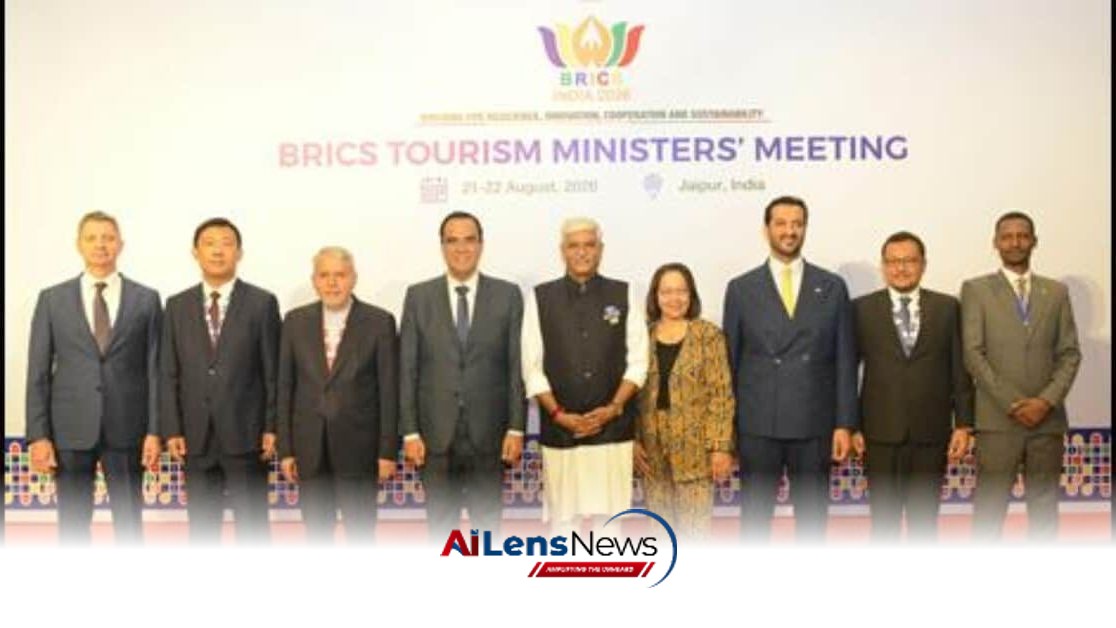



The BRICS Tourism Ministers' meeting in Jaipur concluded with the adoption of the Jaipur Declaration, focusing on strengthening tourism cooperation among member countries.
New Delhi, India Aug 21, 2026 ALN: The BRICS Tourism Ministers' meeting, held in Jaipur under India's chairmanship, concluded with the adoption of the BRICS Tourism Ministers' Communique 2026, also referred to as the Jaipur Declaration. This significant agreement aims to strengthen tourism cooperation among the BRICS member countries: Brazil, Russia, India, China, and South Africa, along with additional countries that have been included in this collaborative framework.
Chaired by Union Culture and Tourism Minister Gajendra Singh Shekhawat, the meeting represented the culmination of the BRICS Tourism Track under India's 2026 chairmanship. The overarching theme of the meeting, "Building for Resilience, Innovation, Cooperation and Sustainability," reflects the increasing recognition of tourism's pivotal role in global economic recovery, particularly in the wake of the COVID-19 pandemic, which severely impacted travel and tourism worldwide.
The meeting saw participation from tourism ministers and heads of delegation from nine BRICS member states, including Brazil's Tourism Minister Gustavo Costa Feliciando, Iran's Minister of Cultural Heritage, Tourism and Handicrafts Reza Salehi Amiri, South Africa's Tourism Minister Patricia De Lille, and UAE's Minister of Economy and Tourism Abdulla Bin Touq Al Marri. Additionally, representatives from China, Ethiopia, Indonesia, and Russia contributed to the discussions, highlighting the collaborative spirit that defines the BRICS grouping.
The Indian delegation was led by Tourism Secretary Bhuvnesh Kumar and Joint Secretary Harikishore S, among other officials, emphasizing India's commitment to fostering international tourism partnerships. The Jaipur Declaration builds upon the foundational work carried out by the BRICS Tourism Working Group during India's chairmanship, focusing on four key priorities: the integration of artificial intelligence in tourism, sustainability and responsible tourism practices, enhancing tourism skilling and capacity building, and facilitating seamless travel experiences among member nations.
The communique, which was adopted by consensus, recognizes the transformative potential of responsible, safe, and human-centered artificial intelligence and digital technologies in revolutionizing the tourism sector. The declaration advocates for enhanced cooperation among BRICS countries in crucial areas such as tourism planning, destination management, visitor services, multilingual communication, and travel facilitation. This collaborative approach aims to streamline processes and improve the overall experience for travelers within the BRICS framework.
Moreover, the declaration emphasizes the importance of sustainable and community-centered tourism. It calls for the protection of natural and cultural heritage, investment in tourism infrastructure, and the promotion of diverse tourism products that reflect the unique attributes of each member country. By focusing on sustainable practices, the BRICS nations aim to ensure that tourism contributes positively to local economies while preserving the environment and cultural identities.
The Jaipur Declaration further underscores the necessity for continuous skilling and upskilling of tourism professionals. This includes fostering stronger partnerships between industry and academia, facilitating the exchange of tourism data and statistics, and sharing best practices among member countries. Enhanced people-to-people connectivity is also a focal point, as it is essential for building mutual understanding and collaboration in tourism initiatives.
In his address to the meeting, Minister Shekhawat emphasized the critical role that tourism will play in India's vision of "Viksit Bharat" (Developed India) by 2047. He articulated the sector's potential to drive economic growth beyond major urban centers, extending its benefits to towns, villages, and remote regions. This vision aligns with India's broader economic strategy, which seeks to create inclusive growth opportunities across all sectors of society.
Shekhawat highlighted the various livelihoods that tourism supports, including those of hotel and homestay operators, taxi drivers, tourist guides, artisans, weavers, farmers, and entrepreneurs. By fostering a robust tourism ecosystem, India aims to support millions of families who are directly or indirectly dependent on the sector, thereby contributing to poverty alleviation and economic empowerment.
The minister also articulated India's efforts to develop a tourism ecosystem that is not only economically prosperous but also environmentally responsible, technologically enabled, and culturally authentic. This holistic approach is vital for ensuring that tourism can thrive in a manner that respects local communities and ecosystems.
On the sidelines of the meeting, India engaged in bilateral discussions with delegations from Brazil, Iran, South Africa, and the United Arab Emirates to further advance tourism cooperation. These discussions are crucial for fostering deeper ties and exploring collaborative opportunities that can enhance tourism flows among the member countries.
A press conference was held to outline the outcomes of the BRICS Tourism Track under India's chairmanship, including the adoption of the Jaipur Declaration. The event served to inform stakeholders and the public about the commitments made and the vision outlined for future tourism cooperation among BRICS nations.
Additionally, the meeting featured curated experiences that showcased traditional arts, crafts, and community-based tourism initiatives for the visiting ministers and delegates. Such experiences not only enrich the understanding of each country's cultural heritage but also promote the importance of preserving these traditions in the face of globalization.
Following the meeting, delegates were scheduled to visit Jaipur's major heritage attractions, including the Hawa Mahal, City Palace, and Amber Fort. This visit provided an opportunity for them to experience firsthand the architectural, cultural, and tourism heritage of Jaipur, further emphasizing the importance of heritage tourism in the BRICS countries' collaborative efforts.
In conclusion, the Jaipur Declaration represents a significant step forward in enhancing tourism cooperation among BRICS nations. By focusing on sustainability, innovation, and capacity building, the declaration aims to foster a resilient tourism sector that can adapt to future challenges while contributing to the economic and cultural vitality of member countries.
To learn more about the latest developments in Destinations, stay updated with our exclusive reports and analyses on AILensNews.

The Gathering, launched in 2013 to boost Irish tourism, has officially ended aft…

In light of rising tensions with Meghalaya, Assam's Chief Minister Himanta Biswa…

This long weekend in Abu Dhabi offers a variety of fun activities, from celebrat…

The launch of Etihad Rail passenger services has transformed travel between Abu …

Explore exciting last-minute staycation offers across the UAE for the upcoming l…