

More
Checking your session
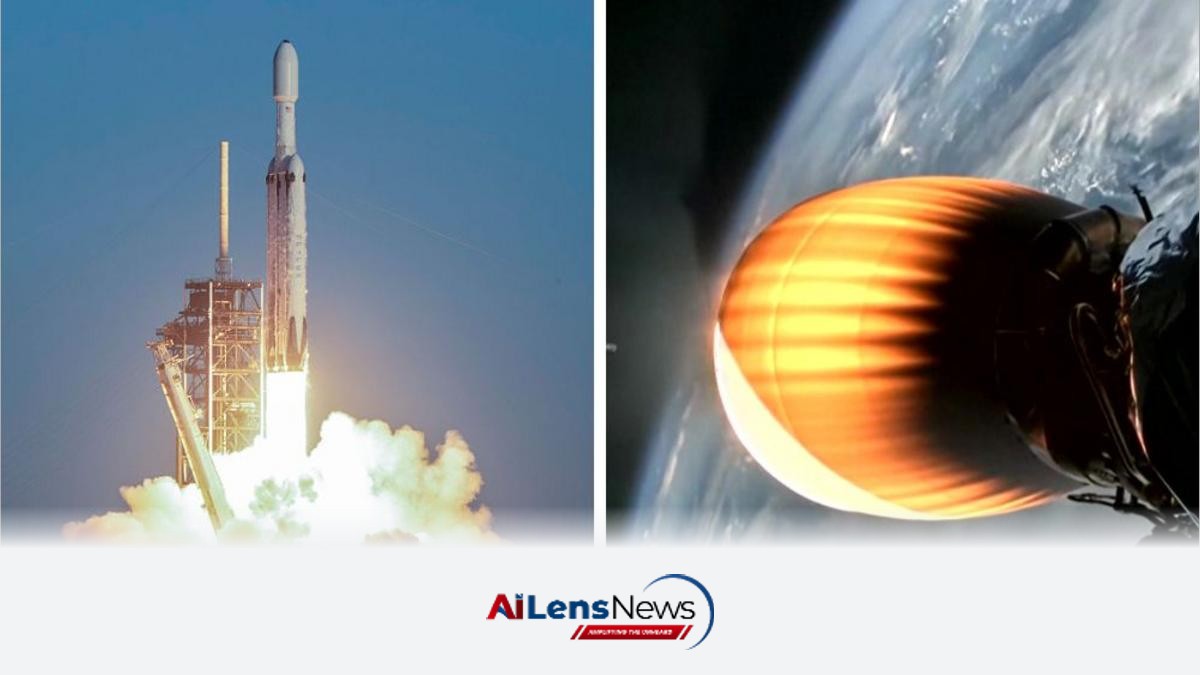



NASA's new telescope embarks on a mission to revolutionize our understanding of the universe, focusing on dark energy and exoplanets.
New Delhi, India Aug 31, 2026 ALN: NASA's powerful next-generation telescope has blasted off into space from its launchpad in Florida, with a mission to explore dark energy, black holes, and other mysteries of the Universe.
The Nancy Grace Roman telescope will capture vast panoramic views of space, with a field of vision 100 times larger than both the Hubble and James Webb space telescopes, NASA says. This expansive field of view is expected to enable the telescope to conduct surveys of the night sky with unprecedented efficiency, potentially revealing new celestial phenomena and deepening our understanding of the cosmos.
The mission begins with a 100-day journey to a vantage point roughly one million miles from Earth, where the telescope will then start charting planets outside our solar system, known as exoplanets. This location, known as the L2 Lagrange point, is a stable gravitational zone that allows the telescope to maintain a constant position relative to Earth and the Sun, minimizing the interference from our planet's atmosphere and light.
"Roman is going to change the way we look at the Universe," said Nicky Fox, a NASA administrator. The telescope's advanced instruments will allow scientists to gather data that was previously unattainable, paving the way for new discoveries in astrophysics and cosmology.
The successful launch of the telescope took place on Sunday morning local time from the Kennedy Space Center in Florida. The launch was a culmination of years of planning, development, and testing, showcasing NASA's commitment to advancing space exploration and scientific research.
Jackie Townsend, a project manager on NASA's Roman telescope, described it as "glorious" at a news conference afterwards. "The ride was magnificent. It put us right where we wanted to be." This successful deployment marks a significant milestone for the mission, which is expected to contribute valuable insights into fundamental questions about the universe.
About 30 minutes after launch, Roman separated from its SpaceX rocket and is now heading towards its orbiting point around a million miles away. This separation is a critical phase of the mission, as it signifies the transition from the launch vehicle to the operational phase of the telescope.
Fox said Roman "is going to discover tens of thousands, maybe even 100,000 new exoplanets" - referring to planets located outside of our solar system. The search for exoplanets has gained significant momentum in recent years, with thousands already confirmed. Roman's enhanced capabilities are expected to greatly expand the catalog of known exoplanets, potentially identifying Earth-like worlds that could harbor life.
"Why do we care so much about exoplanets? Because one of our main goals at NASA is answering the question, 'Are we alone in the universe'?" she added. The quest to find potentially habitable exoplanets is a driving force behind many of NASA's missions, reflecting humanity's enduring curiosity about our place in the universe.
US President Donald Trump dialed in to the space agency's news conference to congratulate the scientists working on the project. "You're the hottest in space, and we have the hottest country anywhere in the world. So, let's keep it all going. You're a big part of it," Trump said. This acknowledgment from the highest levels of government underscores the importance of space exploration as a national priority and a source of pride for the country.
Astronomer Jenifer Millard said the telescope will be four times further from Earth than the Moon is, where a lot of infrared space cameras - made to pick up what she describes as "heat light" - operate. This strategic positioning is essential for the telescope's infrared observations, as it minimizes interference from both the Moon and Earth, allowing for clearer and more accurate data collection.
She told the BBC this is to make sure infrared light from the Moon and Earth don't interfere with the cameras. The ability to capture infrared light is crucial for studying celestial objects that emit heat rather than visible light, such as cooler stars, distant galaxies, and the atmospheres of exoplanets.
NASA's James Webb Space Telescope, launched in 2021, also orbits the Sun around one million miles from Earth, but its field of vision is not as expansive. NASA's Hubble Space Telescope, launched in 1990, orbits at about 300 miles above Earth's surface. Each of these telescopes has played a pivotal role in advancing our understanding of the universe, and Roman is poised to complement their findings by offering a different perspective and capabilities.
While Roman will look outward into the Universe, Millard said scientists are also anticipating it will find thousands of new worlds in our own galaxy. The Milky Way is home to billions of stars, many of which are likely to host their own planetary systems. Roman's mission will significantly enhance our knowledge of these systems and the potential for life beyond Earth.
The telescope is named after physicist Nancy Grace Roman, who was NASA's first chief astronomer in the 1960s and its first female executive. Roman's contributions to astronomy and her advocacy for space have left a lasting legacy, inspiring future generations of scientists and researchers.
During her career, she was instrumental in getting the Hubble Space Telescope approved by US Congress and later said its most interesting discovery was dark energy. Dark energy, a mysterious force that is believed to be driving the accelerated expansion of the universe, remains one of the biggest enigmas in modern cosmology. Roman's work laid the groundwork for many of the advancements we see in space exploration today.
The new telescope is similarly expected to revolutionize our understanding of the Universe, including through investigating dark energy. It has a five-year primary lifespan with a goal to operate for 10 years. This extended operational period will allow scientists to gather comprehensive data sets, facilitating long-term studies of cosmic phenomena.
NASA says its "crisp, sweeping surveys will help scientists investigate dark energy and dark matter, discover and characterize new exoplanets, and deepen our understanding of the cosmos." The implications of Roman's findings could reshape our understanding of fundamental physics, the formation of galaxies, and the potential for life elsewhere in the universe, making this mission one of the most anticipated in the field of astronomy.
To learn more about the latest developments in Space & Astronomy, stay updated with our exclusive reports and analyses on AILensNews.
NASA's Roman Space Telescope is set to launch today, aiming to revolutionize our…
Jared Isaacman shares insights on the Nancy Grace Roman Telescope and its potent…
During a visit to NASA's Mission Control, President Trump announced the establis…

Space weather significantly affects technologies on Earth, prompting a dedicated…
As NASA transitions from the International Space Station, it is adapting astrona…