

More
Checking your session
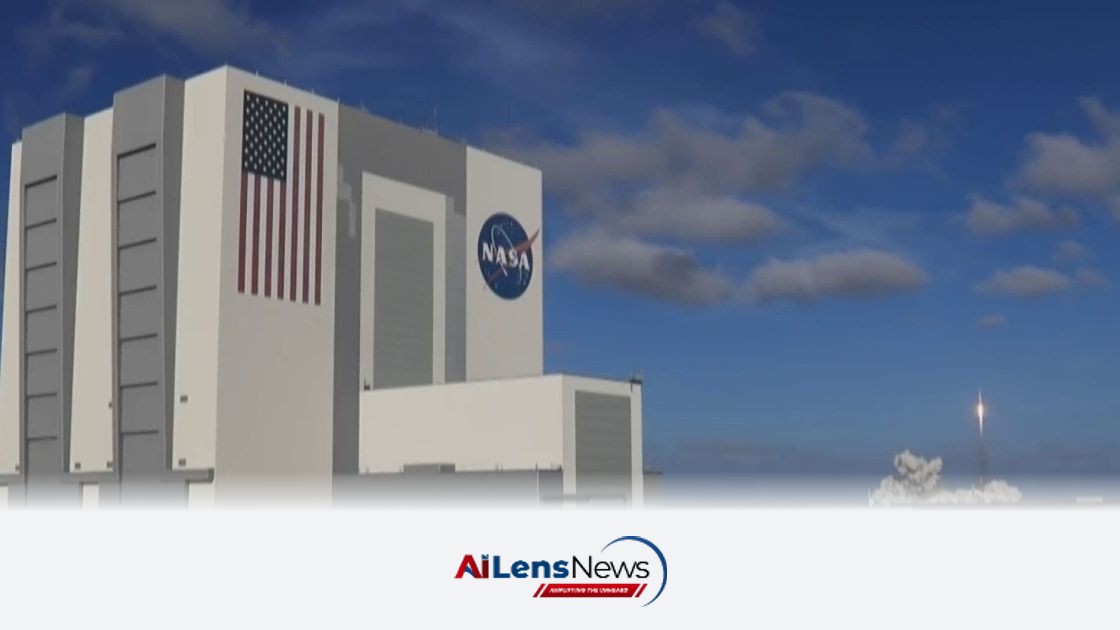



Jared Isaacman shares insights on the Nancy Grace Roman Telescope and its potential to revolutionize our understanding of the universe.
Washington DC, United States Aug 29, 2026 ALN: In a recent interview with NBC News' Gadi Schwartz, NASA administrator Jared Isaacman elaborated on the upcoming launch of the Nancy Grace Roman Telescope. This groundbreaking telescope is set to enhance our understanding of the universe significantly.
The Nancy Grace Roman Telescope, named after the pioneering astronomer, is designed to explore the cosmos in unprecedented detail. Roman was a key figure in the development of space-based astronomy and played a significant role in the Hubble Space Telescope project. The Roman Telescope is expected to build on the legacy of Hubble by offering a broader field of view and more advanced capabilities.
Isaacman emphasized that this telescope will allow scientists to investigate dark energy, exoplanets, and the formation of galaxies, potentially answering some of the most profound questions in astrophysics. Dark energy, which is thought to make up approximately 68% of the universe, is a mysterious force that is driving the accelerated expansion of the cosmos. Understanding its nature could fundamentally change our comprehension of physics and the universe's fate.
The Roman Telescope's wide field of view will enable it to capture more data than previous telescopes, making it a crucial tool for astronomers. This capability will facilitate a deeper understanding of the universe's structure and evolution. For instance, the telescope will be able to survey large areas of the sky in a single observation, significantly increasing the efficiency of astronomical research. This is particularly important for studies involving transient phenomena, such as supernovae and gamma-ray bursts, which require rapid observations over wide areas to understand their origins and impacts.
In addition to discussing the Roman Telescope, Isaacman touched upon the Artemis III mission, scheduled for launch in 2027. This mission aims to return humans to the Moon and establish a sustainable presence there, paving the way for future Mars exploration. The Artemis program is a cornerstone of NASA's efforts to promote lunar exploration as a stepping stone for future missions to Mars and beyond, with the goal of sending the first woman and the next man to the lunar surface.
Isaacman also mentioned SpaceX's new Louisiana Starbase, highlighting the collaboration between NASA and private companies in advancing space exploration. This partnership is expected to accelerate technological advancements and reduce costs associated with space missions. The collaboration with private entities has already proven beneficial, as seen in the successful launches of crewed missions to the International Space Station (ISS) through the Commercial Crew Program. These partnerships not only enhance NASA's capabilities but also stimulate innovation in the aerospace sector.
As NASA prepares for these significant launches, the excitement surrounding the Roman Telescope and Artemis III continues to grow. Isaacman’s insights provide a glimpse into the future of space exploration and our quest to understand the universe. The Roman Telescope is expected to be a game-changer in the field of astronomy, with its advanced capabilities allowing scientists to conduct extensive surveys of the night sky, leading to discoveries that could reshape our understanding of the cosmos.
One of the most anticipated aspects of the Roman Telescope's mission is its ability to detect and characterize exoplanets—planets outside our solar system. By utilizing a technique known as gravitational microlensing, the telescope will be able to identify planets that might otherwise be obscured by their parent stars. This could lead to the discovery of Earth-like planets in habitable zones, raising questions about the potential for life beyond our planet.
Moreover, the Roman Telescope's contributions to the study of galaxy formation and evolution are expected to be profound. By observing galaxies at various stages of their development, astronomers hope to gain insights into how galaxies like our Milky Way formed and evolved over billions of years. This research could also shed light on the role of dark matter in the universe, as galaxies are thought to be influenced significantly by this elusive substance.
In conclusion, the Nancy Grace Roman Telescope represents a pivotal advancement in astronomy, promising to unlock new mysteries of the cosmos and enhance our knowledge of the universe. As it prepares for its launch, the scientific community eagerly anticipates the wealth of data it will provide, which could lead to breakthroughs in our understanding of fundamental astrophysical phenomena. The future of space exploration, bolstered by the collaboration between NASA and private companies, signals a new era of discovery that could redefine humanity's place in the universe.
To learn more about the latest developments in Space & Astronomy, stay updated with our exclusive reports and analyses on AILensNews.
During a visit to NASA's Mission Control, President Trump announced the establis…

Space weather significantly affects technologies on Earth, prompting a dedicated…
As NASA transitions from the International Space Station, it is adapting astrona…
China has postponed the Chang’e-7 lunar mission, originally set to explore the m…
The Northeast India Space Workshop 2026 aims to position the region as a key pla…