

More
Checking your session
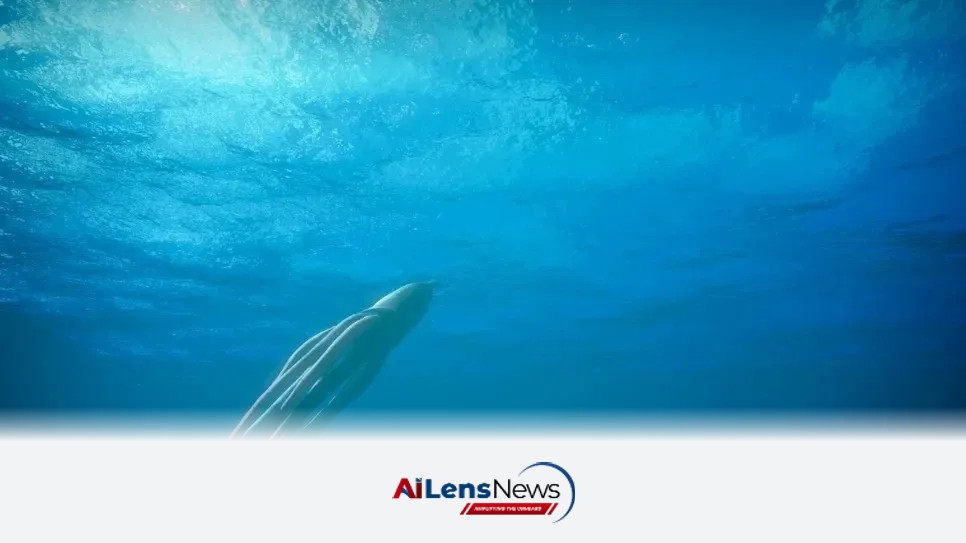



A groundbreaking video reveals the elusive giant squid in its natural habitat for the first time, shedding light on this mysterious deep-sea creature.
Kohima, India Aug 26, 2026 ALN: Few ocean animals have spent so long suspended between reality and myth as the giant squid. This enigmatic creature, often depicted in folklore and literature as a monstrous sea beast, has captivated the imagination of scientists and storytellers alike for centuries. The enduring mystery behind these creatures resurfaced recently after archival footage, identified as the first recording of a live giant squid, was shared on social media, sparking renewed interest in the biology and ecology of this elusive species.
The Instagram post highlights a significant breakthrough that occurred in 2006, when Japanese researchers used bait near the Ogasawara Islands to capture the first footage of a living giant squid. This marked a pivotal moment in marine biology, as scientists had previously only been able to study this species through carcasses that washed ashore or were found in the stomachs of predators. The video’s poster, Histopedia, noted, “These animals can reach around 43 feet in length, yet they spend their lives in the dark depths of the ocean, making encounters extremely rare.” This observation emphasizes not only the size of the giant squid but also the challenges researchers face in studying such deep-sea organisms.
The post also mentioned two previous sightings that helped shape our understanding of this rare animal. In 2012, scientists recorded a live giant squid in its natural deep-sea habitat, revealing its elusive behavior and massive size. This sighting was groundbreaking, as it provided insights into the giant squid's locomotion and hunting strategies. In 2019, another expedition documented a living giant squid in the Gulf of Mexico, further contributing to the growing body of knowledge about this species and its distribution across various oceanic regions.
With its enormous size and the fact that it is hard to find, the giant squid has fascinated scientists and storytellers for generations. It lives far below the sunlit surface, where pressure is intense, light is limited, and direct observation is quite rare. The depths of the ocean, often referred to as the last frontier on Earth, remain largely unexplored, making the study of creatures like the giant squid particularly challenging.
The first confirmed footage of a living individual took generations to capture despite centuries of speculation and folklore. Washed-up remains could show scientists what the animal looked like, but not how it hunted, moved, or behaved in its natural environment. Researchers have made significant headway in understanding these animals by combining deep-sea exploration with advanced imaging tools and technologies. That progress can be seen in the timeline itself, from the bait-assisted 2006 footage near the Ogasawara Islands to live recordings gathered during the 2012 and 2019 expeditions.
These methods give scientists the opportunity to study rare animals without the guesswork and with more direct evidence. Each confirmed sighting can add to what researchers know about the giant squid's range, behavior, and habitat. Such information is crucial for understanding the ecological role of this species in the marine ecosystem and its interactions with other organisms.
Furthermore, the giant squid's elusive nature has made it a subject of interest not only in scientific circles but also in popular culture. The creature has been depicted in various forms of media, including movies, books, and documentaries, often symbolizing the unknown and the mysteries of the deep sea. This cultural fascination has, in turn, spurred public interest in marine conservation and the importance of protecting ocean habitats.
In addition to the scientific implications, the giant squid's story reflects broader themes in marine research and conservation. As human activities continue to impact ocean ecosystems—through pollution, overfishing, and climate change—the need for comprehensive studies of marine life becomes increasingly urgent. Understanding the life cycle, reproductive patterns, and habitat preferences of species like the giant squid can inform conservation strategies and help protect these creatures from potential threats.
Moreover, the challenges faced by researchers in studying deep-sea organisms underscore the importance of technological advancements in marine exploration. Innovations such as remotely operated vehicles (ROVs), advanced sonar mapping, and deep-sea submersibles have expanded our capabilities to explore previously inaccessible areas of the ocean. These technologies not only enhance our understanding of species like the giant squid but also contribute to the discovery of new marine life and ecosystems.
In a different context, the article also recounts an experience shared by Capt. Damon Sacco and his anglers aboard his boat, the Castafari, as they embarked on a fishing trip off the coast of Massachusetts. Initially, their expedition yielded little success, with only one yellowfin tuna caught after long hours of trolling. However, a change in location led them to a more fruitful area where they encountered a large school of tuna feeding on squid. This observation highlights the interconnectedness of marine life and the food web dynamics within ocean ecosystems.
Sacco’s experience illustrates how the presence of certain species, like squid, can attract larger predators, such as marlin. As he described, “That’s what attracted a giant marlin,” emphasizing the ecological relationships that exist within the ocean. His anglers had just finished catching and boating several tuna when they spotted an enormous fin slicing through the water toward the boat. Initially mistaking it for a shark, the excitement grew when they caught a glimpse of a neon-blue flash in the clear water, hinting at the presence of a larger predator.
This anecdote serves as a reminder of the dynamic nature of marine environments and the ongoing interactions between various species. It underscores the importance of continued research and exploration to deepen our understanding of these complex relationships. As scientists and anglers alike seek to uncover the mysteries of the ocean, the giant squid remains a symbol of the vast, uncharted territories that still lie beneath the waves.
To learn more about the latest developments in Environment & Climate, stay updated with our exclusive reports and analyses on AILensNews.

Researchers have identified a new grass species, Eremochloa bimaculata, in Assam…

A remarkable find in Assam reveals a new species of blind, blood-red eel, highli…

A rare flowering plant, Rungia mastersii, has been rediscovered in Assam after 1…

On Space Exploration Day, President Trump highlights America's space achievement…

Recent findings from ancient cave sites in Northeast India suggest that the regi…