

More
Checking your session
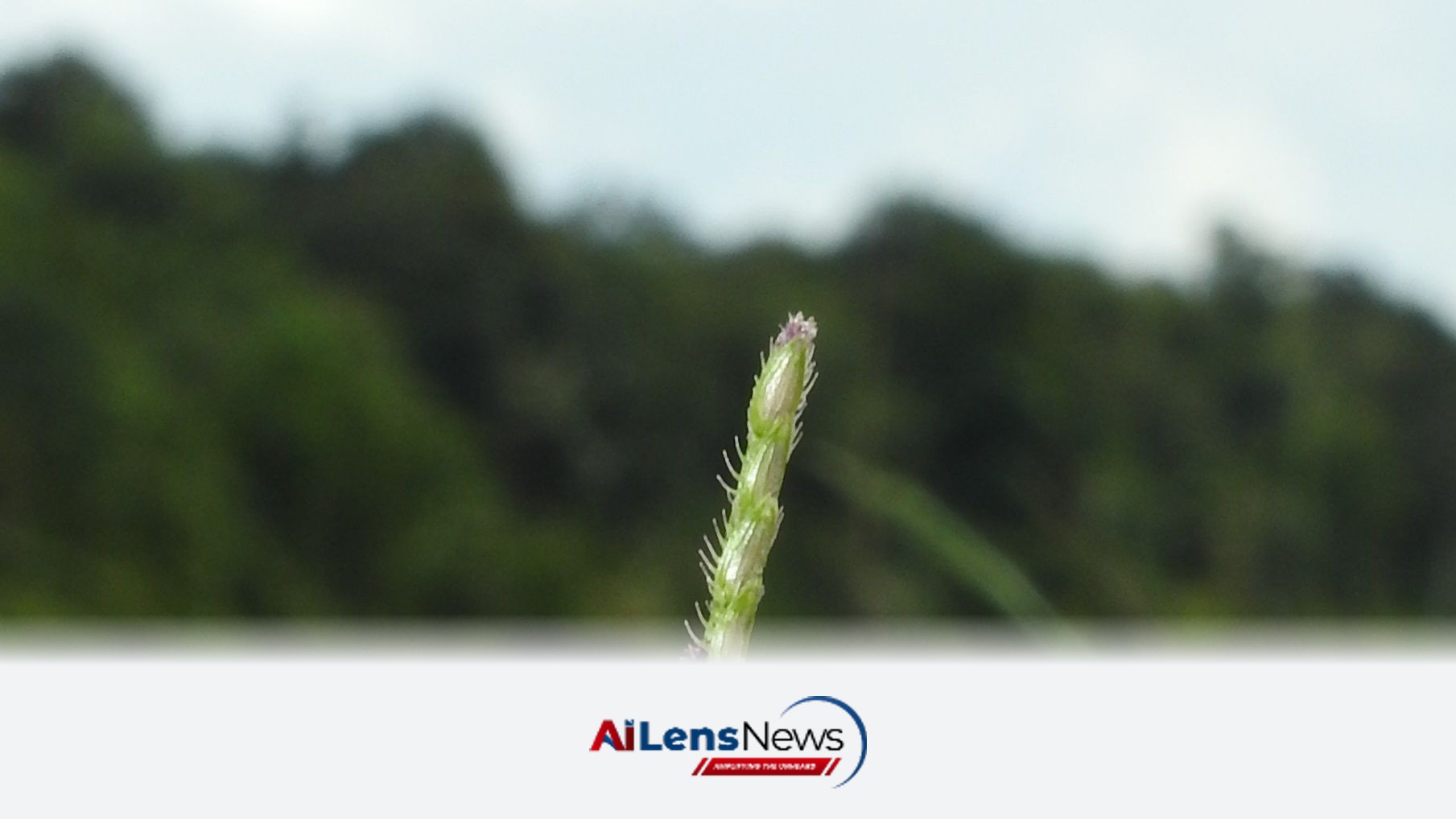



Researchers have identified a new grass species, Eremochloa bimaculata, in Assam's Karbi Anglong, marking its first record in India.
Kohima, India Aug 27, 2026 ALN: Guwahati: A seemingly ordinary grass growing in cracks and debris among rocks along the Kopili river in Assam’s Karbi Anglong has turned out to be a significant botanical find, with researchers recording the species in India for the first time.
Researchers from the CSIR-North East Institute of Science and Technology (NEIST), Jorhat, identified the grass as Eremochloa bimaculata Hack. during floristic surveys in Karbi Anglong between 2023 and 2025. Their findings have been published in the National Academy Science Letters.
The researchers, Dr. Debolina Dey and Dr. Mohan Lal, said the finding represents a new record for India, not a species new to science. E. bimaculata was described in 1889 and has previously been reported from Cambodia, south-central China, Myanmar, Thailand, Vietnam, New Guinea, and parts of Australia. The Karbi Anglong record now extends its known distribution to India.
The genus Eremochloa is notable for its diverse range of species, many of which have adapted to various ecological niches across Asia and Australia. This adaptability has made them of interest not only for their ecological roles but also for their potential applications in agriculture and landscaping. Some species in the genus are used in turf and have been associated with soil and environmental protection, highlighting their importance in both natural ecosystems and human-made environments.
What makes the discovery particularly notable is the specialised habitat in which the grass was found. Researchers encountered E. bimaculata growing in rock crevices and rock debris along the Kopili riverside, a habitat described in the study as chasmophytic and riparian. This specific environment plays a crucial role in supporting biodiversity, as it offers unique microhabitats that can sustain various plant and animal species. The species was recorded at an elevation of about 92 metres above sea level, indicating its preference for specific altitudinal conditions.
Identifying the grass required more than a comparison of its appearance with known species. The researchers carried out detailed morphological studies and compared their specimens with existing taxonomic literature, herbarium material, and digital type specimens. This rigorous approach underscores the complexity of plant identification and the importance of thorough research in confirming species classifications.
The species closely resembles Eremochloa zeylanica, but the researchers distinguished it on the basis of several morphological characteristics, including the shorter setae on the lower glume. Such distinctions are vital in the field of botany, as they contribute to the understanding of plant diversity and evolution within the genus.
The ecological implications of this discovery are noteworthy. The study notes that several Eremochloa species can contribute to soil-erosion control, particularly in areas exposed to heavy rainfall. This is particularly relevant in regions like Northeast India, where monsoonal rains can lead to significant soil degradation and loss. E. bimaculata is also described as tolerant of acidic, drought-prone, and low-fertility soils, suggesting potential applications in restoring vegetation on degraded landscapes. Such characteristics could make it a candidate for use in reforestation projects or in soil conservation efforts, which are crucial for maintaining ecological balance and supporting local agriculture.
However, the study does not assess the conservation status of E. bimaculata in India. Researchers recorded around 55 individuals at the collection site, but it remains unclear how widely the species occurs elsewhere in the country. This lack of data raises concerns about the species' vulnerability and the need for further research to understand its distribution and population dynamics. Conservation efforts may be necessary to ensure that this newly recorded species does not face threats from habitat destruction or climate change.
Voucher specimens have been deposited in the herbarium facilities of the Botanical Survey of India in Shillong and Itanagar, providing a permanent scientific record of the species’ occurrence in India. This step is critical for future research and for monitoring the species over time, as it allows scientists to revisit the specimens for further study and comparison.
The discovery adds to the growing botanical record from Northeast India, where surveys of specialised and relatively poorly explored habitats continue to reveal species that had previously gone undocumented in the country. The region's rich biodiversity is attributed to its unique climatic conditions, varied topography, and ecological niches, making it a hotspot for botanical research. Continued exploration and documentation of plant species in this area are essential for enhancing our understanding of biodiversity and for informing conservation strategies.
In conclusion, the identification of Eremochloa bimaculata in Karbi Anglong not only marks a significant addition to the flora of India but also emphasizes the importance of ongoing botanical research in understanding and preserving the rich biodiversity of Northeast India. As researchers continue to explore this region, it is likely that more discoveries will emerge, contributing to our knowledge of plant species and their ecological roles.
To learn more about the latest developments in Environment & Climate, stay updated with our exclusive reports and analyses on AILensNews.

A groundbreaking video reveals the elusive giant squid in its natural habitat fo…

A remarkable find in Assam reveals a new species of blind, blood-red eel, highli…
A rare flowering plant, Rungia mastersii, has been rediscovered in Assam after 1…

On Space Exploration Day, President Trump highlights America's space achievement…

Recent findings from ancient cave sites in Northeast India suggest that the regi…