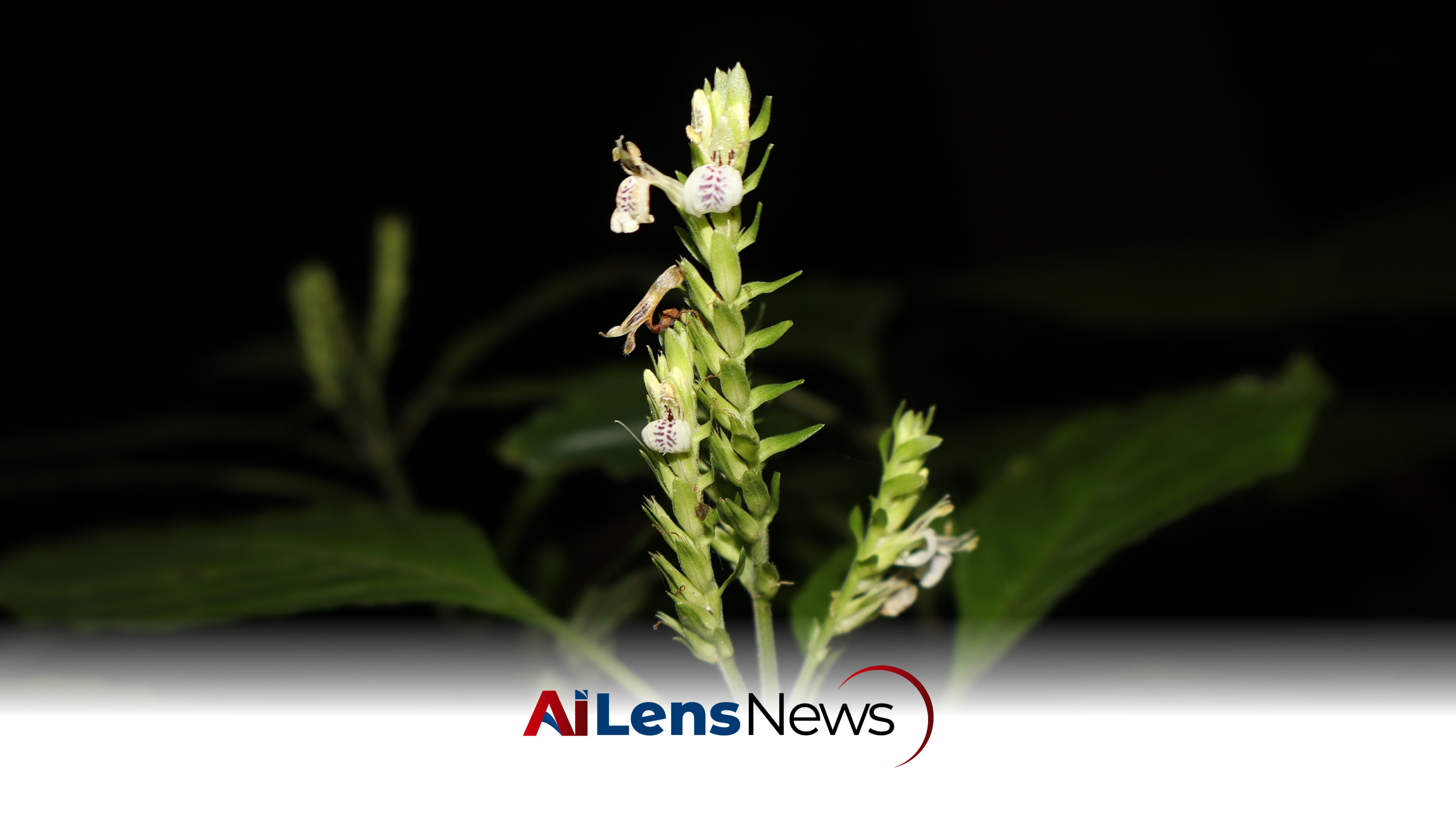


A rare flowering plant, Rungia mastersii, has been rediscovered in Assam after 180 years, offering new opportunities for study and conservation.
Kohima, India Jul 24, 2026 ALN: Guwahati: A rare endemic flowering plant, missing from scientific records for 180 years, has been rediscovered in Assam, giving botanists a second chance to study and conserve a species once feared lost. This rediscovery highlights not only the resilience of nature but also the importance of continued exploration and conservation efforts in the region.
Researchers from Assam University have rediscovered Rungia mastersii, an endemic plant known only from a single specimen collected by British botanist J.W. Masters in 1845. The original specimen was collected during a period when botanical exploration was thriving, particularly in the rich biodiversity of India. Masters' work contributed significantly to the understanding of the flora in the region, but after his collection, Rungia mastersii was never recorded again, making the latest find one of the most significant botanical rediscoveries in the Northeast in recent years. The study has been published in the international journal Feddes Repertorium, which focuses on the documentation and taxonomy of plant species.
The herbaceous genus Rungia Nees (Acanthaceae) comprises 88 accepted species worldwide and is distributed mainly across tropical Africa, tropical to subtropical Asia, and the southern Arabian Peninsula. Assam is home to four species: Rungia mastersii, R. pectinata, R. repens and R. tinsukiaensis. The presence of multiple species within the same region underscores the ecological diversity that Assam harbors, which is a crucial aspect of the region's environmental health and resilience.
Researchers Kangkan Kumar Das and Debjyoti Bhattacharyya made the rediscovery during field surveys in the Jatinga Hills of Dima Hasao district, where they found a small population of the plant growing on moist, shaded rocky slopes beside a stream at elevations between 900 and 1,250 metres. The specific habitat conditions—moisture, shade, and elevation—are critical for the survival of many endemic species, and the discovery of this plant in such a specific locale raises questions about the ecological requirements and potential threats to its habitat.
What makes the discovery even more striking is that the species survived unnoticed despite decades of botanical exploration in Assam. The lack of previous sightings suggests that either the plant is exceedingly rare or that it has specific habitat requirements that make it difficult to locate. Until now, scientists knew it only from a single herbarium sheet preserved at the Botanical Survey of India, and the exact location where it was first collected remained a mystery. The Jatinga Hills record is the first confirmed locality for the species, which highlights the need for more comprehensive botanical surveys in unexplored or under-explored areas.
The researchers located only one population of around 40 plants, suggesting the species is extremely rare. Such a small population raises urgent concerns about the plant's long-term viability and genetic diversity. Because so little is known about its distribution, it has not yet been assessed under the IUCN Red List, prompting scientists to call for urgent surveys to determine whether more populations survive in Assam’s forests. The IUCN Red List is a critical tool for conservationists, providing information on the global conservation status of species, and the absence of Rungia mastersii from this list indicates a gap in conservation awareness and action.
The study also documents the plant’s habitat, flowering pattern, and identifying characteristics for the first time since its original discovery, providing a valuable reference for future botanical surveys. Understanding the flowering patterns and habitat preferences is essential for developing conservation strategies, as it can inform how to protect the species from potential threats such as habitat destruction, climate change, and invasive species.
“The species is currently known from a single surviving population in the world, raising urgent concerns over its future survival amid the continuing degradation of the region’s forest ecosystems,” said Kangkan Das. This statement reflects the broader challenges faced by many endemic species in Northeast India, where rapid development, deforestation, and climate change are putting immense pressure on the region's biodiversity.
For conservationists, the rediscovery is more than a scientific curiosity. It is a reminder that the forests of Northeast India continue to conceal species that have escaped notice for generations, reinforcing the region’s status as one of India’s richest—and least explored—biodiversity hotspots. The Northeast region of India is characterized by its unique climatic conditions, topography, and cultural diversity, which contribute to a high level of endemism. However, the region is also facing significant environmental challenges, including habitat loss due to agriculture, urbanization, and infrastructure development.
The rediscovery of Rungia mastersii serves as a call to action for researchers, conservationists, and policymakers to prioritize the protection of such rare species and their habitats. It emphasizes the need for collaborative efforts to conduct thorough surveys, establish conservation programs, and raise awareness about the importance of preserving biodiversity. The continuation of such efforts is vital not only for the survival of Rungia mastersii but also for the myriad of other species that share its habitat and contribute to the ecological balance of the region.
In conclusion, the rediscovery of Rungia mastersii in Assam after 180 years is a remarkable event that underscores the significance of botanical exploration and conservation efforts. It highlights the intricate connections between species and their environments and the urgent need to safeguard the rich biodiversity of Northeast India. As research and conservation initiatives continue, there is hope that more hidden treasures of the plant kingdom will be uncovered, leading to a greater understanding of our planet's natural heritage.
To learn more about the latest developments in Environment & Climate, stay updated with our exclusive reports and analyses on AiLensNews.

