

More
Checking your session
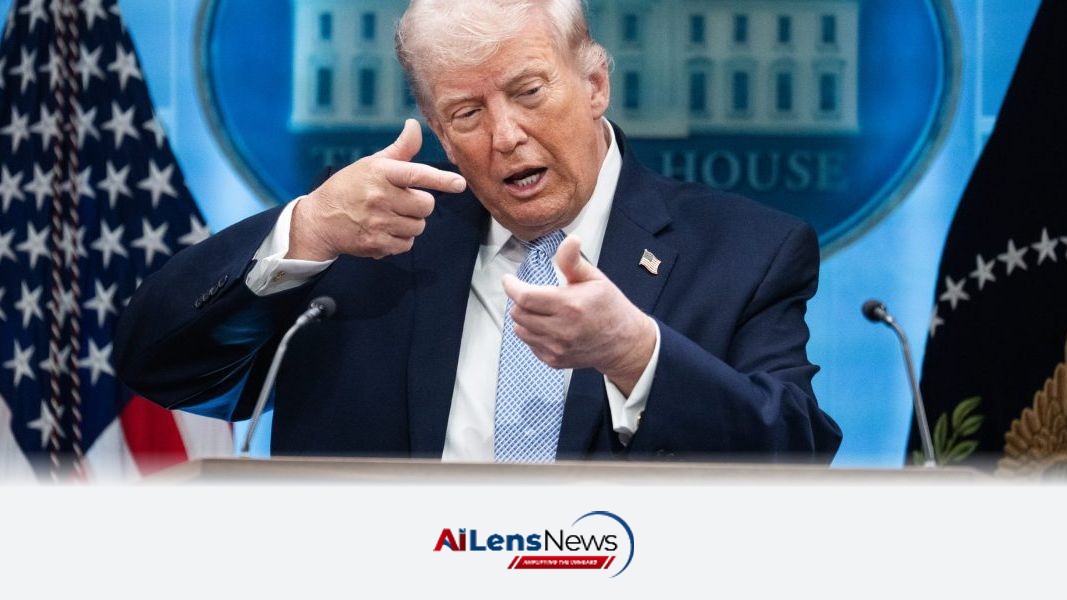



The U.S. Justice Department is reviving prize law, a centuries-old maritime legal framework, to facilitate the seizure of Iranian oil tankers amid ongoing tensions.
Washington DC, United States Aug 29, 2026 ALN: The Trump administration is reviving a centuries-old legal tradition that would allow it to more easily seize Iranian oil tankers and sell off their assets. This move represents a strategic shift in how the U.S. government can engage with maritime law in the context of ongoing tensions with Iran, particularly regarding the nation’s oil exports, which have been a focal point of U.S. sanctions and military strategy.
Aaron Reitz, the U.S. Attorney in the Southern District of Texas, confirmed the revival of prize law, a set of rules allowing military forces to seize enemy vessels. “Our national security interests may require the United States military to seize vessels or cargo supporting the enemy during military conflict. If that happens, our federal courts must be ready to adjudicate the disposition of these captured vessels and cargo,” he stated. “Prize law is an ancient body of maritime law—already codified in statute but which we are now reviving—that sets the rules for how seized maritime property is condemned, returned, or disposed of.”
Invoking prize laws would allow U.S. forces to bolster the naval blockade of Iran and recoup costs from the war. The news was first reported by Bloomberg Law, highlighting the administration's intent to leverage historical legal frameworks to address contemporary geopolitical challenges.
Prize law contrasts sharply with civil seizure laws that require the U.S. government to identify a statutory violation of a vessel and establish jurisdiction over that violation. Such civil cases often entail extensive litigation, which can be time-consuming and resource-intensive. According to Michael Frevola, a maritime litigation partner at Holland & Knight LLP, the traditional civil seizure process could significantly delay any action against Iranian vessels.
By comparison, prize law does not require a captor to have a warrant or tie a vessel’s seizure to a violation of an existing statute. This legal framework allows the Department of Defense, typically through military force, to seize an enemy vessel, thereby streamlining the operational process of taking control of maritime assets that are deemed to support hostile activities.
Prize laws have existed since the Middle Ages and have been integrated into the U.S. legal canon since the country’s founding. The Constitution explicitly outlines rules for capturing and confiscating enemy vessels during times of war in its Captures Clause. This historical context underscores the longstanding tradition of maritime law in U.S. governance and its relevance in contemporary conflicts.
During the 19th century, President Abraham Lincoln invoked the Prize Act of 1812 to blockade Confederate seaports—an act that was contested and ultimately upheld by the Supreme Court. This precedent illustrates how prize law has been used in significant military actions in U.S. history. It was most recently invoked during the Spanish-American War, which legitimized the U.S. naval detainment of Spanish vessels as prizes of war, further entrenching the legal framework within military operations.
Reitz did not specify if the Justice Department will invoke the Prize Act of 1812, the Captures Clause, or another law. However, the less complicated legal process for capturing an enemy vessel that prize law affords would have clear benefits for the Trump administration. The ability to quickly seize and sell vessels and their cargo could provide a financial incentive, particularly as the administration has shown a priority for generating revenue through various means.
“There’s definitely a financial interest in being able to sell the oil and being able to sell the vessel and then just put that money into the coffers of the United States, which is another thing that this administration has shown is a priority,” Raymond Waid, a veteran naval officer and maritime lawyer at Liskow and Lewis, noted. This financial dimension adds another layer to the revival of prize law, as it intertwines military action with economic strategy.
Legal experts have warned that while reviving prize law could theoretically expedite the process of seizing Iranian ships, they anticipate ample legal complications that could hamper the effectiveness of this legal strategy. One significant concern is the sheer age of the law, which has not been invoked since the Spanish-American War in 1898. The lack of contemporary application raises questions about how well it would hold up against modern legal challenges.
“It’s not like the DOJ has some really veteran Prize Act litigators on their staff,” Frevola quipped. “So we’d have to conduct a séance to wind up getting serious counsel in terms of this.” This humorous remark highlights the potential difficulties the Justice Department may face in navigating the complexities of prize law, particularly given the absence of recent precedents and the specialized knowledge that may be required to litigate under this framework.
Moreover, the invocation of prize law could provoke international legal challenges and diplomatic repercussions. Countries that view the U.S. actions as aggressive or unlawful may respond with their own measures, potentially escalating tensions in an already volatile region. The implications of such actions extend beyond the immediate legal context and could influence U.S.-Iran relations, as well as the broader geopolitical landscape involving other nations interested in the stability of oil supply routes.
As the Trump administration moves forward with the revival of prize law, it will need to carefully consider not only the legal and operational implications but also the potential diplomatic fallout. The balance between asserting military authority and maintaining international relationships will be critical in determining the long-term effectiveness of this strategy in addressing the challenges posed by Iran and its maritime activities.
To learn more about the latest developments in Political Controversies, stay updated with our exclusive reports and analyses on AILensNews.

Former Ukrainian Defense Minister Mykhailo Fedorov has accepted an advisory role…

In a recent Assembly session, the Meghalaya government refrained from addressing…

Northern Ireland Secretary Chris Bryant asserts that Prime Minister Andy Burnham…

The SNP's recent approach to independence has sparked criticism from within its …

The Iranian Revolutionary Guard Corps asserts its dominance over the Strait of H…