

More
Checking your session
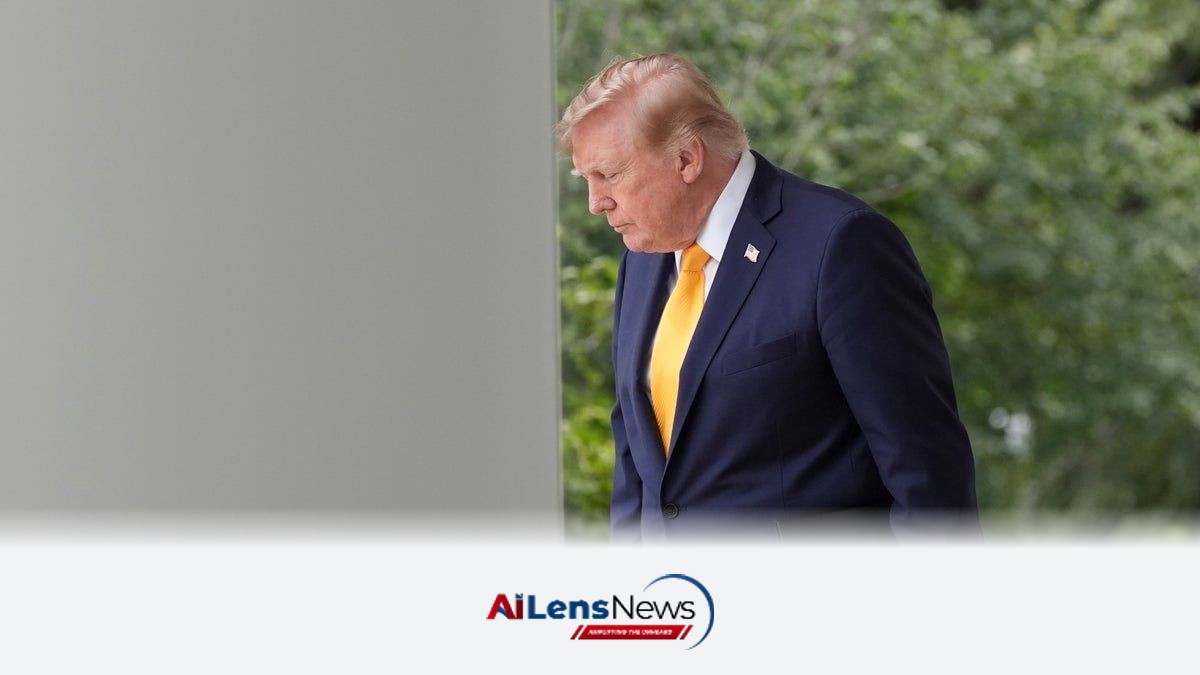



Avi Loeb, a key advisor on UFOs, suggests that extraterrestrial visitors would not be concerned about Earth's political divisions, including the presidency.
London, United Kingdom Aug 27, 2026 ALN: In recent years, the topic of unidentified flying objects (UFOs), now more commonly referred to as Unidentified Aerial Phenomena (UAPs), has garnered significant attention from both the public and government officials. This renewed interest has been particularly pronounced during the Trump administration, which has made strides in releasing previously classified information related to UFO sightings and encounters. The administration's efforts are seen as part of a broader initiative to promote transparency and public awareness regarding UAPs, a subject that has long been shrouded in secrecy and speculation.
President Trump has been vocal about his commitment to making UFO-related materials available to the public. This approach aligns with a growing trend among various governments around the world to declassify and disclose information about UFOs, recognizing the public's fascination with the possibility of extraterrestrial life. The release of such information is not only a matter of transparency but also a response to years of speculation and conspiracy theories surrounding UFOs, which have captured the imaginations of many.
Avi Loeb, a prominent astrophysicist from Harvard University, has been appointed as the leader of the UAP Science Advisory Council, a body formed to provide guidance and recommendations on the scientific investigation of UAPs. His perspective on the potential indifference of extraterrestrial beings towards human political structures raises intriguing questions about how humanity perceives its own significance in the universe. Loeb's assertion that if aliens were to visit Earth, they would likely be unconcerned with human politics or national borders reflects a broader philosophical debate about humanity's place in the cosmos.
Loeb's comments highlight a critical distinction between human affairs and the vastness of interstellar space. He suggests that any advanced civilization capable of interstellar travel would prioritize exploration and scientific inquiry over the political divisions that characterize human societies. This perspective invites reflection on the nature of intelligence and the values that guide civilizations, both human and hypothetical extraterrestrial. The implication is that while humans may view political power and territorial claims as paramount, these concerns may seem trivial to a species with the technological capability to traverse the stars.
Despite the potential for groundbreaking discoveries regarding extraterrestrial life, Loeb acknowledges that any such finding would significantly shape President Trump's legacy. The discovery of intelligent life beyond Earth would not only redefine humanity's understanding of its place in the universe but also have profound implications for global politics, religion, and science. Such a momentous event would likely transcend typical political achievements and be remembered for eons, fundamentally altering human history and our collective worldview.
The UAP Science Advisory Council was announced in June as part of a broader initiative by the Trump administration to address the growing public interest in UFOs and the need for a structured approach to investigate and understand UAPs. This initiative includes the Pentagon's release of several tranches of information regarding UAP encounters, which, while not providing definitive evidence of extraterrestrial life, have nonetheless sparked considerable debate and curiosity.
As of now, the Pentagon has released five sets of documents that contain records of various encounters with UAPs, some of which date back several decades. These releases have included videos and reports from military personnel who have witnessed unexplained aerial phenomena. However, the materials have not yet disclosed any conclusive evidence that would confirm the existence of extraterrestrial life or advanced technology beyond human capabilities.
In addition to releasing information, the Trump administration is also taking steps to encourage government whistleblowers to come forward with information regarding UAPs. This initiative aims to create a safer environment for individuals with knowledge of UAP-related matters to share their experiences without fear of repercussions, such as violating non-disclosure agreements or facing punitive actions. By fostering an atmosphere of openness, the administration hopes to gather more insights into UAPs and facilitate a more comprehensive understanding of these phenomena.
However, Loeb's leadership has not been without controversy. His selection has drawn criticism from some within the scientific community who argue that his previous claims regarding the existence of alien life may be premature. Critics, such as Steve Desch, an astrophysicist at Arizona State University, have expressed skepticism about the efficacy of Loeb's approach, suggesting that it may not lead to meaningful advancements in the quest to understand UAPs. This division within the scientific community underscores the complexity of the discourse surrounding UFOs, where differing opinions can lead to heated debates about the validity of research and the interpretation of data.
Loeb has stated that he approaches the investigation of UAPs with a mindset that considers them as potentially man-made phenomena until proven otherwise. This stance reflects a scientific rigor that emphasizes the need for evidence-based conclusions. By advocating for the declassification of various UAP-related materials, Loeb aims to enhance transparency and facilitate further research into these enigmatic occurrences.
The ongoing exploration of UAPs represents not only a scientific challenge but also a cultural phenomenon that engages the public's imagination. As the conversation around UFOs continues to evolve, it raises fundamental questions about humanity's understanding of the universe, our technological capabilities, and the possibility of life beyond our planet. The implications of such discoveries could reverberate through society, influencing everything from scientific inquiry to philosophical discourse and even spiritual beliefs.
In conclusion, the Trump administration's efforts to address UAPs through the establishment of the UAP Science Advisory Council and the release of classified information reflect a significant shift in how governments approach the topic of unidentified aerial phenomena. As scientists like Avi Loeb navigate the complexities of this field, the potential for groundbreaking discoveries looms on the horizon. Whether or not humanity is alone in the universe remains an open question, one that continues to captivate the minds of scientists, policymakers, and the general public alike.
To learn more about the latest developments in Science & Environment, stay updated with our exclusive reports and analyses on AILensNews.

President Donald Trump awarded the Congressional Space Medal of Honor to the Art…

Cave Creek's mayor likens the water crisis to a meteor strike, highlighting the …

During a meeting with space startup leaders, PM Modi emphasized the need to crea…
Prime Minister Narendra Modi emphasizes the need for a global aura around India'…

A new initiative in Assam seeks to enhance elephant habitats by managing invasiv…