

More
Checking your session
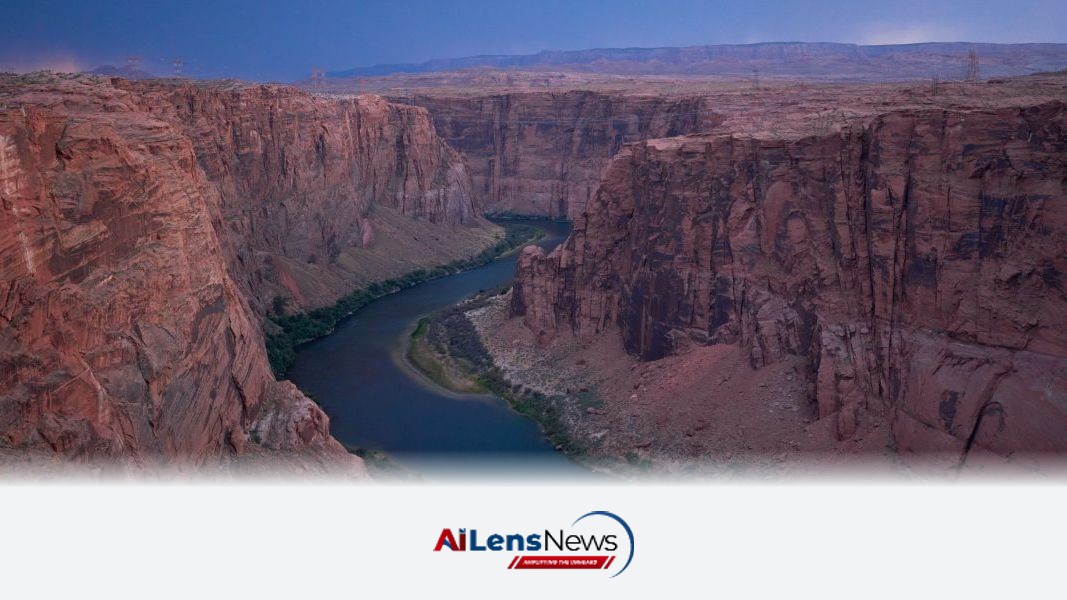



Cave Creek's mayor likens the water crisis to a meteor strike, highlighting the urgency of reducing water use as federal plans unfold.
Phoenix, United States Aug 30, 2026 ALN: On the outskirts of Phoenix, a small town with a huge reliance on the Colorado River has capped growth, revived old wells, and struck water deals. This proactive approach reflects the urgent need for sustainable water management in a region increasingly threatened by severe drought and climate change. The Colorado River, a critical water source for millions, has been under significant stress, prompting local leaders like Cave Creek Mayor Robert Morris to take drastic measures.
Mayor Morris has expressed deep concerns about the long-term viability of Cave Creek, a community of about 5,000 residents. Despite the town's efforts to secure its water supply, Morris cannot shake the real possibility that these measures may not be sufficient to keep the desert community afloat well into the future. A recent federal plan aimed at addressing the escalating crisis in the Colorado River basin has only added to his worries, as it may impose further restrictions on water usage.
Cave Creek relies almost exclusively on the Colorado River for its water supply, which serves approximately 40 million people across the western United States. However, this vital resource has been dwindling due to a combination of factors, including climate change, increasing demand from a growing population, and overuse of the river's waters. As a result, the town has already been compelled to implement cuts to its water allocation this year, and under the new federal plan, more reductions may be on the horizon.
In a striking analogy, Morris likened the situation to planning for a meteor strike. "You can see it coming, but you can’t get out of the way and you don’t know what the damage is going to be,” he remarked, capturing the sense of impending crisis that many communities in the region are feeling.
The uncertainty surrounding water availability extends beyond Cave Creek, affecting seven U.S. states, numerous tribal nations, and Mexico. Farmers in the region are grappling with difficult decisions regarding which crops are worth the investment given the unpredictable water supply. Cities like Phoenix may face the unprecedented prospect of losing some municipal and industrial water supplies, forcing them to rely on backup sources that could be more expensive and less reliable for residents.
The situation has escalated recently, with Nevada taking legal action by suing the Interior Department and the U.S. Bureau of Reclamation. The state argues that basic water needs in the Las Vegas region will go unmet if it is forced to absorb planned reductions of up to 70% of its Colorado River water over the next decade. This lawsuit underscores the high stakes involved in the ongoing water crisis and highlights the contentious nature of water rights and allocations in the region.
In response to inquiries regarding the lawsuit, the Bureau of Reclamation has stated that it does not comment on ongoing litigation. However, the broader implications of these legal battles could have lasting effects on water management strategies across the West.
Tom Buschatzke, director of the Arizona Department of Water Resources, has expressed concern about the growing uncertainty surrounding water availability. "The uncertainty is going to continue to build in the wrong direction," he stated, emphasizing the need for collaborative solutions to address the challenges facing the Colorado River system.
In the U.S. West, water is primarily stored in reservoirs, aquifers, and snowpacks, which serve as critical buffers against drought. However, a record snow drought has resulted in significantly less water available to recharge these essential sources. The two largest reservoirs in the country, Lake Mead and Lake Powell, are particularly indicative of the health of the Colorado River system. Alarmingly, both reservoirs hit record lows this month, reflecting the severity of the ongoing water crisis.
In addition to Mead and Powell, eight other reservoirs operated by the Bureau of Reclamation have recently recorded their lowest levels in at least the last 30 years. Among these is Elephant Butte Lake in New Mexico, a crucial water source for agricultural irrigation in southern New Mexico, Texas, and Mexico. The Green Mountain Reservoir serves the western part of Colorado, while the Guernsey Reservoir in Wyoming is vital for farmers in eastern Wyoming and western Nebraska. The declining water levels in these reservoirs signal a broader trend of water scarcity that could have far-reaching implications for agriculture, industry, and municipal water supplies.
Under the Bureau of Reclamation’s plan, California, Nevada, and Arizona are expected to collectively reduce their water use by 1.25 million acre-feet (approximately 1.54 billion cubic meters) annually over the next two years. This reduction is enough to fill over 600,000 Olympic-sized swimming pools and underscores the significant scale of the water crisis. While Colorado, Utah, Wyoming, and New Mexico are not currently required to make cuts, they may choose to voluntarily reduce their water usage in response to the ongoing situation.
Looking ahead, the potential for an El Niño weather pattern could bring intense moisture to the northern Rockies and the Southwest in the coming months. However, the long-term outlook for the Colorado River remains uncertain, and the region's water management strategies will need to adapt to the changing climate and evolving water demands. The ongoing crisis serves as a stark reminder of the critical importance of sustainable water management practices and the need for collaborative efforts among states, tribal nations, and local communities to ensure the resilience of water supplies in the face of climate change and increasing pressure on this vital resource.
To learn more about the latest developments in Science & Environment, stay updated with our exclusive reports and analyses on AILensNews.

Tempe, Arizona, has terminated its contract with Flock Safety, citing privacy ri…

President Donald Trump awarded the Congressional Space Medal of Honor to the Art…

Avi Loeb, a key advisor on UFOs, suggests that extraterrestrial visitors would n…

During a meeting with space startup leaders, PM Modi emphasized the need to crea…
Prime Minister Narendra Modi emphasizes the need for a global aura around India'…