

More
Checking your session
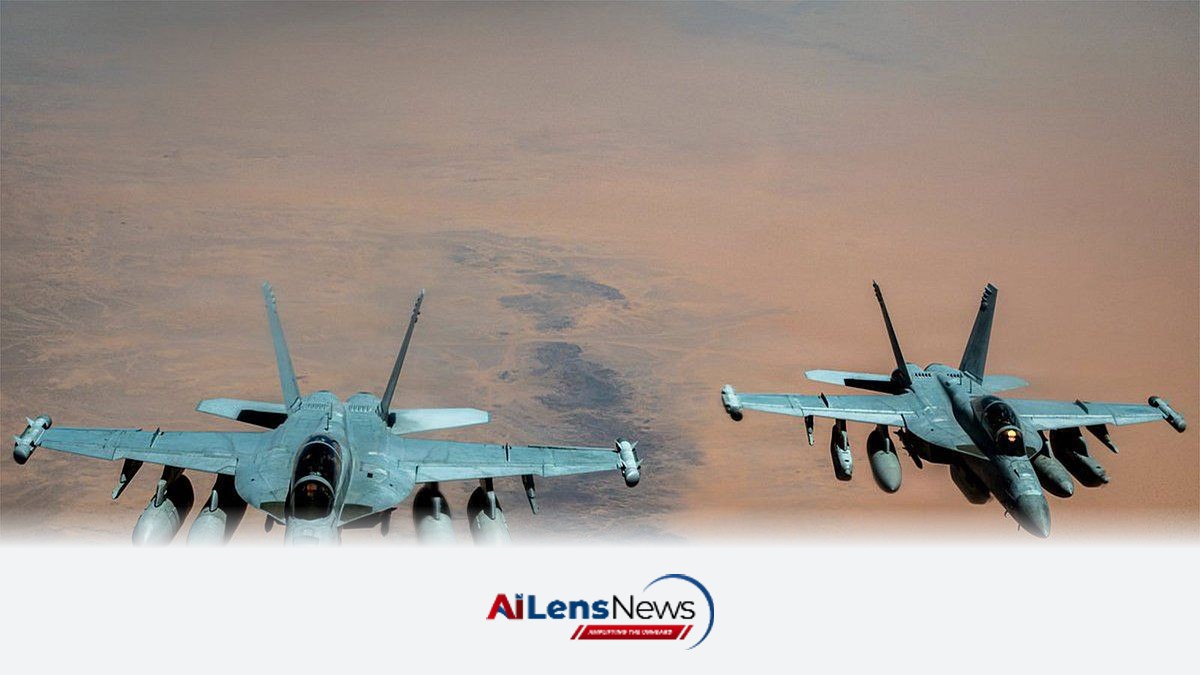



The US military has conducted strikes on Iranian launchers in the Strait of Hormuz, escalating tensions as Iran vows retaliation.
Doha, Qatar Aug 31, 2026 ALN: The Strait of Hormuz, a narrow waterway that plays a crucial role in global oil transportation, has become the focal point of escalating tensions between the United States and Iran. The recent military actions taken by the U.S. against Iranian rocket launchers on Larak Island signal a significant development in ongoing hostilities in the region. This incident not only marks the first known direct U.S. attack on Iranian forces since late July but also raises alarms about the potential for renewed confrontation in a strategically vital area.
On August 30, U.S. Central Command confirmed that it had conducted strikes on two Iranian launchers located on Larak Island. The U.S. government claims that these launchers were being prepared to deploy rockets equipped with sea mines into the Strait of Hormuz, a crucial passage through which approximately 20% of the world's oil supply is transported. The strategic importance of this waterway cannot be overstated, as it serves as a critical chokepoint for global energy trade.
The strikes occurred against the backdrop of a six-month period of heightened tensions between the U.S. and Iran, which had seen a temporary lull in hostilities. The timing of the U.S. attack raises questions about the stability of the region, as previous incidents had led to significant disruptions in maritime traffic and heightened military readiness on both sides. The U.S. Central Command's spokesperson indicated that the strikes were a necessary action to prevent Iran from further threatening international shipping lanes, especially after U.S. forces had recently completed mine-clearing operations in these waters.
Reports from Iranian media suggest that there were casualties resulting from the U.S. strikes, and Iranian officials have responded with threats of retaliation. This escalation has the potential to create a new flashpoint in U.S.-Iran relations, which have been fraught with tension since the U.S. withdrawal from the Iran nuclear deal in 2018 and the subsequent imposition of economic sanctions on Tehran. The Iranian Revolutionary Guards Corps (IRGC), which has been at the forefront of Iran's military operations in the region, was specifically mentioned as having been involved in preparations for the rocket launches.
The situation in the Strait of Hormuz has been further complicated by a notable decline in commercial shipping traffic. Data from Kpler indicates that on August 28, only seven commodity vessels were recorded transiting the strait, a significant drop from the 17 vessels that passed through the previous day and well below the 10-day average of about 15. This decline in maritime activity may be attributed to the heightened risks associated with navigating through a region known for its geopolitical volatility.
The U.S. has emphasized its commitment to ensuring the security of international shipping routes, particularly in light of previous incidents where Iranian forces have been accused of harassment or attacks on commercial vessels. The U.S. Central Command's recent mine-clearing operations were part of a broader strategy to secure these vital shipping lanes from potential Iranian threats, which have included the deployment of sea mines in the past.
The implications of these developments extend beyond immediate military engagements. The Strait of Hormuz serves as a critical artery for the global oil supply, and any significant disruptions can have far-reaching consequences for energy markets worldwide. The ongoing tensions have already influenced oil prices, and further escalations could lead to increased volatility in global markets. Additionally, the situation presents a complex challenge for U.S. policymakers, who must balance military responses with diplomatic efforts to de-escalate tensions and avoid a broader conflict.
In the context of U.S.-Iran relations, the recent strikes on Larak Island represent a continuation of a cycle of provocation and retaliation that has characterized the relationship between the two nations for decades. While the Trump administration has focused on implementing economic sanctions and diplomatic pressure as tools of "economic warfare" against Iran, military actions such as the recent strikes serve as a reminder of the potential for miscalculations that could lead to a larger confrontation.
As the situation unfolds, both the U.S. and Iran are likely to remain on high alert, with military assets positioned in the region and diplomatic channels under scrutiny. The international community will be watching closely, as any escalation in hostilities could have significant implications not only for regional stability but also for global economic security. The Strait of Hormuz will continue to be a critical flashpoint, and ongoing developments will be pivotal in shaping the future of U.S.-Iran relations and the broader geopolitical landscape in the Middle East.
To learn more about the latest developments in World News & International Affairs, stay updated with our exclusive reports and analyses on AILensNews.

In a significant military action, US forces struck Larak Island, targeting Irani…

Rescuers in Nepal and China are racing against time to find thousands missing af…

The killing of Palestinian children and teenagers has surged in the West Bank si…
India has emerged as a key supplier of gasoline to Russia, driven by a surge in …

The Jordanian Armed Forces successfully intercepted eight missiles, responding t…