

More
Checking your session
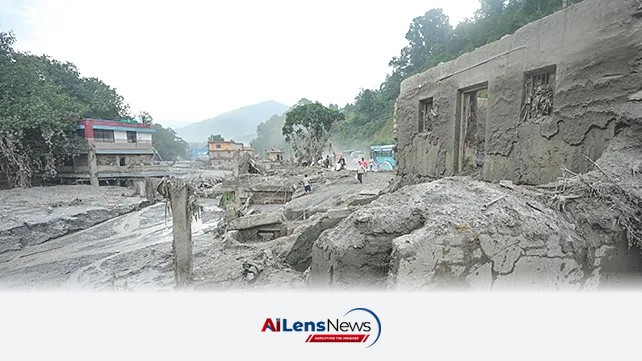



In the aftermath of severe flash floods in Nepal, families search for missing loved ones amid destruction, as the death toll rises and rescue efforts continue.
New Delhi, India Aug 30, 2026 ALN: KATHMANDU, AUG 29: The aftermath of Nepal’s devastating flash floods has left families grappling with loss and despair. Outside hospitals, people are lined up, searching through photographs of the deceased displayed on walls, while others wade through mud and debris in hopes of finding their possessions. Stark images depict a woman carrying a child past damaged buildings and a dead dog lying among the wreckage.
The floods, which struck on Wednesday, swept through towns and villages, destroying homes, vehicles, and infrastructure. As of Saturday, the death toll had surpassed 600, with over 2,400 individuals still unaccounted for. Rescue teams are racing against time, evacuating nearly 2,500 people, including 163 foreigners, amid ongoing rainfall in the affected regions.
Families outside hospitals are anxiously checking lists of injured individuals, hoping to find their loved ones. When they fail to locate them among the survivors, they turn to another list—photographs of the deceased—with heavy hearts. Rescuers are working tirelessly, braving rain and digging through drying mud in search of those still missing.
Nepal's Home Minister, Sudan Gurung, has been monitoring rescue operations, particularly at the Upper Trishuli 3A hydropower project site, where over a hundred people were trapped inside a tunnel following the floods. The Nepali Army has successfully rescued 350 individuals from this site, as reported by the online Khabar news portal.
The extent of the devastation is evident across central Nepal, with buildings buried under feet of mud and vehicles half-submerged. Survivors are now focused on finding shelter, seeking medical assistance, and salvaging belongings from the wreckage. Many families have lost everything, including their homes and means of livelihood, which will have long-lasting implications on their economic stability.
In Devighat village, residents are seen sifting through thick mud in search of their possessions. Damaged structures and uprooted electricity poles stand amid the debris, while a woman sits beside scattered corn. Another person, carrying a gas cylinder, navigates through the destruction, salvaging the only item they could recover. The situation in villages like Devighat illustrates the significant challenges faced by rural communities, which often lack the resources and infrastructure to recover swiftly from such disasters.
An aerial view reveals the scale of destruction, with damaged structures lining a swollen river. In Trishuli, an Army relief camp has become a crucial support center for those affected by the disaster. Army personnel are assisting the elderly and children, while makeshift medical facilities treat the injured and provide information on missing individuals. The establishment of these relief camps is vital, as they not only offer immediate assistance but also help in coordinating further rescue efforts and providing psychological support to traumatized survivors.
Over 11,000 security personnel, including more than 5,000 from the Nepal Army, have been mobilized for search and rescue operations. However, the meteorology department has warned of potential moderate rainfall, complicating rescue efforts further. The ongoing threat of additional rainfall raises concerns about further flooding and landslides, which are common in Nepal during the monsoon season. This unpredictability makes it imperative for rescue teams to act swiftly and efficiently.
Despite the challenges, the focus remains on searching for the missing, aiding survivors, and beginning the long process of rebuilding in a country that has faced similar disasters in the past. Nepal is no stranger to natural calamities, having experienced devastating earthquakes and landslides in recent years. This history underscores the need for improved disaster preparedness and response strategies, which could mitigate the impact of such events in the future.
The government has promised to provide assistance to the affected families, but the scale of the disaster raises questions about the adequacy of resources available for recovery. Humanitarian organizations are likely to step in, providing essential supplies such as food, water, and medical care. However, the effectiveness of these efforts will depend on the ability to navigate the challenging terrain and reach those in need promptly.
In the long term, the floods serve as a stark reminder of the vulnerability of Nepal’s infrastructure, particularly in rural areas where development has lagged. The rebuilding process will require significant investment in not only physical infrastructure but also in community resilience and disaster preparedness programs. Engaging local communities in these efforts will be essential to ensure that they are better equipped to handle future disasters.
The emotional toll on families and communities affected by the floods cannot be overstated. As they mourn their losses, the journey toward recovery will be fraught with challenges, including psychological trauma and economic hardship. Support systems, both from the government and non-governmental organizations, will play a crucial role in helping these communities heal and rebuild their lives.
In conclusion, the recent flash floods in Nepal have left a deep mark on the affected communities, highlighting the urgent need for comprehensive disaster management strategies. As rescue operations continue and the nation begins to confront the aftermath, it is clear that collaboration, resilience, and support will be essential in navigating the road to recovery.
To learn more about the latest developments in World News & International Affairs, stay updated with our exclusive reports and analyses on AILensNews.

Nigerien authorities have regained control following a soldier mutiny at a milit…
The death toll from Nepal's devastating floods has climbed to 724, with nearly 2…

A devastating flash flood at Gyirong Port has left 261 foreign nationals, includ…

As US oil companies report record profits, the ongoing conflict in Iran poses si…
The death toll from the devastating flash floods in central Nepal has risen to 7…