

More
Checking your session
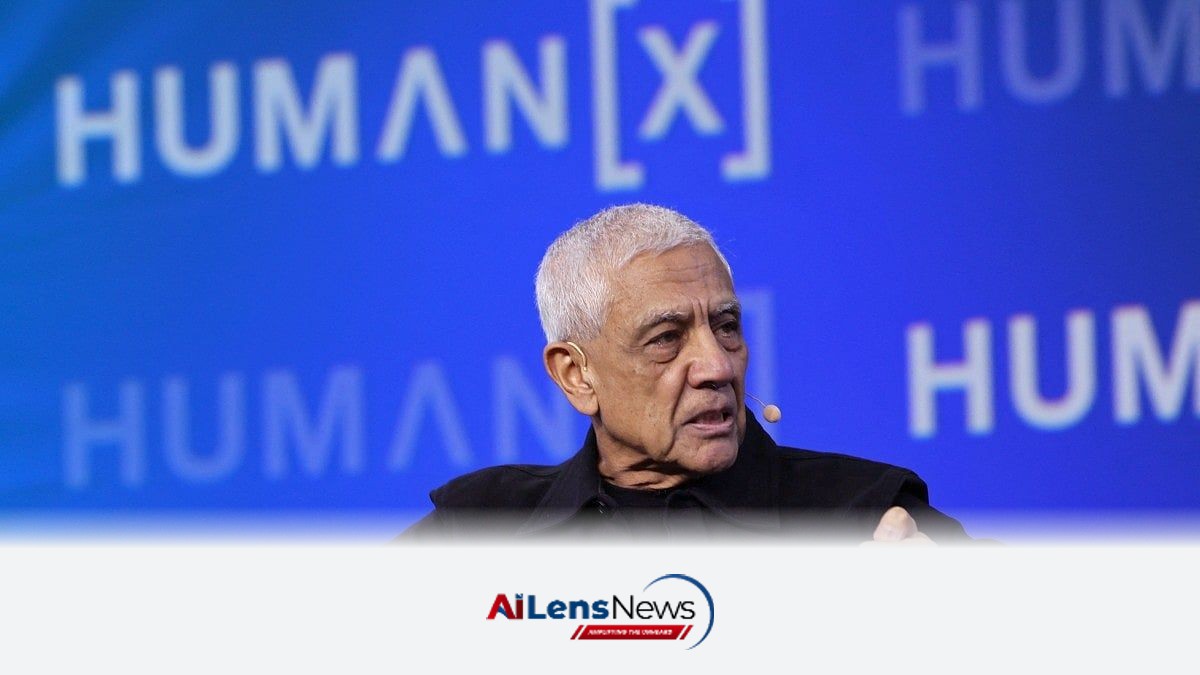



Explore Vinod Khosla’s journey from tech pioneer to NFL owner, highlighting his bold vision for an AI-driven future and the record-breaking Seahawks deal.
Abu Dhabi, United Arab Emirates Aug 28, 2026 ALN: Indian-American billionaire Vinod Khosla has been described as a "contrarian" visionary. Tech media often label him as "abrasive" and even "polarizing." Yet, at 71, Khosla has established himself as a high-conviction venture capitalist, co-founding Sun Microsystems and leading Khosla Ventures.
Celebrated for his early investments, including being the first institutional investor in OpenAI, Khosla has faced criticism for his blunt public commentary and aggressive deal terms. He has spent over four decades betting on technologies that many investors initially deemed too risky, ranging from computer networking and internet infrastructure to clean energy, fusion, and artificial intelligence.
Now, Khosla is entering a new arena: professional football. On August 26, NFL owners unanimously approved the sale of the Seattle Seahawks to the Khosla family for a record-breaking $9.612 billion. The transaction is expected to close in early September.
Khosla, along with his wife Neeru and their son Neal, is part of the ownership group taking over the reigning Super Bowl champions from the estate of the late Microsoft co-founder Paul Allen. This deal marks a significant chapter in Khosla's remarkable journey, which began in Pune, India, and includes prestigious institutions like IIT Delhi, Carnegie Mellon, and Stanford.
Born on January 28, 1955, in Pune, Khosla is an Indian-American entrepreneur, technologist, and venture capitalist. He is best known as a co-founder of Sun Microsystems, a pivotal player in Silicon Valley during the rise of networked computing.
After leaving Sun in 1984, Khosla became a prominent venture capitalist at Kleiner Perkins before founding Khosla Ventures in 2004. Today, his firm invests in various sectors, including AI, healthcare, robotics, climate technology, energy, and financial technology. As of August 25, 2026, Forbes estimates Khosla's net worth at approximately $13.4 billion, ranking him among the world's wealthiest individuals.
Khosla's most significant headline in 2026 is not about AI or venture capital; it’s about football. The Khosla family's $9.612 billion purchase of the Seahawks is the most expensive NFL franchise sale ever recorded and ranks among the most costly sports transactions in North American history.
Paul Allen acquired the Seahawks for just $194 million in 1997. Following Allen's death in 2018, the franchise remained under his estate, which ultimately agreed to sell it to the Khosla family. The sale is expected to close in early September 2026, coinciding with Seattle's recent Super Bowl victory, making the Khoslas the owners of the NFL's reigning champions.
Khosla's first major breakthrough occurred in the early 1980s when he co-founded Sun Microsystems with Scott McNealy, Andy Bechtolsheim, and Bill Joy. Sun popularized the concept of powerful computers connected through networks rather than relying solely on standalone PCs.
The company developed influential technologies, including SPARC processors, networked workstations, NFS, and Java. Khosla served as Sun's first chairman and CEO before leaving in 1984 to pursue venture capital. Sun grew rapidly, reaching about $1 billion in annual sales within five years, shaping Khosla's investment philosophy: back technologies before they become obvious.
In 1986, Khosla joined Kleiner Perkins as a general partner, gaining recognition for backing unconventional founders and technologies. His investments included:
His investment in Juniper Networks became one of the internet era's spectacular successes, generating billions for Kleiner Perkins and establishing Khosla as one of Silicon Valley's most aggressive "contrarian" investors.
Khosla founded Khosla Ventures in 2004, focusing on early-stage technologies and ambitious, science-driven ventures. The firm is known for investing in ideas that traditional venture capital might consider too experimental, with a portfolio spanning AI, robotics, healthcare, climate, energy, biotechnology, software, and financial technology.
The philosophy is straightforward: bet early on technologies capable of changing entire industries.
Khosla's most significant technology bet of the current era has been artificial intelligence. Khosla Ventures became the first outside venture capital firm to invest in OpenAI, reportedly investing about $50 million in 2019. This investment has proven extraordinarily valuable as OpenAI evolved into one of the world's leading AI companies.
Khosla remains a vocal supporter of AI's potential, believing it could provide dramatically cheaper or nearly universal access to services such as healthcare and education.
His optimism about AI has sparked controversy. In 2012, he predicted that machines would replace 80% of doctors in a future driven by entrepreneurs rather than medical professionals. In 2026, he suggested that AI could eliminate or radically transform many traditional jobs, arguing that many jobs could disappear or be transformed by 2030.
His vision is provocative: AI will destroy some jobs but make essential services dramatically cheaper and more accessible.
Khosla's investment interests extend beyond software. Khosla Ventures has backed technologies aimed at transforming:
Khosla argues that technological breakthroughs, rather than regulation alone, are essential to solving climate and energy challenges.
His willingness to fund technologies long before they become mainstream has defined his career and continues to shape the future of various industries.
To learn more about the latest developments in Corporate & Industry Insights, stay updated with our exclusive reports and analyses on AILensNews.

Nvidia's strong revenue forecast reignites AI enthusiasm, lifting Nasdaq and S&P…

Gaana and Fenix360 have partnered to create a new artist-fan ecosystem within th…

The Sensex fell sharply by 539 points to 76,933.59, while the Nifty dropped belo…

Companies thrive not by isolation or excessive collaboration, but by strategical…

As Americans increasingly reject promotions that compromise work-life balance, e…