

More
Checking your session
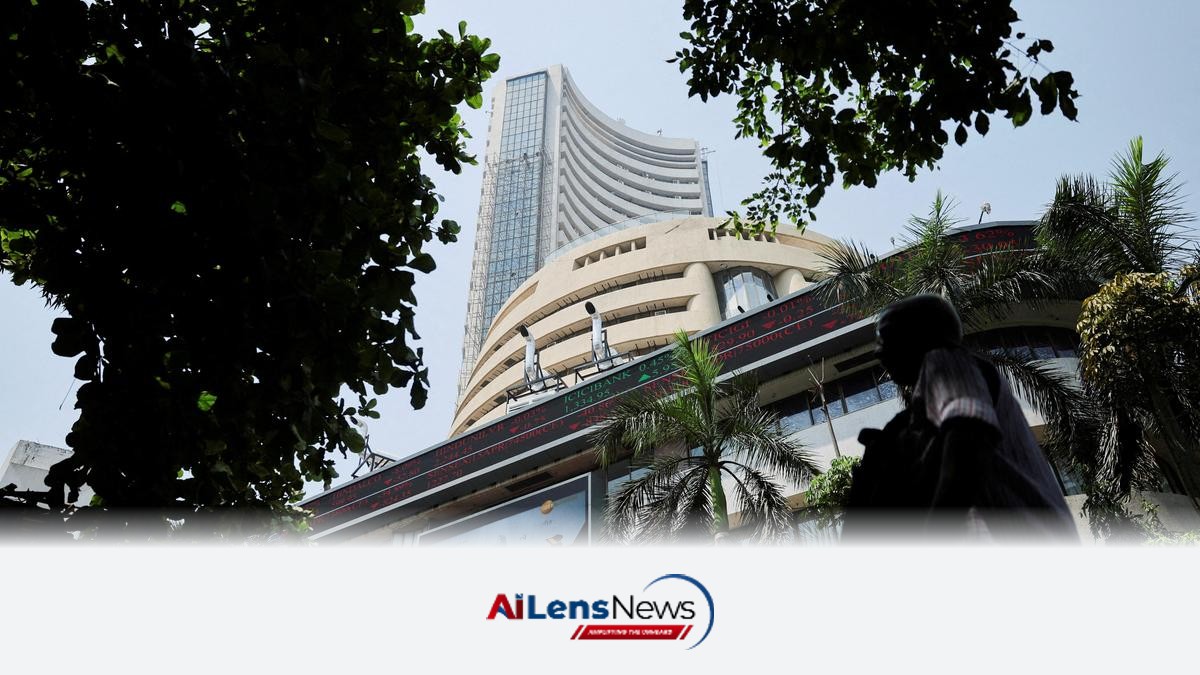



The Sensex fell sharply by 539 points to 76,933.59, while the Nifty dropped below 24,100, influenced by HDFC Bank's decline and ongoing geopolitical tensions.
New Delhi, India Aug 28, 2026 ALN: Benchmark indices experienced a significant decline towards the end of trading on Thursday, August 27, 2026. The Sensex dropped by 539 points, while the Nifty slipped below the 24,100 mark, primarily due to selling pressure on blue-chip stocks like HDFC Bank and persistent geopolitical uncertainties that affected market sentiment.
For the second consecutive day, the 30-share BSE Sensex fell by 539.35 points, or 0.70%, settling at a low of 76,933.59, coinciding with the monthly derivatives expiry. This decline reflects a broader trend of volatility in the Indian stock market, which has been influenced by a combination of domestic and international factors.
Similarly, the 50-share NSE Nifty declined by 116.90 points, or 0.48%, closing at 24,090.85. This drop below the 24,100 mark is significant as it indicates a psychological barrier for investors, who may interpret such movements as a signal of further bearish trends.
Among the 30 firms listed on the Sensex, major laggards included HDFC Bank, NTPC, Mahindra & Mahindra, Bharti Airtel, HCL Tech, and ITC. HDFC Bank, in particular, has been a cornerstone of the Indian banking sector, and its performance is often viewed as a bellwether for the financial health of the economy. In contrast, Kotak Mahindra Bank, ICICI Bank, Tech Mahindra, and Bharat Electronics emerged as winners, showcasing a mixed bag of performances among blue-chip stocks.
The volatility in the markets can be attributed to various factors, including the expiry of monthly derivatives, which often leads to increased trading activity and price fluctuations as traders settle their positions. Additionally, geopolitical uncertainties, particularly in the Middle East, have continued to weigh heavily on investor sentiment. The lack of a diplomatic breakthrough in the region has contributed to a cautious outlook among market participants, as these developments can have far-reaching implications for global oil prices and overall economic stability.
Brent crude, the global oil benchmark, saw a slight increase of 0.67%, reaching $88.43 per barrel. Oil prices are a critical factor for the Indian economy, as the country is one of the largest importers of crude oil. Fluctuations in oil prices can significantly impact inflation rates and the balance of trade, influencing the overall performance of the stock market.
Vinod Nair, Head of Research at Geojit Investments Ltd, commented, "Expiry-led volatility and the lack of a diplomatic breakthrough in the Middle East continue to keep markets range-bound in the near term." This statement encapsulates the prevailing sentiment among analysts who are closely monitoring both domestic market dynamics and international developments that could influence trading patterns.
In Asian markets, South Korea's Kospi and Shanghai's SSE Composite index closed higher, while Japan's Nikkei 225 and Hong Kong's Hang Seng index ended lower. This mixed performance across Asian indices reflects the varying degrees of investor confidence in different markets, influenced by local economic indicators and global trends. European markets were mostly trading in the negative territory, further indicating a widespread sense of caution among investors globally.
On the previous day, U.S. markets also ended in the negative, reflecting a broader trend of market uncertainty. The performance of U.S. indices is often seen as a precursor to trends in global markets, and declines in the U.S. can lead to ripple effects in other regions, including Asia and Europe.
Foreign Institutional Investors (FIIs) were active in the market, purchasing equities worth ₹502.63 crore on Wednesday, August 26, 2026. This level of investment indicates a continued interest from foreign investors in the Indian market, despite the recent volatility. On that day, the Sensex had declined by 183.15 points, or 0.24%, closing at 77,472.94, while the Nifty was down by 126.80 points, or 0.52%, ending at 24,207.75. The activity of FIIs can be a significant driver of market movements, as their investment decisions often reflect broader trends in global capital flows and risk appetite.
Overall, the recent decline in the Sensex and Nifty highlights the complex interplay of domestic market dynamics and international developments. Investors are advised to remain vigilant and consider both macroeconomic indicators and geopolitical events when making investment decisions. As the situation evolves, market participants will be closely watching for any signs of stabilization or further declines, particularly in light of ongoing geopolitical tensions that could impact the economic landscape in the coming weeks.
To learn more about the latest developments in Corporate & Industry Insights, stay updated with our exclusive reports and analyses on AILensNews.

Explore Vinod Khosla’s journey from tech pioneer to NFL owner, highlighting his …

Nvidia's strong revenue forecast reignites AI enthusiasm, lifting Nasdaq and S&P…

Gaana and Fenix360 have partnered to create a new artist-fan ecosystem within th…

Companies thrive not by isolation or excessive collaboration, but by strategical…

As Americans increasingly reject promotions that compromise work-life balance, e…