

More
Checking your session
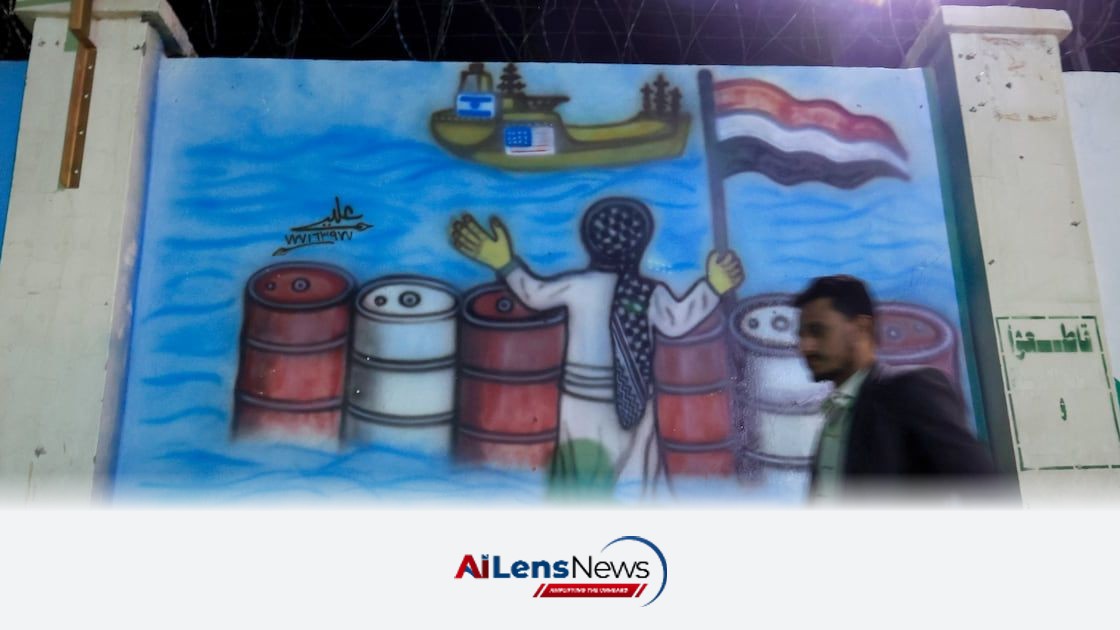



The Houthis' recent activities in Africa, particularly in Sudan and the Horn of Africa, pose significant risks to regional stability and international security.
Abu Dhabi, United Arab Emirates Aug 28, 2026 ALN: For more than a decade, the Houthis have inflicted immense suffering on Yemen and sown instability across the Middle East. Since taking control of the country’s north in 2014, the Iranian-backed rebels have deprived large segments of the population of basic services, launched projectiles into neighboring countries, and turned the Bab Al Mandeb strait into one of the world’s most dangerous shipping lanes. The conflict in Yemen has been characterized by a humanitarian crisis of unprecedented scale, with millions facing food insecurity, lack of medical care, and widespread displacement. The Houthis' control of key areas has not only exacerbated the plight of the Yemeni people but has also posed significant threats to regional security, given their strategic location near crucial maritime routes.
Now, a report from the Century Foundation, a US-based non-partisan think tank, details how the group’s nefarious ambitions have extended far beyond the region’s shores. This should concentrate minds in the western, Middle Eastern, and African capitals. The findings of this report highlight a worrying trend: the Houthis are not merely a local insurgent group but are evolving into a transnational threat with the potential to destabilize multiple regions simultaneously. The implications of their expanding influence are profound, as they could reshape the dynamics of conflict and cooperation across the Horn of Africa and the broader Middle East.
The report details how the Houthis have been building smuggling and training networks that stretch across the Red Sea into the Horn of Africa and Sudan, as they deepen ties with Al Shabab, a terrorist group in Somalia, and the Sudanese Armed Forces. These connections are largely transactional – at least for now. But as the report warns, they can develop into something considerably more durable. The potential consequences of this happening are serious, as they could lead to a more coordinated approach to warfare and insurgency across these regions, complicating efforts by international actors to manage and resolve conflicts.
Al Shabab, a group with links to Al Qaeda, has sought Houthi assistance in acquiring anti-aircraft weapons and drones to counter aerial attacks. While advanced weaponry hasn’t appeared in Somali battlefields, such a possibility could be a matter of when – not if. Several Al Shabab operatives have either been killed or arrested in Yemen, one of whom confessed to organizing training camps with Houthi fighters. This collaboration raises the stakes for regional security, as enhanced military capabilities for Al Shabab could lead to increased attacks not only within Somalia but also against neighboring countries, further destabilizing the region.
Containing the Houthis within Yemen’s borders won’t be enough.
The Houthis’ relationship with the Sudanese Armed Forces (SAF) is comparatively more advanced, with the Yemeni group having arranged shipments of small arms and light weapons on Tehran’s behalf since 2024. This relationship underscores the Houthis' role as a proxy for Iranian interests in the region, allowing Tehran to extend its influence while maintaining plausible deniability. Sudan’s state-owned Military Industrial Corporation, with close ties to the SAF, has developed an attack drone that resembles an Iranian model. Houthi engineers and operatives have also trained SAF personnel alongside Iran’s Islamic Revolutionary Guard Corps, indicating a sophisticated level of military cooperation that could enhance the capabilities of both groups.
What’s more, there are indications of Houthi activity in Eritrea – where they are seeking to create a logistical network along the African coast of the Red Sea. This means a Houthi-linked logistics corridor running from northern Sudan to the Horn of Africa could knit together three conflicts – Sudan’s civil war, the insurgency in Somalia, and the Red Sea shipping crisis. Such a corridor would not only facilitate the movement of weapons and fighters but could also serve as a conduit for illicit trade, further entrenching the Houthis' influence in the region.
The implications of these developments are manifold. Increased Houthi activity in Africa could lead to a more pronounced Iranian presence on the continent, raising concerns among Western nations and regional powers alike. The potential for a new front in the conflict involving the Houthis, Al Shabab, and the SAF could stretch the resources and attention of countries already engaged in counterterrorism efforts in the region. Moreover, as the Houthis expand their operations, they may also attract the attention of other extremist groups, resulting in a more complex and dangerous landscape.
In response to these evolving threats, it is imperative for the international community to reassess its strategies in the region. Efforts to contain the Houthis within Yemen’s borders must be coupled with a broader understanding of their transnational ambitions. This could involve enhancing intelligence-sharing among nations, increasing support for regional partners combating terrorism, and addressing the root causes of instability that allow groups like the Houthis to thrive.
As the situation continues to evolve, it is crucial to monitor the developments closely. The Houthis' expanding influence into Africa represents not only a challenge for regional stability but also a potential shift in the global balance of power. Countries must remain vigilant and proactive in their approach to mitigate the risks posed by this increasingly interconnected web of conflict and extremism.
To learn more about the latest developments in Regions & Countries, stay updated with our exclusive reports and analyses on AILensNews.

King Harald V of Norway has died at the age of 89, leading to the ascension of h…

As Norway mourns the passing of King Harald V, his son Haakon VIII ascends the t…

As President Trump seeks to revive talks with North Korea, analysts suggest Chin…

A sword attack at a high school in Sweden has resulted in one death and multiple…

The re-establishment of the Kadim settlement by Israeli settlers has sparked fea…