

More
Checking your session



Sheikh Mohammed bin Abdulrahman Al Thani's visit to Iran marks a significant diplomatic engagement as tensions in the region persist.
Doha, Qatar Aug 27, 2026 ALN: Qatar’s Prime Minister and Minister of Foreign Affairs Sheikh Mohammed bin Abdulrahman Al Thani is travelling to Tehran on Thursday for talks with Iranian officials, marking the first high-profile visit between the two countries since the U.S.-Iran war began on 28 February.
Advisor to the Prime Minister and official spokesperson for the Ministry of Foreign Affairs, Majed Al-Ansari, confirmed the visit in a post on X on Wednesday. Al-Ansari stated that the visit reflects Qatar’s position that diplomacy remains the best means of resolving disputes and promoting security and stability in the region.
“The discussions will also address freedom of navigation in the Strait of Hormuz and the need for it to return to the status quo prior to February 28,” Al-Ansari added.
In a statement on Wednesday, Iranian Foreign Ministry spokesperson Esmail Baqaei indicated that Sheikh Mohammed will discuss Qatar’s ongoing mediation efforts and other regional developments with Iranian officials.
Sheikh Mohammed’s Tehran visit coincides with Iran and Oman working towards implementing a temporary shipping arrangement through the Strait of Hormuz, which includes measures to facilitate maritime navigation and clear mines from parts of the waterway.
The Strait of Hormuz has remained one of the most consequential flashpoints of the U.S.-Iran war. The visit comes as the U.S.-Iran war approaches its six-month mark, with direct fighting having largely subsided, yet diplomatic efforts to ease tensions remain stalled.
Pakistan’s Chief of Defence Forces and Chief of Army Staff, Field Marshal Asim Munir, visited Tehran on Monday, where he met with Iranian President Masoud Pezeshkian and other senior officials. In a post on X on Tuesday, Pakistan’s Interior Minister Mohsin Naqvi, who accompanied Munir, mentioned that the two sides had made “significant progress” and discussed steps to restore the Islamabad Memorandum of Understanding, an interim framework aimed at ending the conflict.
The diplomatic landscape surrounding the U.S.-Iran war is complex and multifaceted, with various regional players involved in attempts to mediate and influence the situation. Qatar, in particular, has positioned itself as a mediator in regional conflicts, leveraging its relationships with both the United States and Iran to foster dialogue. This role is critical, especially given the escalating tensions and the potential for broader regional instability.
Washington and Tehran remain divided over sanctions, the terms of any potential agreement, and the conditions for restoring normal navigation through the strategic waterway. U.S. President Donald Trump stated in an interview that he is “not in a hurry” to resume talks with Iran, indicating a cautious approach to negotiations that have proven challenging in the past.
The diplomatic impasse is compounded by Washington's recent escalation of economic pressure on Tehran. On Monday, the U.S. Treasury launched “Operation Economic Outcast,” targeting Iran’s economic networks. New sanctions were imposed on nearly 60 individuals, entities, and vessels across the UAE, Hong Kong, China, Singapore, and Switzerland, accusing them of enabling the “Iranian regime’s recklessness.”
This strategy reflects a broader U.S. approach that seeks to isolate Iran economically while pressuring it to abandon its nuclear ambitions and regional activities that the U.S. and its allies view as destabilizing. The sanctions have significant implications for Iran's economy, which is already grappling with challenges, including inflation and currency devaluation.
Washington has warned countries and companies doing business with Iran that they could face secondary sanctions, a move aimed at cutting off Tehran’s access to international revenue and financial networks. This has led to a chilling effect on international business dealings with Iran, further exacerbating its economic difficulties.
Before the conflict began on 28 February, approximately one-fifth of global oil and gas supplies passed through the Strait of Hormuz each day. This waterway is crucial not only for regional countries but also for the global economy, making its stability essential for energy security worldwide. Since the onset of hostilities, traffic has sharply declined, disrupting global energy markets and international shipping.
The implications of this decline are far-reaching, affecting oil prices, supply chains, and energy security for nations dependent on these resources. The situation also raises concerns about potential military confrontations in the region, particularly given the strategic importance of the Strait of Hormuz as a transit route for energy supplies.
As the conflict continues, the international community is closely monitoring developments and the role of key players like Qatar and Oman in mediating tensions. The effectiveness of these diplomatic efforts will be critical in determining whether a more stable and peaceful resolution can be achieved, or if the region will continue to face the specter of conflict and instability.
In conclusion, Sheikh Mohammed bin Abdulrahman Al Thani's visit to Tehran represents a significant moment in the ongoing U.S.-Iran conflict, highlighting the importance of diplomacy in addressing regional disputes. As various nations attempt to navigate the complex geopolitical landscape, the outcomes of these discussions could have lasting implications for security, stability, and economic conditions in the Middle East and beyond.
To learn more about the latest developments in International Politics, stay updated with our exclusive reports and analyses on AILensNews.

The US has conducted its first known strike on Iranian targets since July, targe…

A ferry carrying nearly 270 people capsized off northern Cyprus, resulting in at…

Milo Yiannopoulos, the controversial right-wing commentator, has been deported f…

A Russian drone attack on a weapons depot near Kyiv has resulted in 37 fatalitie…
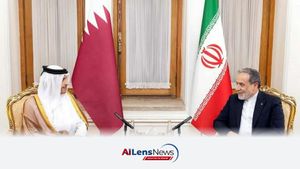
Sheikh Mohammed bin Abdulrahman bin Jassim Al Thani's visit to Tehran aims to ad…