

More
Checking your session
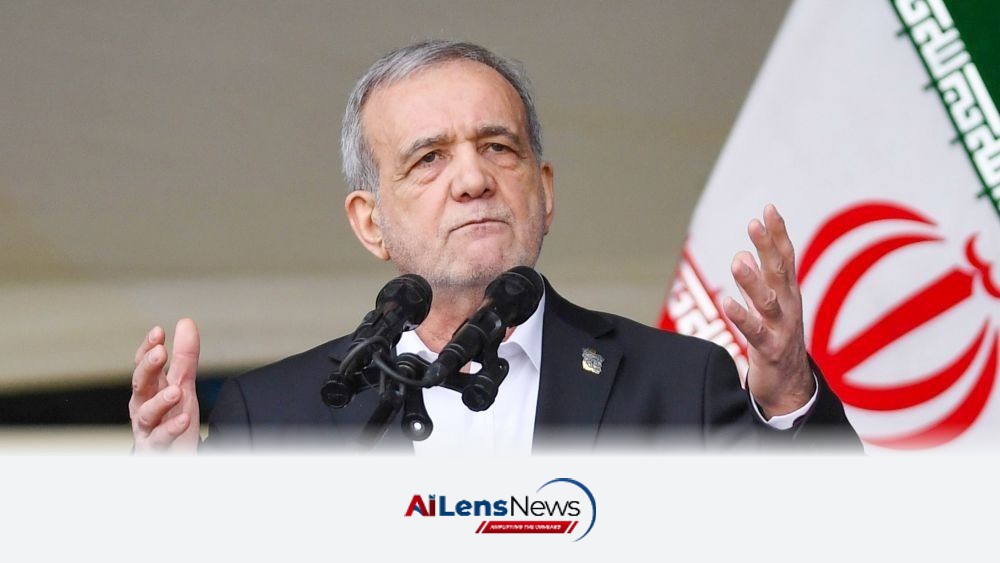



Iranian President Masoud Pezeshkian emphasizes the benefits of the peace MoU with the US, aiming for stability in West Asia and countering chaos from external forces.
New Delhi, India Aug 30, 2026 ALN: Iranian President Masoud Pezeshkian stated that the peace memorandum of understanding (MoU) signed between Iran and the United States serves the interests of Iran, West Asia, and the global community. This MoU comes at a time when tensions between Iran and the US have historically been high, particularly following the withdrawal of the US from the Joint Comprehensive Plan of Action (JCPOA) in 2018, which was an agreement aimed at curbing Iran's nuclear program in exchange for sanctions relief.
During a ceremony in Tehran, Pezeshkian asserted that the implementation of the MoU would prevent the United States and Israel from instigating chaos, aggression, and insecurity in the region. The Iranian leadership has often accused the US and Israel of meddling in Middle Eastern affairs, claiming that their actions have led to instability, particularly in countries like Syria and Iraq. This MoU, according to Pezeshkian, is a step towards allowing regional nations to pursue stability and development, a goal that many believe is essential for the long-term peace of the region.
Pezeshkian underscored the importance of thwarting the "enemies' sinister plots" by fostering unity and solidarity among Muslim nations, according to Xinhua news agency. This call for unity reflects a broader sentiment in Iranian politics, where the government often emphasizes the need for a cohesive front against perceived external threats, particularly from Western powers. The notion of unity among Muslim nations is not only a political stance but is also rooted in Iran's ideological framework, which positions itself as a leader of the Islamic world.
He emphasized that Iran has never initiated a war, stating, "We do not welcome war, but will stand strongly against any aggressor, and no power can force a nation that is standing with all its might and will into surrender." This statement is consistent with Iran's long-standing narrative that it is a victim of aggression, particularly from the US and its allies, and it underscores Iran's commitment to a defensive posture rather than an offensive one. The rhetoric surrounding this MoU is likely intended to reinforce national pride and resilience among the Iranian populace.
On the same day, Iranian Foreign Minister Seyed Abbas Araghchi warned via social media that significant efforts are underway to manipulate global energy markets for personal gain, prolonging the US conflict with Iran. This comment highlights the complexities of the geopolitical landscape, particularly regarding oil and energy resources, which are critical for both the Iranian economy and global markets. The energy sector in Iran has been severely impacted by US sanctions, leading to economic challenges that the government is keen to address through diplomatic avenues.
Additionally, Iran's Islamic Revolution Guard Corps reported that the country's security forces dealt a "decisive" blow to a "terrorist" group linked to the United States and Israel in southeastern Sistan and Baluchestan province, resulting in the death of one member and the arrest of six others. This incident illustrates the ongoing security challenges Iran faces within its borders, particularly from groups that it perceives as being supported by foreign powers. The Iranian government often uses such incidents to justify its security policies and military actions, reinforcing its narrative of external threats.
On February 28, Israel and the United States initiated joint attacks on Tehran and other Iranian cities. In response, Iran launched missile and drone strikes targeting Israeli and US bases in the region, tightening its control over the Strait of Hormuz. The Strait of Hormuz is a critical chokepoint for global oil shipments, and any conflict in this area can have significant implications for international energy markets. The recent escalations have raised concerns among global leaders about the potential for wider conflict in the region, which could destabilize not only the Middle East but also affect global economic conditions.
On June 18, the US and Iran signed the MoU aimed at ending hostilities in the region across all fronts. They were scheduled to engage in negotiations within a 60-day timeframe, which concluded on August 17. However, the future of these talks remains uncertain following recent escalations between the two nations. The signing of the MoU was seen by some as a potential turning point in US-Iran relations, but the ongoing military confrontations and mutual accusations have cast doubt on its effectiveness.
The implications of the MoU and the recent statements by Iranian officials are significant. If implemented effectively, the MoU could lead to a reduction in hostilities and a path towards diplomatic engagement. However, the entrenched positions of both nations, coupled with external pressures from allies and regional dynamics, make the prospect of lasting peace challenging. As the situation evolves, the international community will be closely monitoring developments, particularly in relation to energy security, regional stability, and the broader implications for global geopolitics.
To learn more about the latest developments in Culture & Society, stay updated with our exclusive reports and analyses on AILensNews.

Prime Minister Narendra Modi participated in a yoga event in Tashkent, highlight…

The devastating flash floods in central Nepal have claimed 724 lives, with nearl…
The devastating floods and landslides in Nepal and China have resulted in 633 co…

In response to devastating floods in Nepal, China has pledged emergency financia…

The UAE has expressed solidarity with China, offering condolences for the victim…