

More
Checking your session
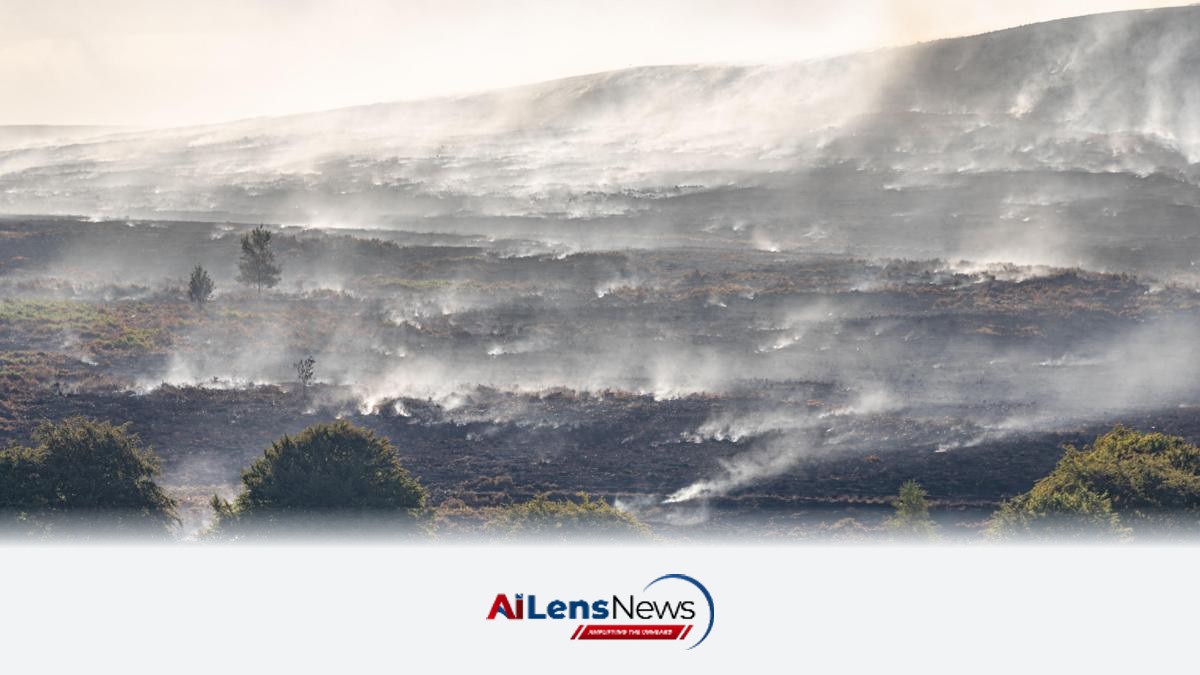



Recent wildfires in Blaenavon, Wales, have led to alarming carbon emissions, raising health concerns among local authorities and al organizations.
New Delhi, India Aug 22, 2026 ALN: A county in Wales had one of the world's highest carbon emissions per square kilometre due to wildfires in July, according to a charity.
The fire above Blaenavon, Torfaen was described as "one of the largest and most challenging" in south Wales in recent years by the fire service. This incident has drawn attention not only for its scale but also for the alarming al implications it carries, particularly in the context of climate change and public health.
Wildfires are increasingly recognized as a significant source of carbon emissions, contributing to atmospheric pollution and climate change. The data published by the European Union's earth observation programme, Copernicus, indicated that Torfaen's emissions from the wildfire were among the highest globally in July, surpassed only by regions known for their own al challenges, such as Malanje in Angola, Ávila in Spain, and Annaba in Algeria. Such comparisons highlight the severity of the situation in Torfaen, a region not typically associated with such extreme wildfire activity.
Save the Children expressed concern about the potential health consequences stemming from the wildfire smoke, particularly for vulnerable populations such as children and the elderly. The charity's alarm is rooted in the understanding that wildfire smoke contains harmful pollutants that can exacerbate respiratory conditions and lead to long-term health issues. The air quality monitoring conducted by Torfaen council corroborated these concerns, showing "elevated particulate concentrations" during and after the wildfire.
The wildfire itself, which covered an area roughly equivalent to 300 football pitches, ignited on Mynydd Garnclochdy, situated between Abersychan and Blaenavon. The scale of the fire was such that residents reported being able to smell smoke from as far away as Cardiff, approximately 30 miles distant. This widespread impact underscores the potential for wildfires to affect air quality over extensive regions, raising questions about emergency preparedness and response strategies in the face of such al disasters.
In response to the escalating situation, a major incident was declared, necessitating assistance from the military. This response reflects the seriousness of the wildfire threat in the region and the challenges faced by local fire services, which often operate with limited resources. Blaenavon councillor Janet Jones noted that the smoke had been "particularly bad" on 13 August, approximately three weeks after the fire initially ignited. She expressed concerns about the impact on air quality, especially for elderly residents and individuals with pre-existing respiratory conditions such as emphysema and Chronic Obstructive Pulmonary Disease (COPD).
While Jones mentioned that local GP practices had not reported an increase in respiratory complaints immediately following the fire, she acknowledged the potential for future health issues to arise as the long-term effects of smoke exposure become more apparent. This situation underscores the need for ongoing monitoring and research into the health impacts of wildfire smoke, particularly in vulnerable populations.
Melanie Simmonds, head of Save the Children Wales, emphasized the broader implications of wildfires on children's health and well-being. She stated, "In Wales and across the world, children are breathing in smoke from wildfires, coping with extreme heat and losing the freedom to play outdoors because the air is no longer safe." This statement highlights the intersection of al issues and child health, raising awareness of how climate change and its associated phenomena can disproportionately affect the youngest members of society.
In light of the findings from the Copernicus Atmosphere Monitoring Service (CAMS), Torfaen council expressed its surprise at the EU data and stated that it was not aware of the specific research that led to the reported conclusions. The council acknowledged that prolonged wildfire incidents could negatively impact local air quality, particularly through increased smoke and particulate matter. However, it also clarified that its air quality monitoring station in Croesyceiliog Cwmbran is designed to provide general background air quality information rather than real-time data specific to areas immediately adjacent to the fires.
The Copernicus Atmosphere Monitoring Service plays a crucial role in providing global information related to air pollution and health. Its data indicated that emissions in Torfaen during the wildfire period were "extremely unusual," raising alarms about the potential for similar events in the future. As climate change continues to alter weather patterns and increase the frequency and intensity of wildfires worldwide, regions like Torfaen may find themselves facing new challenges in managing air quality and protecting public health.
The implications of this event extend beyond immediate health concerns. The wildfire in Torfaen serves as a stark reminder of the interconnectedness of al health, public policy, and community resilience. As climate change continues to pose significant challenges, local governments and communities must adapt to the realities of increased wildfire risks, which may include investing in better emergency response systems, enhancing public health initiatives, and implementing strategies for air quality management.
Moreover, the incident raises questions about the adequacy of current regulations and policies aimed at mitigating the impacts of climate change and protecting vulnerable populations. It underscores the need for comprehensive strategies that address both the causes and consequences of wildfires, including land management practices, community preparedness, and public health responses.
In conclusion, the wildfires in Blaenavon have propelled Torfaen into the global spotlight concerning carbon emissions, highlighting the urgent need for action to address the multifaceted challenges posed by climate change. As communities grapple with the immediate aftermath of such al disasters, it is imperative to consider long-term strategies that prioritize health, safety, and sustainability in the face of an uncertain future.
To learn more about the latest developments in Environment & Climate, stay updated with our exclusive reports and analyses on AILensNews.

As the bank holiday weekend approaches, the UK braces for strong winds and thund…
As droughts intensify, England's water supply is under threat. Experts discuss t…
During a call to the International Space Station, President Trump praised Indian…

Discover how to witness the upcoming lunar eclipse on August 27-28 in the UAE, i…