

More
Checking your session
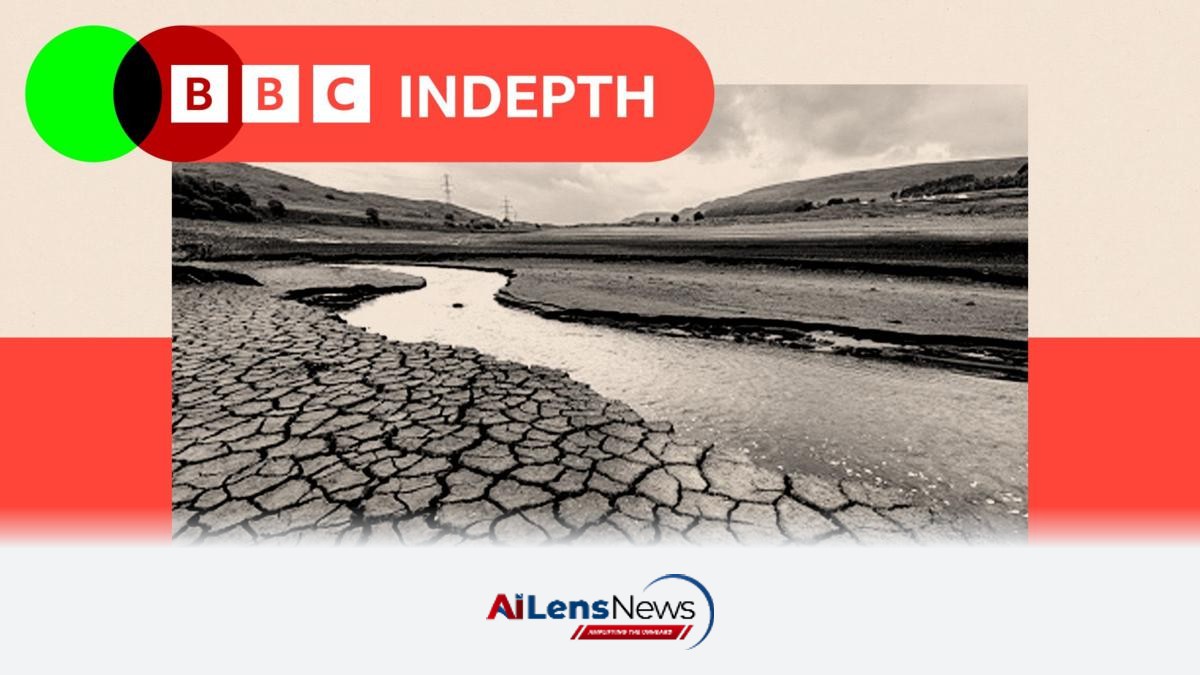



As droughts intensify, England's water supply is under threat. Experts discuss the causes and potential solutions to avert a crisis.
New Delhi, India Aug 29, 2026 ALN: One evening in early August, farmer Daniel Sizer's phone buzzed with a message.
It was from his local water board and it read: "River levels are low but have recovered enough to allow one night of irrigation tonight."
Like much of the lower half of England, Daniel's fourth-generation farm had seen barely any rain in nearly three months. He shows us what is left of the peas and wheat crop at his 300-hectare site in Suffolk. "There's no water in the river so half my crop is completely and utterly ruined."
With river levels falling so low that taking any more water out of them risked endangering wildlife, in July the Agency (EA) temporarily stopped Daniel and thousands of other farmers from watering their crops from the river. This decision reflects a growing concern about the sustainability of water resources in the region, particularly as agricultural demands continue to rise.
England has long been used to hosepipe bans over the summer. However, what Daniel has experienced points to something newer and more worrying. The kind of increasingly frequent heatwaves we have experienced and greatly reduced rainfall that we could see over successive summers with climate change, plus a projected increase in demand for water, have raised the prospect that England could at some point run out of water.
The result could be that by 2055 England will face a shortfall of five billion litres in public water supply a day, almost enough to fill Wembley Stadium four and a half times daily. A mixture of low rainfall, high temperatures, and demand puts pressure on water supply in England more so than elsewhere in the UK, where rainfall patterns and water management practices may differ significantly.
This situation is a far cry from when, in 1818, John Keats wrote: "It is impossible to live in a country which is continually under hatches… Rain! Rain! Rain!" The historical perspective underscores how England's relationship with water has evolved, moving from an abundance of rainfall to a situation where scarcity is becoming a pressing concern.
But what is really to blame for England finding its water supply so under threat? And are there ways of securing its future? These questions are increasingly relevant as the country grapples with the implications of climate change, population growth, and changing consumption patterns.
Back in the 1980s, people in England and Denmark were using water at a similar rate. But no longer. Residents in Denmark now consume 97 litres of water per person per day, according to Danva, the country's water and wastewater industry body. The daily consumption per person in England is 136.5 litres, a figure that has been steadily rising.
"We've actually doubled the amount of water we use per person, on average, in the last 50, 60 years," points out Nicci Russell, who runs Waterwise, a water efficiency campaign organization. She highlights the changing habits over generations—where once a family might have shared a bath once a week, it is now common to have multiple showers a week, sometimes even daily. This shift in behavior reflects broader changes in lifestyle and expectations surrounding hygiene and convenience.
Households are responsible for nearly 60% of water use in England and Wales. If we had domestic water consumption patterns more like Denmark, Russell says, more than half the anticipated shortfall by 2055 could be mitigated. This statistic emphasizes the potential for significant improvements in water efficiency through behavioral changes.
So how could water use in England come down to the levels seen in Denmark? Russell suggests that even with projected population growth, if everyone in England knocked just a minute off their shower time, it would save nearly one billion litres of water a day by 2050. This simple adjustment highlights how small changes in individual behavior can collectively have a substantial impact on overall water consumption.
However, water companies have been running campaigns urging the public to use less water, seemingly with limited success. Will Willoughby, director of water supply at Wessex Water, acknowledges that negative public perception of the water industry has limited the impact of these messages. He suggests that the government may be better positioned to deliver these initiatives effectively. "I think that would absolutely go a long way to… undoing some of the disdain towards the water companies and get people on board to help look after our water resources," he notes.
What truly separates England and Denmark is the price of water. In Denmark, water meters are mandatory, and residents pay significantly more for their water than consumers in England. Despite climbing water bills across the UK—and the accompanying outrage aimed at water companies accused of prioritizing dividends for shareholders over investment in essential infrastructure—there is an argument to be made that consumers are actually not paying enough for their water. In Denmark, the average cost of water and wastewater is £9.45 per cubic meter, while the cost in England is substantially lower.
This disparity raises important questions about the long-term viability of England's water supply. If consumers do not face the true cost of water, there may be little incentive to conserve it. The economic principle of supply and demand suggests that higher prices could lead to reduced consumption, but such a transition would require careful management to avoid undue hardship on vulnerable populations.
The implications of this water crisis extend beyond individual households and farmers like Daniel Sizer. As climate change continues to alter weather patterns, the pressure on water resources is likely to increase. This could impact agriculture, industry, and domestic life, potentially leading to conflicts over water rights and usage. Policymakers will need to consider a range of strategies, including investment in infrastructure, public education campaigns, and perhaps even regulatory changes to ensure that water is used efficiently and sustainably.
In conclusion, England's water crisis is a multifaceted issue that requires urgent attention. As climate change exacerbates existing challenges, and as population growth drives demand, the need for a comprehensive approach to water management becomes increasingly critical. From changing consumer behavior to reevaluating pricing structures, there are numerous avenues to explore to secure a sustainable water future for England. The time for action is now, as the consequences of inaction could be dire for both the and society as a whole.
To learn more about the latest developments in Environment & Climate, stay updated with our exclusive reports and analyses on AILensNews.

As the bank holiday weekend approaches, the UK braces for strong winds and thund…
During a call to the International Space Station, President Trump praised Indian…

Discover how to witness the upcoming lunar eclipse on August 27-28 in the UAE, i…

The upcoming bank holiday weekend is predicted to bring thunderstorms and heavy …