

More
Checking your session
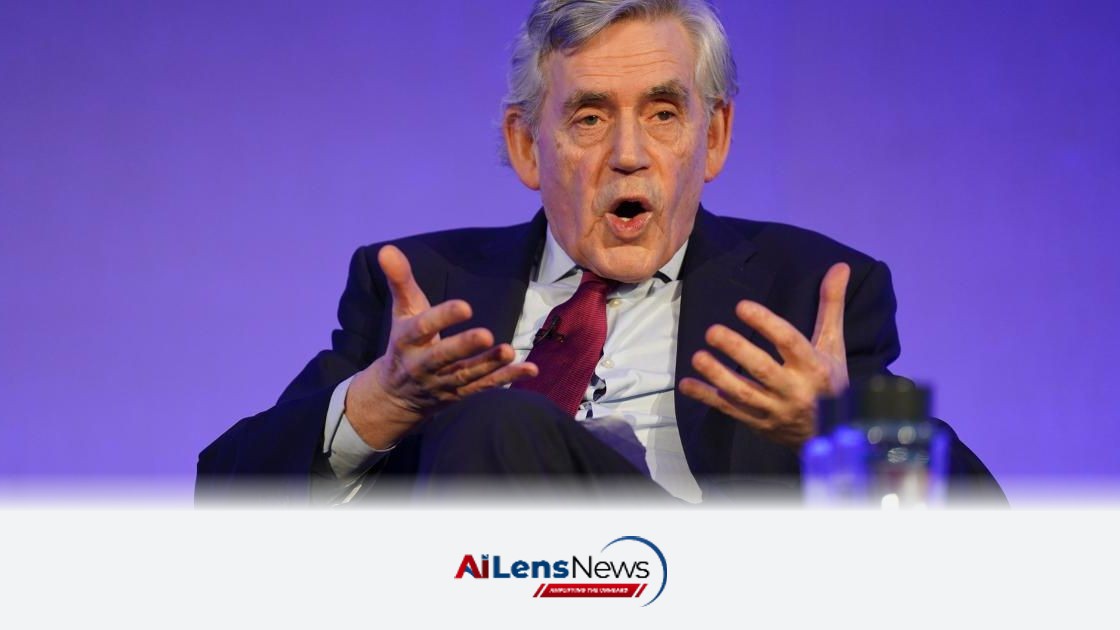



The SNP has criticized Labour's stance on constitutional matters, highlighting Gordon Brown's contradictory views on Irish reunification and Scottish independence.
London, United Kingdom Aug 30, 2026 ALN: The SNP has accused Labour of hypocrisy over constitutional change after former prime minister Gordon Brown said Irish reunification was inevitable while continuing to oppose another referendum on Scottish independence.
SNP depute leader Keith Brown stated that Brown's comments expose the party’s “blatant double standards” regarding the right of nations to determine their own futures. This accusation highlights a growing tension within the political landscape of the UK, particularly concerning the rights of different nations to self-determination.
In an interview with the Guardian, Gordon Brown remarked that “of course, in the long term, Ireland will be united,” emphasizing that any move towards a united Ireland must be gradual and based on agreement. This statement aligns with a historical context where the idea of Irish reunification has been a topic of discussion, especially since the Good Friday Agreement of 1998, which aimed to bring peace to Northern Ireland and allowed for the possibility of a referendum on the issue of reunification if there was sufficient public support.
However, he reiterated his opposition to Scottish independence, arguing that Scotland is geographically, economically, socially, and culturally linked to the rest of the UK. Brown's stance reflects a long-standing view within parts of the Labour Party that emphasizes unity and cooperation among the nations of the UK, which they argue is essential for economic stability and social cohesion.
SNP's Brown added: “Gordon Brown's slap down of Andy Burnham's anti-democratic and arrogant intervention in Ireland this week obviously exposes a clear contradiction between the pair but it equally exposes the Labour Party's blatant double standards when it comes to constitutional change.” This statement underscores the SNP's strategy of framing the independence debate as one of democratic rights, suggesting that the Labour Party's position is inconsistent and undermines the principle of self-determination.
“While accepting that people across Ireland have the right to decide their own future, Gordon Brown still won’t accept that Scots should be afforded the same basic level of democracy. The Labour Party's hypocrisy knows no bounds,” Keith Brown continued, suggesting that the SNP views this inconsistency as a significant political vulnerability for Labour.
“Andy Burnham claimed he was going to go on a listening tour around the UK but so far he has come to Scotland to tell us that independence is ‘off limits’ and then flew into Belfast to tell people that Irish unity is ‘off the table’. Instead of Burnham listening, people in Scotland and Ireland have witnessed more of the same Westminster lecturing.” This criticism reflects a broader sentiment among pro-independence supporters who feel that their voices are not being heard in the current political climate.
“The people of Scotland will democratically decide our future – not Andy Burnham, not Gordon Brown, not any other Westminster politician,” Keith Brown asserted. This statement signals the SNP's commitment to pursuing independence and emphasizes their belief in the democratic process as a means to achieve this goal.
“People across Scotland elected a record number of pro-independence MSPs in May; we now have First Ministers in every corner of these islands who reject Westminster and support the right of self-determination.” This reference to recent elections indicates a significant political shift in Scotland, where pro-independence sentiments appear to be gaining traction among the electorate.
“Instead of lecturing people about what they can and can't democratically decide, it's time Andy Burnham and Gordon Brown woke up to the reality that the failed UK status quo is coming to an end,” Brown concluded, suggesting that the SNP believes the current political framework is no longer viable and that change is imminent.
The former prime minister was asked whether Northern Ireland’s geographical connection with the Republic of Ireland made reunification sensible. He replied: “Yes. Well, of course, in the long term, Ireland will be united.” This statement acknowledges the historical and geographical complexities surrounding the issue of Irish reunification, which has been a contentious topic for decades.
Brown further noted that it would be “a long process where people have got to come together and find a way of agreeing.” This emphasizes the need for dialogue and consensus among the communities involved, which is crucial for any potential reunification process.
However, when discussing the ongoing pressure for Scottish independence, he stated: “Scotland’s got to find a way of living in cooperation with other countries, and independence would not be the right way forward.” This perspective reflects a belief in the benefits of remaining within the UK framework, which proponents argue provides economic security and political stability.
“We’re geographically, economically, socially, culturally linked to the rest of the United Kingdom, whether it’s Wales, England, or parts of Ireland.” This assertion underscores the Labour Party's position that the interconnectedness of the UK nations is a compelling reason to maintain the union.
His remarks follow comments by Prime Minister Andy Burnham during a visit to Northern Ireland, where he stated that Irish unity was “off the table.” Burnham had previously declared a second independence referendum as “off limits” during a visit to Scotland, drawing criticism from pro-independence parties. These statements have sparked further debate about the legitimacy of political leaders dictating the terms of constitutional change, particularly in light of the evolving political landscape and public sentiment regarding independence in both Scotland and Northern Ireland.
To learn more about the latest developments in Political Controversies, stay updated with our exclusive reports and analyses on AILensNews.

In a recent Assembly session, Dr. Mukul A. Sangma sought clarification from Chie…
Mohan Bhagwat's recent event in New York, hosted by AHEAD, reveals connections t…

In a significant political shift, nine out of twelve UDP MLAs are reportedly set…
Activist Manoj Jarange's hunger strike continues as he demands Kunbi caste certi…

President Trump's executive order to rename Lake Ontario as Lake America raises …