

More
Checking your session
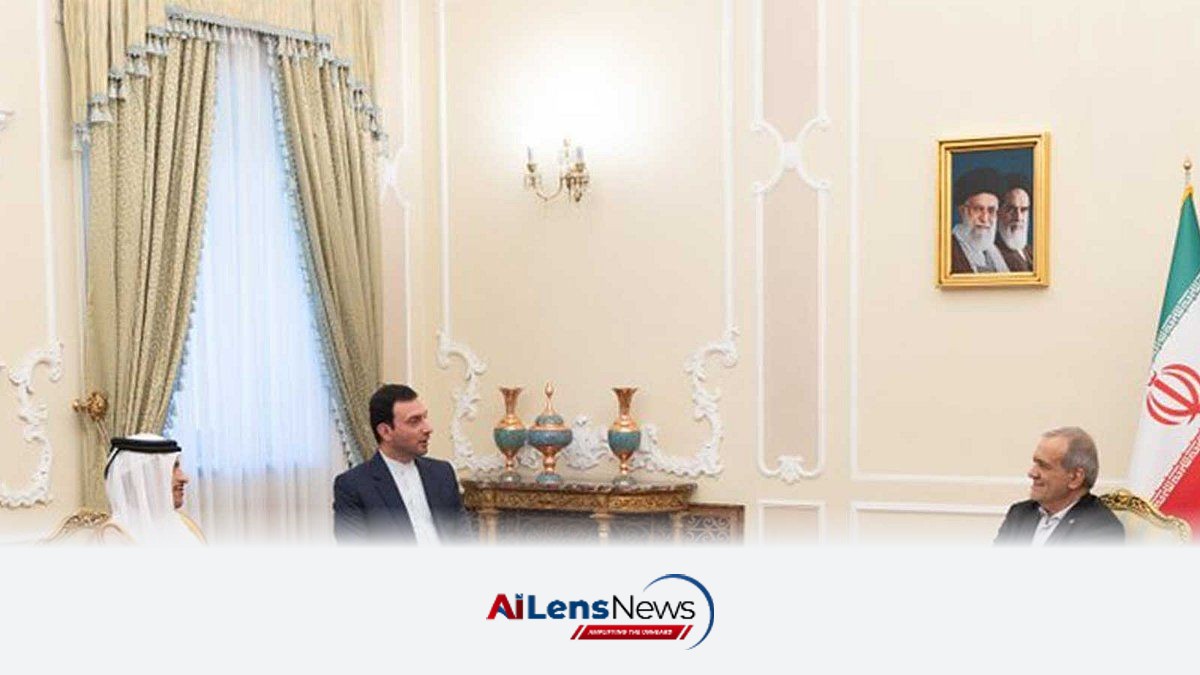



Qatar's PM meets Iran's President to address regional tensions and promote dialogue for security and stability.
Abu Dhabi, United Arab Emirates Aug 28, 2026 ALN: Qatar Prime Minister and Foreign Minister Mohammed bin Abdulrahman bin Jassim Al Thani met Iranian President Masoud Pezeshkian in Tehran on Thursday as Doha stepped up diplomatic efforts aimed at de-escalating regional tensions and creating conditions for dialogue.
The Qatar Ministry of Foreign Affairs, in a post on X, stated that the two sides discussed "regional developments, their impact on security and stability, and ongoing efforts to de-escalate tensions and foster a conducive environment for dialogue." This meeting comes at a crucial time as both nations seek to strengthen their ties amidst recent challenges. Pezeshkian emphasized that Iran and Qatar remain "two countries of friends and brothers" despite the "bitter events" that have transpired in the region.
Diplomatic relations between Qatar and Iran have been pivotal in navigating the complex geopolitical landscape of the Middle East. The discussions in Tehran reflect a mutual interest in maintaining peace and stability, which is essential for the broader region. The Middle East has historically been a zone of significant geopolitical tensions, influenced by a multitude of factors including sectarian divides, territorial disputes, and external interventions. The relationship between Qatar and Iran is particularly noteworthy given their differing alliances and interests in regional conflicts.
Qatar, a small but strategically located nation, has often sought to position itself as a mediator in regional disputes. Its foreign policy has been characterized by a willingness to engage with various factions and states, including those with which it has had contentious relationships. Iran, on the other hand, has faced increasing isolation due to its nuclear ambitions and its support for militant groups across the region. Despite these differences, both nations have recognized the importance of dialogue in addressing shared concerns, particularly in light of the ongoing crises in neighboring countries.
As tensions continue to rise in various parts of the Middle East, the meeting between Qatar and Iran signifies a step towards fostering a more stable environment. Both nations are hopeful that their diplomatic efforts will pave the way for constructive dialogue and cooperation in the future. The implications of this meeting extend beyond bilateral relations; they could influence broader regional dynamics, particularly in relation to the Gulf Cooperation Council (GCC) and Iran's relationships with its neighbors.
The GCC, of which Qatar is a member, has had a complicated relationship with Iran, primarily due to concerns over Iran's influence in the region and its support for groups viewed as destabilizing by the Gulf monarchies. Qatar's approach, however, has often been more conciliatory compared to its GCC counterparts, particularly Saudi Arabia and the United Arab Emirates, which have taken a harder line against Iranian activities.
The backdrop of the meeting also includes the recent normalization of relations between some Arab states and Israel, which has further complicated the geopolitical landscape. Iran perceives these developments as a direct threat, leading to increased tensions. Qatar's efforts to engage with Iran may be seen as an attempt to counterbalance these shifts and promote a more multipolar approach to regional diplomacy.
In conclusion, the meeting between the Qatari Prime Minister and the Iranian President reflects a significant diplomatic initiative aimed at addressing regional tensions through dialogue and cooperation. As both nations navigate the complexities of their relationships with other regional and global powers, their commitment to fostering peace and stability will be crucial in shaping the future of the Middle East. The outcomes of such meetings will be closely watched by other nations in the region, as they may signal shifts in alliances and influence in the ongoing quest for stability in a historically volatile area.
To learn more about the latest developments in Elections, stay updated with our exclusive reports and analyses on AILensNews.

Prime Minister Shehbaz Sharif emphasized the significance of the Makkah Joint De…

During recent talks in Tehran, Qatar's Prime Minister called on Iran to advance …

Chief Minister C Joseph Vijay argues that unproven claims cannot invalidate his …

A federal judge has halted a Postal Service regulation aimed at controlling mail…

A federal judge has temporarily halted President Trump's mail-in voting restrict…