

More
Checking your session
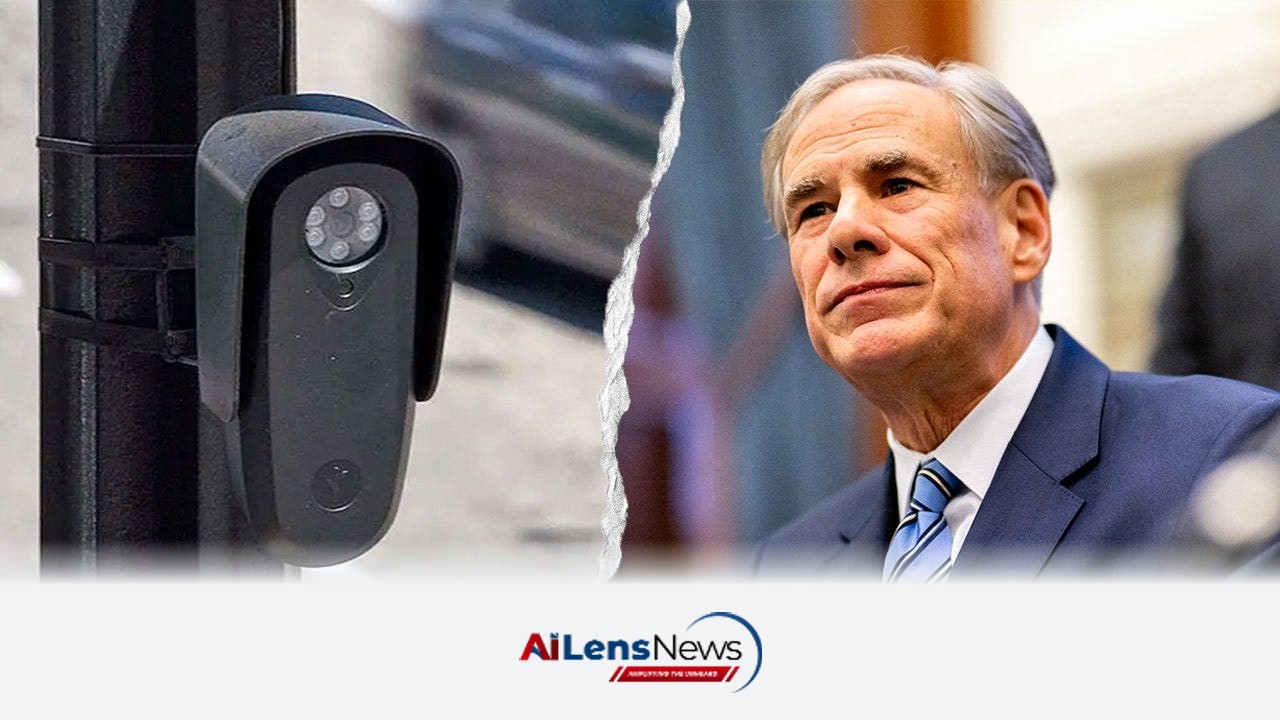



Governor Abbott's decision to cut funding for Flock cameras reflects growing privacy concerns as cities across Texas reconsider their use.
Austin, United States Aug 29, 2026 ALN: Texas Governor Greg Abbott has ordered state agencies to pause funding for AI-powered Flock cameras, which have faced increasing scrutiny nationwide due to privacy concerns. This decision comes as various cities in Texas are canceling their contracts with the automated license plate reader technology. The move highlights a growing tension between public safety initiatives and the right to privacy, a debate that has gained momentum in recent years as surveillance technologies become more prevalent.
According to Abbott's office, the state is moving to cut off funding for these cameras, although it noted that most of the financial support for them originates from federal sources. Abbott's spokesperson, Andrew Mahaleris, stated, "Almost all Flock cameras in Texas are used by cities, and those cities are increasingly canceling their contracts with Flock." This statement underscores the fact that local governments are reassessing their involvement with the technology amid mounting concerns from constituents.
Mahaleris further explained that any funding that cities receive for these cameras primarily comes from the federal government. He added, "To the extent any funding comes from Texas agencies, those agencies are clarifying that those funds cannot be used for Flock cameras." This move aligns with a broader trend as communities across Texas reassess their relationships with Flock, citing worries about data sharing and potential misuse of information. The implications of this decision could resonate beyond Texas, as other states may look to Texas' actions as a precedent in the ongoing debate over surveillance technology.
Flock Safety is one of the leading providers of automated license plate readers (ALPRs) in Texas. These cameras capture images of passing vehicles and record identifying details, utilizing artificial intelligence to detect various vehicle characteristics such as make, model, and color. Law enforcement agencies can then search records across networks of participating cameras, which can be a powerful tool for solving crimes. However, the technology's capabilities have raised alarms among privacy advocates, who argue that the potential for mass surveillance and data breaches poses a significant risk to individual privacy rights.
Supporters argue that these cameras can assist authorities in quickly locating criminal suspects and stolen vehicles. They contend that the benefits of enhanced public safety and crime prevention outweigh the risks associated with data collection. However, opponents raise significant concerns regarding privacy, data sharing, and the potential for misuse of the information collected. This dichotomy reflects a broader societal debate about the balance between security and civil liberties, a conversation that has intensified in the wake of increased surveillance in urban areas.
Abbott's announcement follows recent actions by local governments. Earlier this week, the Pflugerville City Council voted unanimously to terminate its agreement with Flock, effectively eliminating all 28 camera readers covered by the contract. Similarly, Hood County's Commissioners Court voted to end its relationship with Flock, directing that the county's three cameras be disconnected and covered until they can be removed. These local decisions indicate a significant shift in how municipalities are approaching surveillance technology, with many opting for a more cautious stance.
In a radio interview, Abbott noted that cities and counties have begun canceling contracts with Flock amid increasing pressure from residents concerned about surveillance practices. This sentiment reflects a growing bipartisan backlash against the technology, with both conservatives and liberals expressing unease about its implications for personal privacy. The increasing scrutiny may lead to more comprehensive legislative measures aimed at regulating the use of surveillance technology in Texas and potentially across the United States.
In response to the backlash, Flock Safety spokesperson Paris Lewbel defended the technology, emphasizing its role as a vital public safety tool. "Flock’s technology is an important public safety tool for law enforcement agencies across Texas, helping officers solve serious crimes, find missing people, recover stolen vehicles, and support safer communities," Lewbel stated. His comments highlight the company's position that the benefits of their technology can lead to significant advancements in law enforcement capabilities.
He also expressed support for legislation that includes strong privacy and accountability measures to ensure responsible use of technology while allowing law enforcement to effectively protect communities. This suggests that Flock Safety is willing to engage in discussions about how to balance the benefits of their technology with the need for privacy protections, a stance that could help mitigate some of the concerns raised by critics.
The Motor Vehicle Crime Prevention Authority, a Texas state agency aimed at combating vehicle theft and related crimes, has facilitated the installation of over 3,000 Flock cameras since 2023, underscoring the technology's widespread adoption prior to the recent backlash. The agency's involvement illustrates the extent to which state resources have been allocated toward combating vehicle-related crimes using advanced technology, further complicating the conversation around privacy and surveillance.
As the debate continues, the future of AI-powered surveillance in Texas remains uncertain, with privacy concerns at the forefront of discussions among lawmakers and the public alike. The actions taken by Governor Abbott and local governments may signal a turning point in the relationship between technology and civil liberties, prompting a reevaluation of how surveillance tools are deployed and regulated. This situation could set a precedent for other states grappling with similar issues, as communities across the nation seek to navigate the complex landscape of public safety and individual privacy rights.
To learn more about the latest developments in Political Controversies, stay updated with our exclusive reports and analyses on AILensNews.

In a provocative move, President Trump has ordered Lake Ontario to be renamed 'L…

Nitin Nabin has summoned three BJP MPs for visiting the family of Sajjan Kumar, …

In response to a recent incursion by the Chinese PLA into Taksing, the APCC has …

Karnataka Chief Minister D.K. Shivakumar announced he will send Minister B. Nage…
The Seneca Nation's leader condemns President Trump's renaming of Lake Ontario, …