

More
Checking your session
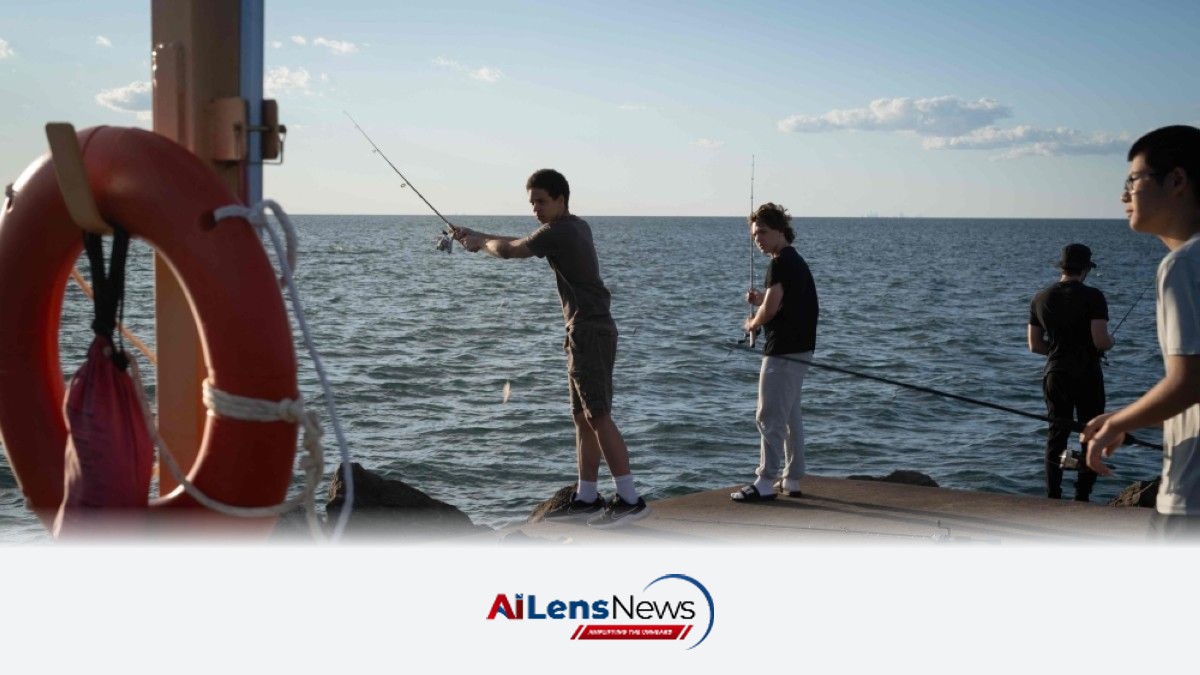



In a provocative move, President Trump has ordered Lake Ontario to be renamed 'Lake America,' escalating trade tensions with Canada.
Kuwait City, Kuwait Aug 30, 2026 ALN: US President Donald Trump on Thursday ordered Lake Ontario to be renamed “Lake America” as he escalated his trade war with Canada, sparking immediate pushback from Ottawa. Trump stepped up his trolling of Canada by signing an executive order changing the name of the body of water on the border between the North American neighbors.
But Canadian Prime Minister Mark Carney swiftly rejected Trump’s move, stating it would be called Lake Ontario “then, now and always.” The volatile US leader’s action comes after US-Canada trade talks collapsed last week, prompting both countries to impose tit-for-tat tariffs on each other. The relationship between the two nations has been strained for several years, with trade disputes affecting various sectors, including agriculture, manufacturing, and energy.
“We’re going to be changing the name of Lake Ontario effective immediately to Lake America,” the 80-year-old Republican told journalists as he signed the order at the White House. When asked by an AFP reporter why he was targeting an ally instead of America’s adversaries, Trump replied: “The Canadian officials have treated us very badly. They’re nasty people.” Behind Trump’s desk in the Oval Office were two maps — one with the words “Lake America” in red over the lake, and the other titled, “Making the Great Lakes Even Greater.” This move is seen as part of a broader strategy by Trump to assert American dominance in various arenas, including trade and international relations.
Canada Strikes Back
Lake Ontario is the smallest by surface area of the five Great Lakes, which straddle the border between the United States and Canada. It borders the Canadian province of Ontario and the US state of New York. The name change mirrors Trump’s unilateral altering of the name of the Gulf of Mexico to the Gulf of America in January 2025 — a move that Mexico has also rejected. Carney retorted that the name of the lake was 400 years old, predating the formation of both the United States and Canada, and comes from an Indigenous word meaning “the lake is beautiful, the lake is big.” This historical context adds a layer of complexity to the name change, as it touches upon Indigenous heritage and the significance of names in cultural identity.
“We know that America is changing,” he said in a post on X. “Canadians also know that naming reality means calling it Lake Ontario — then, now and always.” Carney’s defiance of Trump in recent days has won him praise at home, highlighting a sense of national pride and unity among Canadians in response to perceived American aggression.
In Toronto, Canada’s largest city, which lies on the lake’s northwestern shore, both Canadians and Americans criticized Trump’s move. “Typical Trump. He’s being a bully, he goads, he antagonizes,” said Mark Weicker, who lives in Kitchener, west of Toronto. “He’s just trying to egg us on,” chimed in Jake Marchuk, who was visiting from Alberta province. Megan Smith, who hails from New Jersey, put it bluntly: “It just makes him look stupid.” The sentiment among residents reflects a broader discontent with Trump’s approach to international relations, which many view as counterproductive to fostering cooperation between neighboring countries.
Trump’s executive order instructs the US Department of the Interior to update references to the lake in the official geographical naming service within 30 days and ensure the federal government calls it “Lake America.” The justification for the name change states that the deepest part of the lake is on the American side, meaning that the United States “claims most of the Lake’s volume.” This assertion raises questions about the validity of territorial claims based solely on geographical features, especially in a region where shared resources are governed by treaties and agreements.
Trump — who faces low approval ratings amid the Iran war and economic woes at home, with crucial US midterm elections approaching in November — said he had been contemplating the name change “for a long time.” This timing suggests that the name change could also be a strategic move to rally his base by appealing to nationalist sentiments, as he seeks to bolster his image ahead of the elections.
The US president even hinted at renaming oceans that border the United States, stating, “We have a gulf and we have a lake. Now all we need is an ocean. So, maybe we’ll have to change the name of the Atlantic and/or the Pacific. Maybe we’ll change them both.” This statement exemplifies Trump’s tendency to make bold claims that resonate with his supporters, yet often lack grounding in diplomatic norms or international law.
During his second presidential term, Trump has irked several allies with his outlandish territorial claims, including suggesting that Canada should become the 51st US state. He has also laid claim to Greenland, an autonomous territory of NATO ally Denmark, and discussed making Venezuela a state following the US capture of its leader Nicolas Maduro. These actions reflect a broader pattern of behavior that prioritizes unilateral decision-making over collaborative diplomacy.
In recent days, he has also claimed that he will make the Strait of Hormuz between Iran and Oman a US territory, despite the ongoing war with Tehran. Such statements have raised eyebrows internationally, as they challenge established norms of sovereignty and territorial integrity. The implications of these actions extend beyond mere name changes; they signal a shift in the dynamics of international relations, where traditional alliances are tested and the rules of engagement are increasingly questioned.
As the situation continues to develop, both the United States and Canada will need to navigate the complexities of their relationship carefully. While Trump’s actions may resonate with a segment of the American population, they risk alienating allies and undermining long-standing partnerships that have been built on mutual respect and cooperation. The future of Lake Ontario, or “Lake America,” remains uncertain as both nations grapple with the implications of this provocative move.
To learn more about the latest developments in Political Controversies, stay updated with our exclusive reports and analyses on AILensNews.

In a recent Assembly session, Dr. Mukul A. Sangma sought clarification from Chie…

Mohan Bhagwat's recent event in New York, hosted by AHEAD, reveals connections t…

In a significant political shift, nine out of twelve UDP MLAs are reportedly set…

Activist Manoj Jarange's hunger strike continues as he demands Kunbi caste certi…
President Trump's executive order to rename Lake Ontario as Lake America raises …