

More
Checking your session
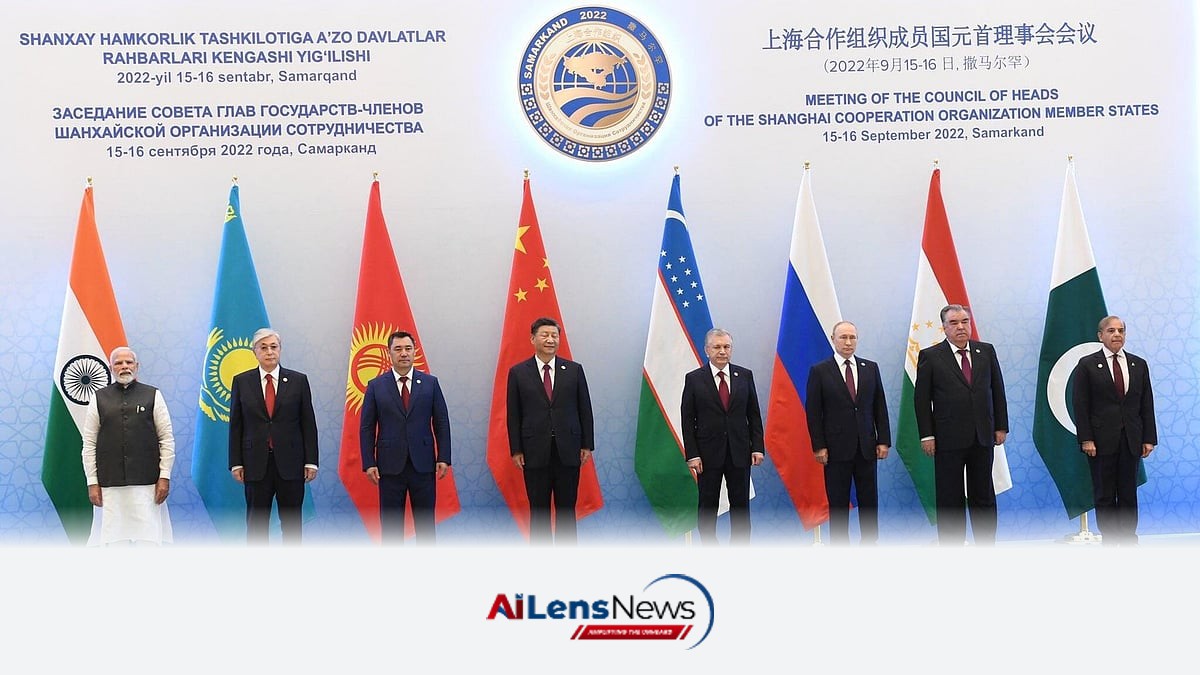



As the 26th SCO Summit approaches, India positions itself to leverage the platform for regional security and economic integration amidst shifting geopolitical dynamics.
Gangtok, India Aug 29, 2026 ALN: Chandan Kumar Nath
As the global geopolitical centre of gravity shifts decisively eastward, the Shanghai Cooperation Organisation (SCO) has emerged as a critical arena for defining the future of Eurasian security and economic integration. With the 26th SCO Summit converging in Bishkek, Kyrgyzstan, in late August 2026, the diplomatic chessboard is set for a high-stakes recalibration of regional power dynamics. For India, a nation steadfast in its commitment to strategic autonomy, the SCO is no longer just an obscure Eurasian bloc; it is an indispensable forum for securing its continental interests, managing friction with adversarial neighbors, and projecting its vision of a multipolar world order. Prime Minister Narendra Modi's scheduled bilateral engagements on the sidelines, particularly with Russian President Vladimir Putin, underscore the immense strategic capital New Delhi invests in this multilateral framework, even as it simultaneously deepens its maritime footprint globally.
India's membership in the SCO, formalized in 2017 alongside Pakistan, has always been a complex diplomatic maneuver. The organization is heavily influenced by Beijing and Moscow, presenting a unique challenge for a democratic India that concurrently nurtures strong defense and technological ties with Western capitals. Yet, New Delhi's sustained engagement with the SCO is driven by stark geopolitical realities rather than ideological alignment. The vast expanse of Central Asia represents a frontier of untapped energy resources, critical minerals, and connectivity potential that India cannot afford to cede entirely to Chinese hegemony. By maintaining a robust presence at the highest levels of the SCO, India ensures that its voice remains consequential in shaping the discourse on regional connectivity, ensuring that infrastructural initiatives respect sovereignty and territorial integrity.
The core of India's strategic mandate within the SCO, however, revolves around the pressing need for regional security and the neutralization of cross-border terrorism. The Tashkent-based Regional Anti-Terrorist Structure (RATS) serves as the institutional mechanism through which New Delhi channels its security concerns. The imperative to confront the "three evils" of terrorism, separatism, and extremism is a recurring theme in Indian diplomatic overtures at the SCO. This was starkly evident during External Affairs Minister S. Jaishankar's historic visit to Islamabad in October 2024 for the SCO Council of Heads of Government meeting. As the first visit by an Indian foreign minister to Pakistan in nearly a decade, the optics were globally scrutinized. Jaishankar utilized the platform to deliver a masterclass in diplomatic messaging, subtly but unmistakably reminding the member states that trade, energy flows, and connectivity cannot thrive in an ecosystem tainted by state-sponsored extremism. By refusing to compromise its bilateral stance while fully participating in the multilateral agenda, India demonstrated its capacity to compartmentalize disputes and prioritize broader regional stability.
Navigating the internal dynamics of the SCO requires a delicate balancing act, particularly given the often-divergent interests of its member states. The organization includes nations like Iran, Russia, and China, whose relations with the West range from strained to openly adversarial. India, conversely, perceives no contradiction in championing the Global South while maintaining robust strategic partnerships with Western democracies. The upcoming summit in Bishkek, coinciding with the 25th anniversary of the SCO, offers India a vital platform to reiterate that the organization must not degenerate into an anti-Western bloc. Instead, New Delhi consistently advocates for an inclusive framework that prioritizes sustainable development, secure supply chains, and cultural exchange.
Prime Minister Modi's diplomatic choreography, transitioning from state visits in Uzbekistan to multilateral plenaries in Kyrgyzstan, reflects a highly calibrated effort to deepen bilateral ties with Central Asian republics independently of the Sino-Russian axis. Energy security and economic integration remain paramount. Central Asia's landlocked geography necessitates viable transit corridors that bypass hostile territories. India's investment in the International North-South Transport Corridor (INSTC) and the Chabahar Port in Iran are strategic counterweights designed to facilitate direct access to Eurasian markets. Within the SCO framework, India seeks to align these connectivity projects with the broader economic aspirations of the Central Asian republics, offering a transparent and economically viable alternative to opaque infrastructure financing.
The discussions in Bishkek will likely pivot toward securing uninterrupted energy supplies and fostering cooperation in critical sectors such as healthcare, digital infrastructure, and space technology, areas where India's expertise is highly valued by its Eurasian partners.
India's strategic importance to the SCO is equaled only by the SCO's importance to India's continental ambitions. As the world navigates an era of unprecedented volatility, characterized by ongoing conflicts and economic fragmentation, India anchors the SCO with a stabilizing presence. It acts as a democratic counterweight, preventing the monopolization of the Eurasian narrative by any single power. By actively shaping the SCO's agenda, pushing for uncompromising stances on terrorism, and championing equitable connectivity, India ensures that its strategic autonomy remains intact. The Bishkek summit of 2026 is not merely a diplomatic gathering; it is a testament to India's enduring resolve to safeguard its national interests while steering the broader Eurasian landmass toward sustainable peace and multipolar parity.
To learn more about the latest developments in Political Controversies, stay updated with our exclusive reports and analyses on AILensNews.

The Mizo Zirlai Pawl has renewed its call for political parties to avoid nominat…
BJP leader Thapa emphasizes the party's duty to fulfill the aspirations of the G…

Dr. W.R. Kharlukhi, a former Rajya Sabha MP, has resigned from the National Peop…
Chakma organizations in India observe 'Chakma Black Day' to demand the annexatio…
The Gorkha Janmukti Morcha convened an all-party meeting in Darjeeling to discus…