

More
Checking your session
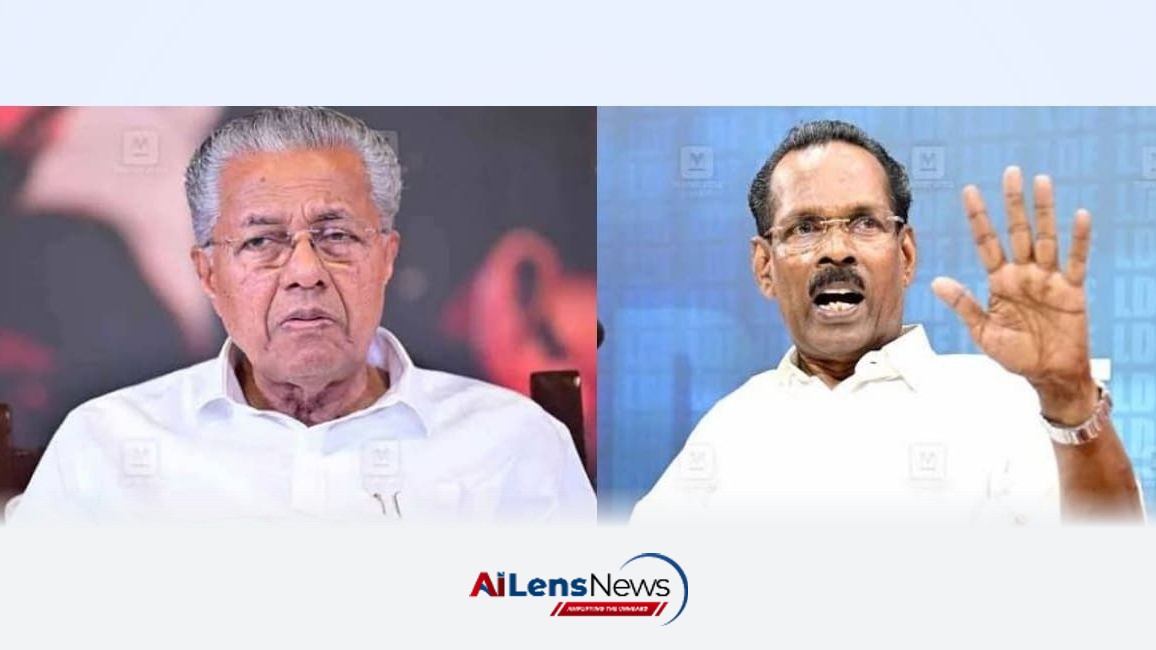



LDF convenor T P Ramakrishnan indicates ongoing discussions to resolve the CPI's claim to the deputy leader position, countering Pinarayi Vijayan's earlier dismissal.
Doha, Qatar Aug 29, 2026 ALN: The political landscape within the Left Democratic Front (LDF) has recently been stirred by discussions surrounding the appointment of the deputy leader of the opposition in the Kerala Assembly. This debate has highlighted not only the internal dynamics of the LDF but also the broader implications for the coalition's unity and strategy moving forward. T P Ramakrishnan, the LDF convenor and a member of the Communist Party of India (Marxist) [CPM] Central Committee, has reopened discussions on this contentious issue, signaling a potential shift in the coalition's approach.
The backdrop to this situation is marked by a growing tension between the two principal parties in the LDF, the CPM and the Communist Party of India (CPI). Recently, Pinarayi Vijayan, the Opposition Leader and a prominent CPM figure, had dismissed the CPI's claim to the deputy leader post as a "closed chapter." His remarks, which were perceived as dismissive, have exacerbated feelings of discontent within the CPI, leading to a public declaration of war by its leadership.
In the context of Kerala politics, the deputy leader position is not merely a ceremonial role; it carries significant weight in terms of representation and influence within the Assembly. The CPI's demand for this position reflects its desire for greater recognition and power-sharing within the LDF, especially as the coalition navigates a complex political landscape that requires unity and strategic cooperation among its members.
Ramakrishnan's recent statements indicate a willingness to engage in dialogue and mutual consultations to address the grievances expressed by the CPI. This approach contrasts sharply with Vijayan's earlier stance, which seemed to prioritize CPM's dominance within the coalition. By emphasizing the importance of Left unity, Ramakrishnan is attempting to mend the rift that has emerged and reaffirm the coalition's collective strength in the face of external challenges.
The comments made by Vijayan, particularly his assertion that appointing a CPI member as the deputy leader was a straightforward matter of submitting a letter to the Speaker, have been interpreted as an underestimation of the CPI's role and contributions to the LDF. His playful tone and the assurance that he would submit a name from the CPM have only fueled the fire of dissent within the CPI, prompting strong reactions from its leaders. CPI state secretary Binoy Viswam criticized Vijayan's remarks as lacking political maturity and not befitting his position, while CPI general secretary D Raja firmly stated that the party would not back down from its demand.
The escalating tensions have raised questions about the future of the LDF, especially given the historical context of the coalition's formation. The LDF has traditionally been a platform for various leftist ideologies to unite against common adversaries, primarily the Indian National Congress and the Bharatiya Janata Party (BJP). However, the recent disagreements suggest that internal cohesion is being tested, and the dynamics within the coalition may need recalibration to ensure a united front.
Ramakrishnan's call for restraint and his attempts to downplay the differences between the parties are crucial at this juncture. By advocating for discussions and mutual understanding, he is attempting to steer the coalition away from public disputes that could weaken its position. His acknowledgment of differing opinions within the party reflects a recognition of the need for dialogue rather than conflict, which could ultimately benefit the LDF's strategy moving forward.
Moreover, Ramakrishnan's nuanced approach suggests that while there may have been an earlier understanding favoring the CPM for the deputy leader post, he is open to revisiting this decision in light of the current political climate. This willingness to engage with the CPI's demands could be seen as a pragmatic move to ensure that the LDF remains cohesive and effective in its opposition to the ruling parties in Kerala.
The implications of these discussions extend beyond the immediate concerns of leadership roles. The LDF's ability to navigate its internal challenges will be crucial as it prepares for upcoming electoral battles, where unity and collaboration will be paramount. A fractured coalition could lead to vulnerabilities that opposition parties might exploit, potentially jeopardizing the LDF's electoral prospects.
In summary, the ongoing discussions regarding the CPI's claim to the deputy leader post highlight the delicate balance of power within the LDF. Ramakrishnan's efforts to mediate the situation and promote dialogue are essential for maintaining the coalition's integrity. As the political climate continues to evolve, the LDF must find ways to address the aspirations and concerns of its constituent parties while presenting a united front against external challenges. The resolution of this issue will not only impact the internal dynamics of the LDF but also shape its future trajectory in Kerala's political landscape.
To learn more about the latest developments in Elections, stay updated with our exclusive reports and analyses on AILensNews.

The Scottish Government has introduced a draft bill for a second independence re…

The SNP Government has published a draft bill for a second independence referend…

Prime Minister Narendra Modi is set to enhance India's strategic partnerships in…

On the 63rd anniversary of Martin Luther King Jr.'s iconic speech, thousands gat…

Prime Minister Modi begins a two-nation visit to Uzbekistan and Kyrgyzstan, focu…