

More
Checking your session
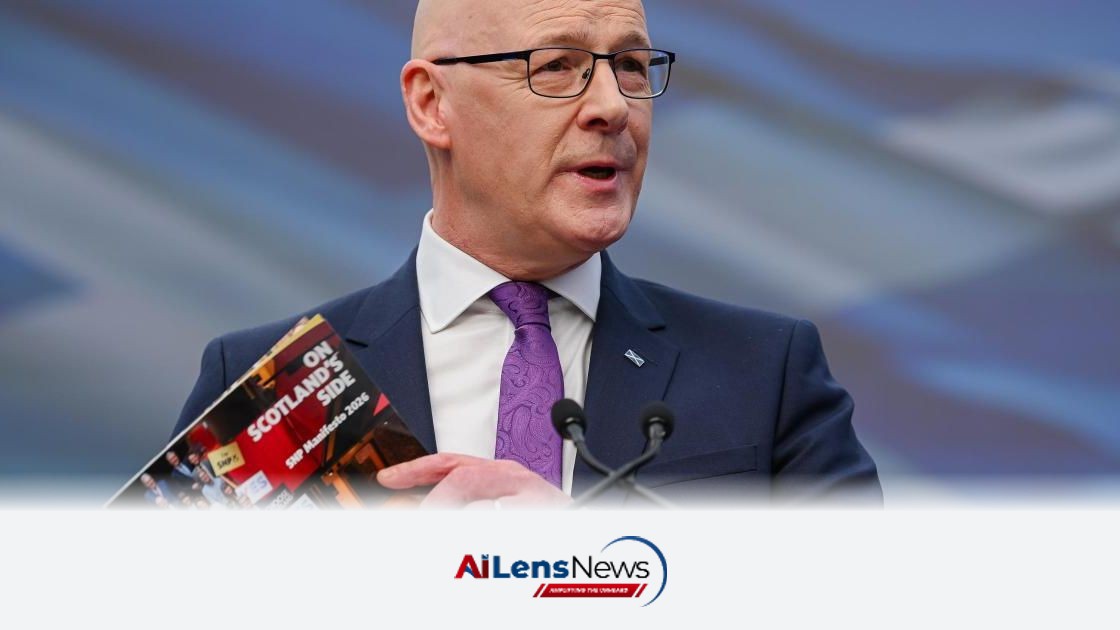



The SNP Government has published a draft bill for a second independence referendum, but legal experts warn it may face significant hurdles.
London, United Kingdom Aug 29, 2026 ALN: The SNP Government published draft legislation for a second independence referendum on Friday, announced with significant fanfare by First Minister John Swinney.
“In May, the largest number of pro-independence MSPs in history voted to support the call for powers to hold a referendum on Scottish independence to be devolved to the Scottish Parliament,” he said.
This draft bill is described as simple, straightforward, and direct. It proposes a clear, unambiguous question, outlines who can vote in the referendum, and will include the date once agreed. It aims to provide the public with certainty.
The draft Independence Referendum Bill defines the franchise for a vote but does not specify a date.
The proposed question for the referendum is: “Should Scotland be an independent country? Yes or No.” This is largely the same as the bill published by Nicola Sturgeon’s government in 2021, prior to the Supreme Court ruling in 2022 that determined the power to hold such a vote is reserved to Westminster.
Consequently, the Scottish Government has stated that the bill will effectively remain on hold until the necessary powers are secured.
Prime Minister Andy Burnham has also swiftly indicated that he will not consider agreeing to the bill.
What can this draft bill actually achieve, and why is the SNP publishing it now?
Speaking to The National, constitutional law expert Nick McKerrell noted that the legislation illustrates the challenging position facing the SNP following the 2022 judgment.
“It’s even more of a symbolic thing now, the referendum bill, because we know it can’t be introduced to the Scottish Parliament,” he stated.
McKerrell explained that it is possible for the Scottish Parliament to debate legislation in cases where there is a live dispute about whether it falls within Holyrood’s powers, citing disputes over Brexit-related legislation that proceeded through parliamentary processes before the legal position was ultimately determined.
However, he emphasized that the independence referendum bill is in a different category due to the Supreme Court's decision.
“Any bill in the Scottish Parliament cannot be accepted if it’s outside the powers of the Scottish Parliament. You can publish it, but you couldn’t vote on it, for example, or have a discussion on it,” he clarified.
“What’s different about the referendum is that, almost uniquely, we already know that it’s not in the power of the Scottish Parliament, according to the Supreme Court, because they’ve already decided it.”
This situation is rare, as typically disputes arise during the parliamentary process regarding whether something is within the powers. However, this issue has already been referred to the Supreme Court, making the current bill even more symbolic.
When asked why the SNP has published it now, McKerrell highlighted that the party is following through on promises made earlier this year. Swinney had stated during the Holyrood election campaign that he would push forward plans to achieve independence if the SNP was re-elected.
After the SNP Government was re-elected in May, a motion in the Scottish Parliament calling on Westminster to make a Section 30 order under the Scotland Act 1998 to devolve the powers to hold a referendum on Scottish independence passed by 72 votes to 55.
This publication is perhaps a natural next step.
McKerrell added, “But also it’s conference time, isn’t it? So it’s something to show that something has happened.”
The publication of the draft bill comes one day after Swinney faced criticism from within the SNP, following a leaked draft conference agenda that showed no motions on Scottish independence strategy had been selected for debate.
When asked about this approach, McKerrell noted that it reflects a broader unresolved disagreement within the independence movement.
“There’s a division between those in the broader independence movement who believe that should be ignored, that you should do it anyway – which is problematic and difficult to actually enforce or do anything about – and those who say, well, it is the only route, and we just have to keep hammering away at that Section 30 route.”
The national conference is set to be held in Aberdeen from October 15-17.
To learn more about the latest developments in Elections, stay updated with our exclusive reports and analyses on AILensNews.

The Scottish Government has introduced a draft bill for a second independence re…

Prime Minister Narendra Modi is set to enhance India's strategic partnerships in…

On the 63rd anniversary of Martin Luther King Jr.'s iconic speech, thousands gat…
Prime Minister Modi begins a two-nation visit to Uzbekistan and Kyrgyzstan, focu…

Defense Secretary Pete Hegseth is reportedly considering a presidential run in 2…