

More
Checking your session
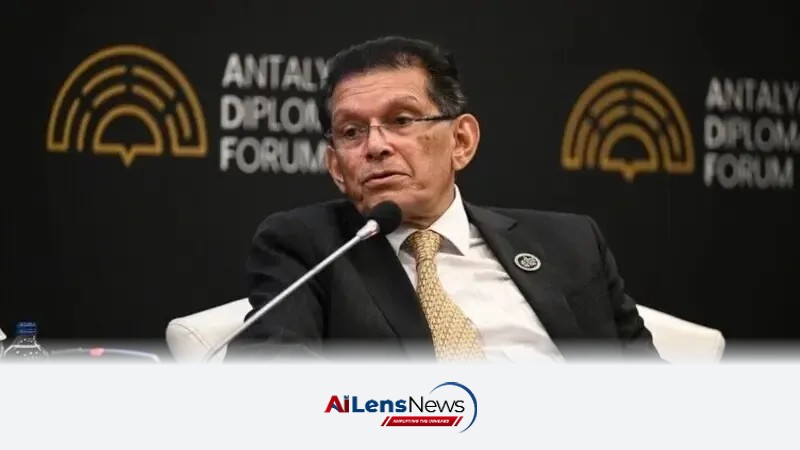



Bangladesh's Foreign Minister Khalilur Rahman expressed that the country would consider joining the Makkah Pact positively if invited, emphasizing the importance of assessing potential benefits.
Islamabad, Pakistan Aug 27, 2026 ALN: Bangladesh's Foreign Minister Khalilur Rahman recently indicated that the country would consider joining the Makkah Pact favorably if invited by the founding members. This statement, made during a parliamentary session, reflects Bangladesh's ongoing assessment of its role in regional security frameworks and its position within the broader Muslim community.
Minister Rahman emphasized that the decision to join the pact has not yet been finalized and is contingent upon the intentions of the existing members. He stated, "Joining the pact or not has not come yet, as it is subjected to the intention of the parties involved in the pact. If they invite Bangladesh to join, then we will definitely consider it positively." This cautious approach underscores the importance of evaluating the potential benefits and implications of such a membership before making a commitment.
Furthermore, Rahman highlighted the Makkah Pact as a self-defense mechanism for the Muslim world, asserting that it is an internal matter for the Muslim community. He noted, "More importantly, we have to keep in mind that it [the Makkah Pact] is the Muslim world’s self-defence mechanism. And this is our family’s, the Muslim family’s, internal matter. So, there is nothing for others to be concerned about." This statement reflects a sentiment of solidarity among Muslim nations, emphasizing the need for collective security and cooperation.
In response to the Foreign Minister's remarks, opposition leader and Bangladesh Jamaat-i-Islami Ameer Shafiqur Rahman asserted that the decision to join the Makkah Pact is ultimately Bangladesh's prerogative. He stated, "If Bangladesh takes a decision in the interests and needs of the country and nation, no one else needs to worry about it." This perspective highlights the importance of national sovereignty and the need for Bangladesh to prioritize its own interests in foreign policy decisions.
Earlier in the week, Bangladesh's State Minister for Foreign Affairs Humayun Kabir had also expressed interest in the Makkah Pact, suggesting that the country is open to exploring its implications. "If there is one [agreement] in West Asia, if there is a security agreement between Islamic countries, then it is not unusual to go there. Let’s see. The matter is being viewed positively," Kabir remarked. This statement indicates that the Bangladeshi government is actively engaging in discussions about its potential role in regional security arrangements.
The Makkah Pact, formally known as the Makkah Joint Defence Agreement, was signed by Turkey, Saudi Arabia, and Pakistan during a trilateral summit in Makkah on August 7. The agreement aims to strengthen collective security, deepen defense cooperation, and promote peace and stability both in the region and beyond. The pact empowers member states to consider an attack on one as an attack on all, fostering a sense of unity and shared responsibility among the signatories.
Notably, the Makkah Pact is part of a broader trend of military and defense collaborations among Islamic nations. Pakistan and Saudi Arabia had previously signed a "Strategic Mutual Defence Agreement" in September 2022, which similarly pledges mutual defense against aggression. These agreements reflect a growing recognition among Muslim-majority countries of the need for coordinated responses to security threats, particularly in a geopolitical landscape marked by instability and conflict.
The discussions surrounding the Makkah Pact have garnered international attention, with endorsements from various countries, including the United States, Bahrain, and Somalia. Turkey has expressed hopes that Egypt will join the pact in the future, indicating a potential expansion of this security framework. The involvement of major players in the Muslim world suggests that the Makkah Pact could play a significant role in shaping regional security dynamics and fostering cooperation among Islamic nations.
As Bangladesh considers its position regarding the Makkah Pact, it must weigh the potential benefits of joining such a collective security arrangement against the possible implications for its foreign relations and domestic politics. The decision to join the pact could have far-reaching consequences, not only for Bangladesh's security strategy but also for its diplomatic relations with other nations, both within and outside the Muslim world.
In conclusion, the Bangladeshi government's cautious yet open stance towards the Makkah Pact reflects its ongoing efforts to navigate complex geopolitical landscapes while prioritizing national interests. As the situation evolves, it will be crucial for Bangladesh to engage in thorough assessments and consultations to ensure that any decision made aligns with its long-term strategic goals and the aspirations of its people.
To learn more about the latest developments in Elections, stay updated with our exclusive reports and analyses on AILensNews.
Prime Minister Shehbaz Sharif emphasized the significance of the Makkah Joint De…
During recent talks in Tehran, Qatar's Prime Minister called on Iran to advance …

Chief Minister C Joseph Vijay argues that unproven claims cannot invalidate his …

A federal judge has halted a Postal Service regulation aimed at controlling mail…

A federal judge has temporarily halted President Trump's mail-in voting restrict…