

More
Checking your session
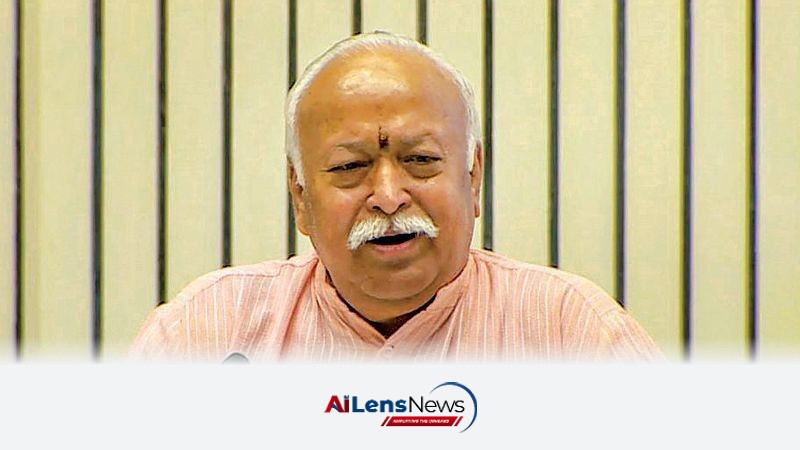



The USCIRF has voiced opposition to Mohan Bhagwat's visit to the US, highlighting ongoing religious freedom challenges and minority rights violations in India.
New Delhi, India Aug 28, 2026 ALN: The United States Commission on International Religious Freedom (USCIRF) has expressed significant concerns regarding the upcoming visit of Mohan Bhagwat, the chief of the Rashtriya Swayamsevak Sangh (RSS), to the United States. The commission has flagged this visit as problematic, citing ongoing challenges to religious freedom in India and reported attacks on various minority communities, including Muslims, Christians, Sikhs, and Dalits.
The USCIRF, an independent federal agency established by the U.S. Congress, has been vocal about its apprehensions regarding the state of religious freedom in India. In its recent statement, the commission emphasized that Bhagwat's visit could be perceived as tacit approval of the current government's policies, which have been criticized for fostering an environment of intolerance and discrimination against religious minorities. The USCIRF's concerns are not isolated; they are part of a broader narrative regarding the rise of religious nationalism and its implications for democracy and pluralism in India.
India, a nation known for its diverse religious landscape, has faced increasing scrutiny over its treatment of minority communities in recent years. Reports of violence, discrimination, and systemic oppression against these groups have raised alarms both domestically and internationally. The USCIRF's concerns reflect a broader apprehension about the erosion of secularism and pluralism in Indian society. In recent years, various reports have documented incidents of mob violence against Muslims, the imposition of anti-conversion laws that disproportionately affect Christians, and the marginalization of Dalits, who are often subjected to caste-based discrimination. Such incidents have led to fears that the fundamental tenets of India's constitution, which guarantees freedom of religion, are being undermined.
The situation has been further complicated by the rise of Hindu nationalist rhetoric, which has gained traction among certain political factions in India. This rhetoric often portrays minority communities as outsiders or threats to the nation, contributing to a climate of fear and hostility. The USCIRF's statement regarding Bhagwat's visit underscores the perception that the RSS, under Bhagwat's leadership, has been instrumental in promoting this narrative, thereby exacerbating tensions among religious communities.
As the leader of the RSS, Bhagwat plays a pivotal role in shaping the ideological framework of the organization, which is often linked to the ruling Bharatiya Janata Party (BJP). The RSS has historically been a proponent of Hindutva, a form of Hindu nationalism that seeks to define Indian culture in terms of Hindu values and traditions. Critics argue that the RSS promotes a Hindu nationalist agenda that marginalizes non-Hindu communities. The USCIRF's statement suggests that Bhagwat's visit could further legitimize these viewpoints on an international platform, potentially signaling to other nations that the U.S. is indifferent to the plight of religious minorities in India.
The implications of Bhagwat's leadership extend beyond India’s borders. His visit to the U.S. could be interpreted as an endorsement of the current Indian government's policies, which have faced criticism for their handling of religious tensions. Moreover, it raises questions about the United States' stance on human rights issues globally, particularly in light of its strategic partnership with India, which is seen as a counterbalance to China's influence in the region.
The USCIRF's opposition to Bhagwat's visit has sparked discussions among various human rights organizations and activists. Many believe that the U.S. government should reconsider its engagement with Indian leaders who are perceived as undermining religious freedom. The commission's stance is seen as part of a larger call for accountability regarding human rights violations in India. Activists and organizations advocating for minority rights have urged the U.S. administration to use diplomatic channels to address concerns about religious freedom and human rights abuses in India.
Internationally, the response to Bhagwat's visit could influence how other nations engage with India on human rights issues. If the U.S. takes a firm stance against the visit, it may encourage other countries to adopt a similar approach, potentially isolating India on the global stage. Conversely, if the visit proceeds without significant opposition, it could embolden the Indian government and the RSS, signaling that their policies are acceptable to major world powers.
As Mohan Bhagwat prepares for his visit to the U.S., the concerns raised by the USCIRF highlight the ongoing challenges related to religious freedom in India. The implications of this visit extend beyond diplomatic relations, touching on fundamental issues of human rights and the treatment of minorities. The international community continues to watch closely as these developments unfold, recognizing that the outcomes of such visits could have lasting effects on the landscape of religious tolerance and human rights in India. The situation underscores the delicate balance that nations must navigate between diplomatic relations and the promotion of fundamental human rights, particularly in contexts where those rights are under threat.
To learn more about the latest developments in Political Controversies, stay updated with our exclusive reports and analyses on AILensNews.

As the US-Israel war against Iran marks six months, President Trump shifts focus…

Germany and five other EU nations call for substantial reductions to the Europea…
Congress President Mallikarjun Kharge has called for a 25-year freeze on Lok Sab…

During his first visit to Northern Ireland, Prime Minister Andy Burnham's remark…

The leaked draft agenda for the SNP conference outlines significant proposals, i…