

More
Checking your session
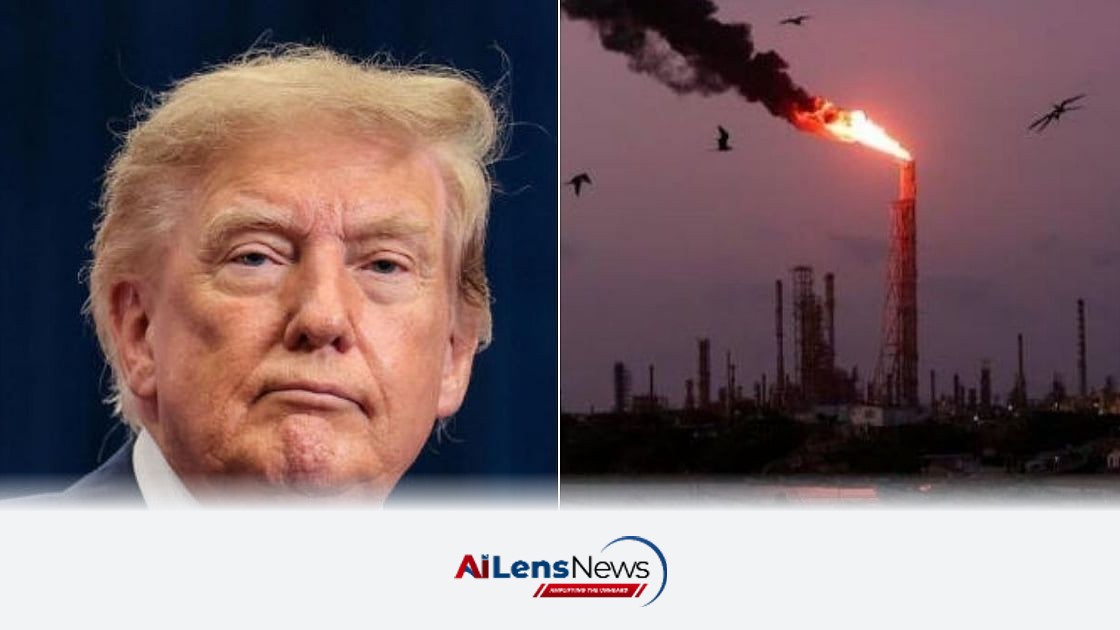



President Trump claims the US has secured majority control over Venezuela's oil reserves, potentially impacting fuel prices amid global tensions.
New Delhi, India Aug 29, 2026 ALN: US President Donald Trump on Friday announced that Washington had reached an agreement with Venezuela to secure majority control of more than 65 billion barrels of the South American country's proven oil reserves. This significant move is part of a broader strategy aimed at addressing the rising fuel prices in the United States and stabilizing the energy market amidst global disruptions.
The agreement was reportedly worked out through a partnership involving private businesses, with key figures such as Secretary of State Marco Rubio, Defense Secretary Pete Hegseth, and Venezuela's interim President Delcy Rodriguez actively involved in the negotiations. Trump, in a post on Truth Social, emphasized the importance of this deal, stating, "At my direction, Secretary of State Marco Rubio, and Secretary of War Pete Hegseth, working closely with Highly Respected Interim President of Venezuela, Delcy Rodriguez, and, through a partnership with private business, have secured majority US control of more than 65 BILLION BARRELS of proven Oil Reserves in Venezuela, at no cost to the American Taxpayer."
Trump characterized this agreement as "THE BIGGEST OIL DEAL IN WORLD HISTORY," although he did not provide specific details regarding the operational mechanics of the arrangement or the identities of the private companies involved. The lack of transparency regarding these aspects has raised questions about the feasibility and implementation of the deal.
As of now, the Venezuelan government has not issued an official statement regarding the agreement, leaving many aspects of the deal shrouded in uncertainty. The timing of this announcement is particularly noteworthy, as it comes amid mounting pressure on Trump to address the rising fuel prices in the United States. The ongoing conflict in Iran has significantly disrupted oil supplies moving through the Strait of Hormuz, a critical shipping route that previously accounted for approximately one-fifth of global petroleum supplies. Such disruptions have a direct impact on global oil prices and, consequently, on domestic fuel costs.
According to the American Automobile Association (AAA), the average price of gasoline in the United States stood at about USD 4.09 a gallon on Friday, a stark increase from $3.21 at the same time last year. This surge in fuel prices has been a growing concern for American consumers and has prompted calls for the government to take action to mitigate the impact on households and businesses.
In addition to rising prices at the pump, the United States has also been relying heavily on its strategic petroleum reserves. Reports indicate that these reserves had fallen below 300 million barrels in early August, down by more than 100 million barrels since the beginning of 2026. This decline raises concerns about the nation's preparedness to respond to further disruptions in oil supply.
Marco Rubio, one of the key figures involved in the negotiations, expressed optimism about the potential economic benefits of the Venezuela agreement. He stated that the deal could bring USD 100 billion in private investment into the country, which in turn could help lower fuel prices in the United States. Rubio described the agreement as a significant victory for both the American and Venezuelan people, highlighting the potential for economic revitalization in Venezuela, which has been plagued by years of economic mismanagement and political turmoil.
Venezuela is known to hold an estimated 303 billion barrels of crude oil reserves, making it home to one of the largest known oil deposits in the world. However, the country's oil production has been severely constrained due to years of deteriorating infrastructure, economic sanctions, and political instability, leading to Venezuela accounting for only around 1% of global oil output. This stark contrast between the country's vast reserves and its actual production capacity raises questions about the viability of the proposed deal and the challenges that lie ahead.
Trump has consistently advocated for American oil companies to return to Venezuela, asserting that his administration has fostered greater stability in the country. However, major oil companies have previously expressed caution about investing in Venezuela, citing concerns over the aging infrastructure, political risk, and the uncertain business environment. The historical context of oil production in Venezuela is marked by nationalization and state control, which has often discouraged foreign investment.
In a notable shift, shortly after taking power, Delcy Rodriguez moved to open Venezuela's oil sector to greater private participation, reversing a long-standing policy of the country's socialist leadership. This pivot reflects an acknowledgment of the need for foreign investment and expertise to revitalize the oil sector, which is vital for Venezuela's economy. The effectiveness of this policy change and its reception by international investors will be crucial in determining the success of the recent agreement with the United States.
As this situation unfolds, the implications of the deal extend beyond the immediate economic benefits. The agreement could reshape geopolitical dynamics in the region, particularly in light of the historical tensions between the United States and Venezuela. Furthermore, the potential for increased U.S. control over Venezuelan oil reserves raises questions about the long-term impacts on Venezuela's sovereignty and its relationship with other global powers.
In conclusion, while the announcement of this oil deal represents a significant development in U.S.-Venezuelan relations and has the potential to address pressing domestic energy concerns, the complexities surrounding implementation, investment, and geopolitical ramifications will require careful navigation in the months and years to come.
To learn more about the latest developments in Elections, stay updated with our exclusive reports and analyses on AILensNews.

The Scottish Government has introduced a draft bill for a second independence re…

The SNP Government has published a draft bill for a second independence referend…

Prime Minister Narendra Modi is set to enhance India's strategic partnerships in…

On the 63rd anniversary of Martin Luther King Jr.'s iconic speech, thousands gat…

Prime Minister Modi begins a two-nation visit to Uzbekistan and Kyrgyzstan, focu…