

More
Checking your session
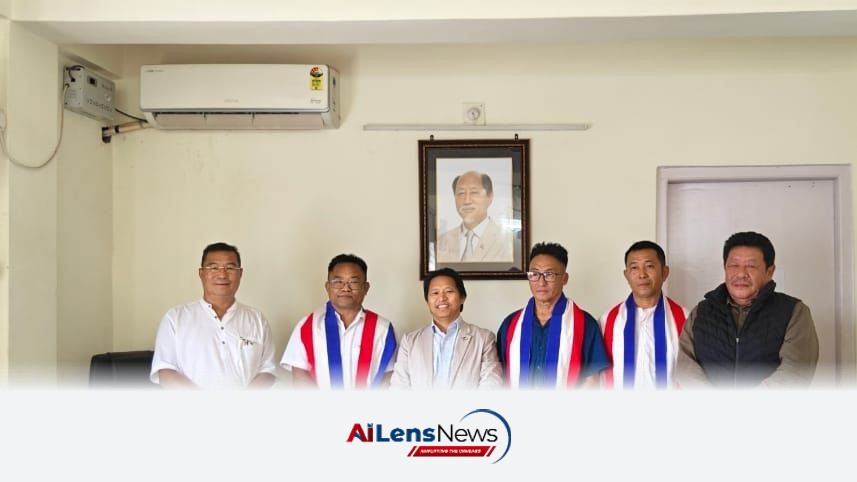



In a significant political shift, three Congress councillors from Nagaland have joined the Naga People’s Front, marking a notable change in local governance.
Shillong, India Aug 26, 2026 ALN: Kohima: In a significant political development, three elected councillors of the Indian National Congress from the Chumoukedima and Tuli town councils have joined the Naga People’s Front (NPF). This move signals a shift in the political dynamics of Nagaland, a state known for its unique cultural identity and complex political landscape.
The councillors formally joined the regional party at an induction programme held at the NPF Central Office in Kohima on Tuesday in the presence of NPF Advisor and Secretary General Achumbemo Kikon. This event marks not just a change in party allegiance but also underscores the growing influence of regional parties in the state, especially in the context of local governance and representation.
Those who joined the NPF are K. Wati Imchen, Ward No. 8, Chumoukedima Town Council; Temsumenba Imsong, Ward No. 6, Tuli Town Council; and K. Imlitemjen Jamir, Ward No. 8, Tuli Town Council. The decision of these councillors to switch parties is indicative of a broader trend where local leaders are increasingly aligning themselves with regional parties that resonate more closely with their constituents' aspirations and identity.
Welcoming the councillors into the NPF, Kikon described their decision to join the party as “bold and timely” and expressed appreciation for their decision to align with the regional party. His remarks highlight the NPF's strategy of consolidating its base by attracting local leaders who can mobilize support at the grassroots level.
Kikon also highlighted the NPF’s guiding principles and ideology, particularly its position on the Naga political issue, which he said remains central to the party’s political agenda. The NPF has historically positioned itself as a champion of Naga rights and identity, advocating for greater autonomy and recognition of the unique socio-cultural fabric of the Naga people.
“Regionalism and the spirit of ‘Naganess’ form the very core of our identity,” Kikon said, reiterating that the NPF would continue to pursue the collective interests and aspirations of the Naga people across boundaries through peaceful and democratic means. This assertion reflects the party's commitment to addressing the long-standing political aspirations of the Naga community, which has been a focal point of regional politics for decades.
The Naga political issue has deep historical roots, stemming from the post-colonial period when various Naga groups sought greater autonomy and recognition from the Indian state. This has resulted in a complex interplay of politics, identity, and governance in Nagaland, where regional parties like the NPF have emerged as key players advocating for the rights of the Naga people.
He further said the party’s political movement is rooted in protecting and promoting Naga identity, culture, and heritage. This emphasis on cultural preservation resonates strongly with the electorate, particularly in a state where traditional customs and practices play a significant role in everyday life. The NPF's narrative often focuses on safeguarding the Naga way of life, which has been perceived as under threat from external influences and policies.
This shift in allegiance reflects ongoing changes in the political landscape of Nagaland, as regional parties continue to gain traction among local leaders. The Indian National Congress, historically one of the major political parties in the region, has faced challenges in maintaining its influence as local sentiments increasingly favor parties that prioritize regional issues over national ones. This trend is not unique to Nagaland; it mirrors a broader pattern observed across various states in India, where regional parties are rising in prominence amidst a backdrop of disillusionment with national parties.
The implications of this shift could be far-reaching. As more local leaders align themselves with the NPF, the party may strengthen its position in upcoming elections, potentially altering the balance of power within the state assembly. This could lead to a more pronounced focus on regional issues, particularly those concerning the Naga identity and political rights, shaping the future of governance in Nagaland.
Moreover, the NPF's ability to attract councillors from the Indian National Congress may signal a growing disenchantment with the latter's policies and approach to local governance. It remains to be seen how the Congress party will respond to this loss of support at the local level and whether it will adapt its strategies to regain the trust of the electorate.
In conclusion, the recent defection of the three councillors to the NPF is emblematic of a shifting political landscape in Nagaland, where regional parties are increasingly seen as more attuned to the needs and aspirations of the local population. As political dynamics continue to evolve, the focus on Naga identity and autonomy will likely remain at the forefront of the discourse, influencing both governance and electoral outcomes in the state.
To learn more about the latest developments in Political Controversies, stay updated with our exclusive reports and analyses on AILensNews.

Union Home Minister Amit Shah assured Manipur CM Yumnam Khemchand Singh that the…

The Congress party has condemned the Modi administration for the escalating cost…

The Meghalaya Legislative Assembly has passed a resolution against uranium minin…

In a recent Assembly session, Opposition leader Mukul Sangma emphasized the need…

Union Minister Kiren Rijiju and Congress leader Pawan Khera engage in a heated e…