

More
Checking your session
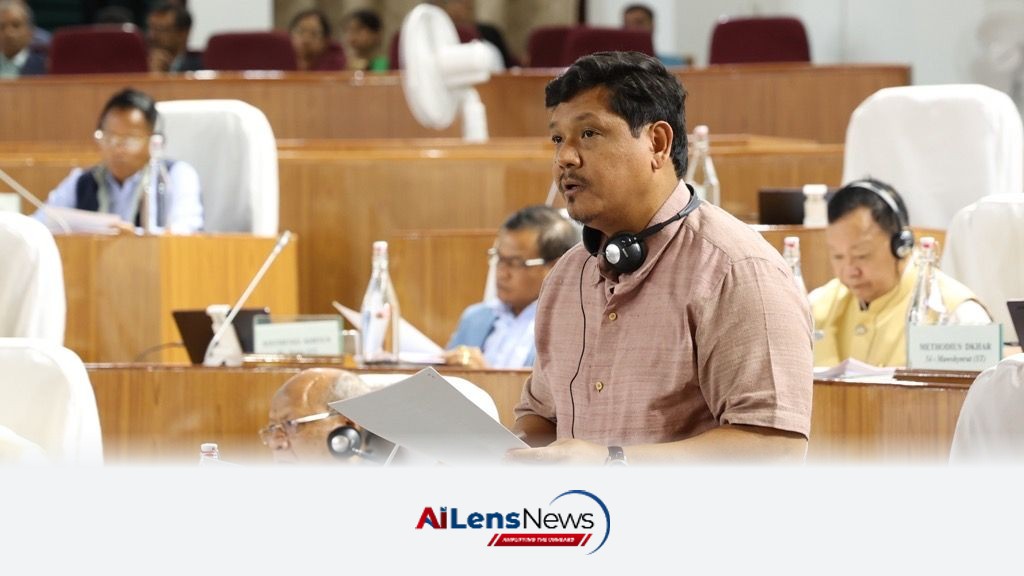



The Meghalaya Legislative Assembly has passed a resolution against uranium mining, emphasizing community rights and environmental concerns.
Shillong, India Aug 26, 2026 ALN: Shillong: The Meghalaya Legislative Assembly on Wednesday unanimously passed a government resolution opposing uranium mining and the establishment of any uranium ore processing facility in the State. This decision received backing from Opposition leaders, who called for stronger legal and political safeguards to prevent the issue from resurfacing in the future.
Moving the resolution, Chief Minister Conrad K. Sangma stated that it formally reflects the long-standing opposition of the people of Meghalaya to uranium mining. The Assembly urged the Government of India, the Department of Atomic Energy, and Uranium Corporation of India Limited (UCIL) not to permit or pursue uranium mining in the State, including the proposed Kylleng, Pyndengsohiong Mawthabah (KPM) project.
The House also called for the closure of any ongoing activities related to uranium mining in Meghalaya.
The resolution highlighted the State’s customary landholding system and constitutional protections under the Sixth Schedule. It noted that land in Meghalaya’s autonomous districts is largely held under community, clan, and individual customary tenure, with Autonomous District Councils exercising legislative authority over land use.
The Assembly referred to the Supreme Court’s July 3, 2019 judgment in Civil Appeal No. 10720 of 2018, which recognized the rights of private and community landowners in Meghalaya over both surface and sub-soil resources, including minerals beneath their land.
Uranium deposits have been identified in Domiasiat, Wahkyn, and Lostoin in the West Khasi Hills and South West Khasi Hills districts. The KPM project proposes open-cast uranium mining along with an ore processing plant.
The Assembly cited the environmental sensitivity of the proposed mining areas, noting their exceptionally high rainfall, steep terrain, and vulnerability to landslides. These areas serve as catchments for streams and rivers that support drinking water, agriculture, fisheries, and livelihoods across a wider region.
The resolution stated that affected communities had not been satisfied that adequate safeguards had been demonstrated for containing mining overburden, mill tailings, and process effluent under such conditions and over long periods.
Opposition to uranium mining has persisted through traditional institutions, Autonomous District Councils, student and civil society organizations, and elected representatives. The Assembly maintained that the free, prior, and informed consent of affected communities had never been obtained and that no uranium mining lease had been granted in Meghalaya.
It also noted a September 8, 2025 Office Memorandum issued by the Ministry of Environment, Forest and Climate Change concerning the exemption of mining projects involving atomic minerals from public consultation under the Environment Impact Assessment Notification, 2006.
The resolution further referred to a statement by the Union Minister of State in charge of the Department of Atomic Energy during a visit to Shillong, indicating that no decision had been made on uranium mining in Meghalaya and that the matter remained under examination.
Leader of the Opposition Dr. Mukul Sangma welcomed the government’s decision, stating that the people of Meghalaya had opposed uranium mining “tooth and nail” for decades. He emphasized that the opposition was based on scientific concerns related to the State’s unique geography, high rainfall, and environmental vulnerability.
However, Dr. Mukul cautioned that passing the resolution should not mark the end of the government’s responsibility. He called for the restoration and protection of landowners’ and communities’ rights over mineral resources beneath their land.
Referring to the 2019 Supreme Court judgment, he argued that recognition of sub-soil rights should be a crucial part of the State’s approach to mineral resources generally, not confined to uranium.
“If landowners have rights over the minerals beneath their land, those rights must be restored to the people,” he asserted, advocating for traditional landowners, including Nokmas, to remain connected to the mineral resources beneath their land.
Dr. Mukul also called for a comprehensive scientific survey of mineral-bearing areas and greater awareness among communities about the resources beneath their land, along with stronger institutional capacity to protect communities from exploitation and illegal mining.
VPP chief Ardent Miller Basaiawmoit supported the resolution but questioned whether the Centre would act on it. He pointed to a previous resolution adopted by the MDA government seeking implementation of the Inner Line Permit system in Meghalaya, noting the lack of official response from the Government of India.
Basaiawmoit expressed that his opposition to uranium mining had strengthened after visiting Jaduguda, where uranium mining has been carried out. He described the area as resembling a “ghost town” and recounted witnessing people suffering from serious illnesses.
He questioned whether India necessarily required Meghalaya’s uranium resources, suggesting that alternative sources and technologies should be explored as the country expands its nuclear-energy capabilities.
Basaiawmoit urged legislators to collectively oppose any attempt by the Centre to revive uranium mining against the wishes of Meghalaya’s people.
UDP MLA Paul Lyngdoh described the resolution as an important and historic step but argued that some doors should not merely be closed but “welded shut” against any future attempts to revive uranium mining.
Lyngdoh called for Meghalaya’s historical and constitutional position on land and natural resources to be incorporated into the State’s case. He referred to the 25 Khasi States and their accession to India through the Instrument of Accession, emphasizing that they had not signed an Instrument of Merger, which is significant as certain powers relating to land, forests, water, excise, and revenue were retained under the terms of accession.
To learn more about the latest developments in Political Controversies, stay updated with our exclusive reports and analyses on AILensNews.

Union Home Minister Amit Shah assured Manipur CM Yumnam Khemchand Singh that the…

The Congress party has condemned the Modi administration for the escalating cost…

In a significant political shift, three Congress councillors from Nagaland have …
In a recent Assembly session, Opposition leader Mukul Sangma emphasized the need…

Union Minister Kiren Rijiju and Congress leader Pawan Khera engage in a heated e…