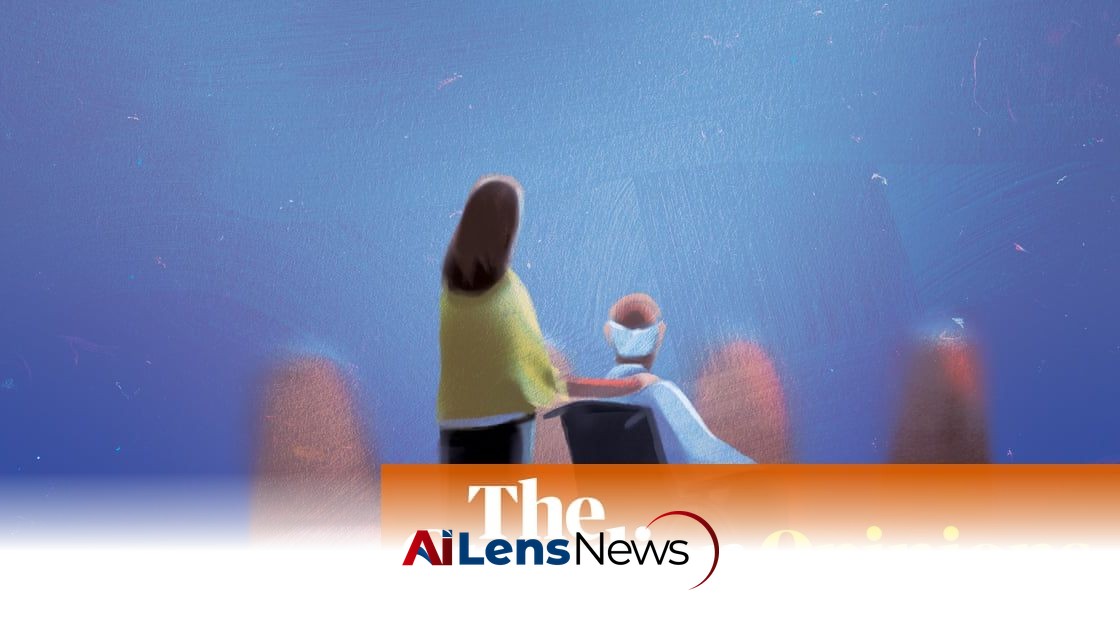


Gaby Hinsliff argues that the UK is already paying a hidden care tax through personal sacrifices and financial burdens, and advocates for a transparent care levy to support social care.
London, United Kingdom Jul 24, 2026 ALN: One of the last things Andy Burnham did before entering Downing Street was to go and see his father.
Now living in a nursing home, Roy Burnham has Alzheimer’s and isn’t really aware of his son’s new job. But perhaps the prime minister wanted, in part, to try to explain why he might not be visiting so often in future.
He wouldn’t be the first middle-aged child torn between work pulling one way and elderly parents the other, ending up desperate for a politician willing (as Burnham Jr says he is) to “expend quite a lot of political capital” on the historically vote-losing task of fixing social care. For the alternative is families expending capital – financial and emotional – they don’t have.
Generation X is now entering its caring years, and unlike previous generations, attempting it while both halves of a couple are simultaneously working full-time jobs. We’re crisscrossing the country between homes far away where we spent our childhoods, and those where our own children are still growing up; dealing with muddles over medication at one end and A-level stress at the other, shuttling from hospital waiting rooms to parents’ evenings in constant fear of dropping a ball somewhere. If working motherhood is mostly being in two places at once, middle-aged daughterhood is being in three: work, home and wherever your parents are, greeted at every turn by accusatory piles of laundry and nagging guilt about not being there (anywhere) enough. Care tax? We’re paying it already: it’s just that nobody calls it that.
The invisible tax on not having a universal care service in England particularly – Wales has a more generous system of means-testing, and Scots get free personal care – is paid most obviously in nursing home fees (on average £5,192 a month, for those with assets of over £23,250 in England and Northern Ireland) or visiting home care workers at up to a pound a minute. But it’s also paid in time, energy, carers’ own health and sanity, and sometimes their jobs. The charity Carers UK reckons 2.6 million people have given up work due to unpaid caring for a loved one; 61% of those still working say it affects the jobs they can do, with a fifth settling for lower-paid or more junior roles. So employers, too, pay the invisible tax, every time they lose good people, while the whole country pays it in lost economic activity, and in every night spent in hospital by a patient who could be at home if they’d had better support. (Anticipating and preventing a fall, pressure sore, or other cause of rapid downward spiral beats expensively treating the consequences, as Burnham will know from Manchester’s pioneering attempts to shift health and care spend towards prevention.)
Yet Westminster sees only the scary price tag on free care, and is paralysed into doing nothing.
It’s not for lack of family experience that every politician approaching this subject hurriedly backed away. David Cameron was the devoted father of a profoundly disabled son – it’s often forgotten that social care is about children too – and his mother had Alzheimer’s. Theresa May’s and Keir Starmer’s mothers were disabled by multiple sclerosis and Still’s disease respectively. Andy Burnham said he was motivated by his granny’s struggles when, as health secretary in 2009, he first proposed a national care service funded by a 10% inheritance levy on all estates. But the plan was doomed the minute the Tories dubbed it a “death tax”, running attack ads covered in gravestones.
Since then, the clamour for something to be done has only grown, but taxing inheritance has become more fraught, with millennials banking on the wealth locked up in their parents’ houses to become homeowners themselves.
But the whole point of an inheritance levy is to stop you losing everything if the worst happens – much like house insurance, which many of us fork out for automatically. One in three people end up in a nursing home, costing on average more than £67,000 a year, for an average of two years for care homes without nursing, one year for care homes with (though often longer for dementia sufferers). The trouble is that human nature means most people like to think they’ll never need nursing care, and so become convinced they’ll end up paying more in death taxes than they get out. If he is to succeed where he failed before, then Burnham must show that, like the NHS it mirrors, his universal care service offers something for everyone.
Make it, then, a service for ageing well. Make it as visible as SureStart was for new parents, with one-stop centres dispensing advice, activities for older people, and helping families through a lonely and confusing time. Introduce Japanese-style routine assessments for over-65s, as recommended by the IPPR thinktank, picking up future risks while there’s still time to improve bone strength or balance. Pitch it as a service taking the fear and indignity out of ageing, while preserving your children’s financial security to boot.
Turn Louise Casey’s review of social care into a short national conversation about what constitutes a good old age; don’t let parliament debate the right to die again without a parallel right to live well to the end. And if people still don’t want a death tax? Tell them the chances are they’ll end up paying an invisible one anyway; at least this way, someone bothered to ask them first.
The issue of social care in the United Kingdom has been a contentious topic for many years, with debates surrounding the adequacy of funding, the quality of care, and the sustainability of the current system. The demographic changes in the population, with an increasing number of elderly individuals, have put additional pressure on the existing care framework. As the baby boomer generation ages, the challenges of providing adequate care for this segment of the population are becoming more pronounced.
In England, the social care system is often criticized for its lack of uniformity and the disparities in access to services. While Wales and Scotland have made strides in providing more comprehensive care services, England's approach remains fragmented. This inconsistency has led to a situation where individuals with similar needs may receive vastly different levels of care depending on their location. The call for a care tax is rooted in the desire to create a more equitable system that can provide consistent support for all individuals in need of care.
Moreover, the financial implications of social care are significant. Many families are faced with the daunting reality of high care costs, which can lead to financial strain and, in some cases, poverty. The average cost of care can be prohibitive, particularly for families who are already struggling to make ends meet. This situation has led to a growing recognition of the need for a sustainable funding model that can alleviate the financial burden on families while ensuring that individuals receive the care they need.
One of the proposed solutions to address these challenges is the introduction of a care tax, which would be designed to fund a universal care service. This tax could be structured in a way that is progressive, ensuring that those with higher incomes contribute more towards the funding of care services. The idea is that by pooling resources, the system can provide a safety net for all individuals, regardless of their financial situation. This approach not only addresses the immediate financial concerns of families but also promotes a more sustainable and equitable system in the long term.
Furthermore, the implications of not addressing the social care crisis are profound. Without adequate support, many individuals may find themselves in precarious situations, leading to increased hospitalizations and a reliance on emergency services. This not only affects the individuals in need of care but also places a strain on the healthcare system as a whole. The interconnectedness of health and social care means that failures in one area can have cascading effects on the other, exacerbating existing challenges.
In conclusion, the conversation surrounding the care tax and social care reform is not just about funding; it is about recognizing the value of care and the importance of supporting individuals and families during challenging times. As society grapples with the realities of an aging population and the complexities of modern life, embracing a care tax could be a pivotal step towards creating a more just and equitable system that prioritizes the well-being of all individuals.
To learn more about the latest developments in Social Commentary, stay updated with our exclusive reports and analyses on AiLensNews.

