

More
Checking your session
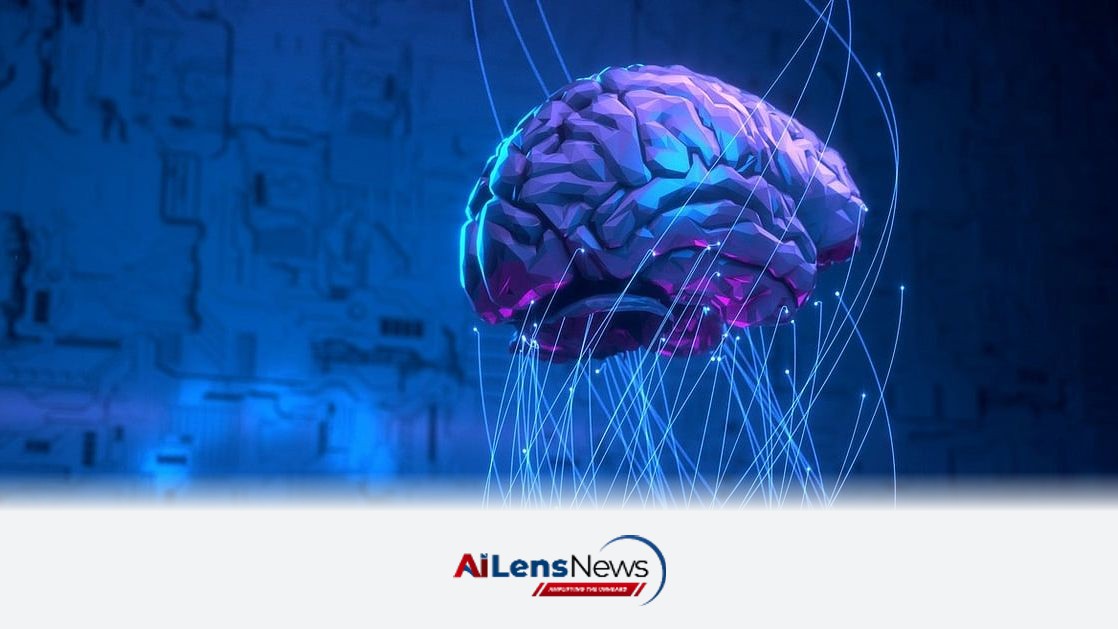



Aimé Césaire's insights on colonialism resonate today as technology shapes our thoughts and interactions, raising concerns about critical thinking and authenticity.
New Delhi, India Aug 23, 2026 ALN: In his Discourse on Colonialism, which first appeared in 1950, Aimé Césaire examines the psychological, sociological, and pseudo-civilisational underpinnings of the colonialist enterprise, whether in Africa, Latin America, or Asia. He exposes the hypocrisy and contradictions implicit in Western notions of ‘progress’ and ‘civilisation’ upon encountering the ‘savage’, the ‘primitive’, and the ‘uncultured’—terms solely reserved for describing and denigrating non-Western, non-Christian societies.
Western adventurers, with no moral or ethical compass but proudly professing to be Christian, went to great lengths to acquire the territories and resources of non-white populations and evangelise them.
Césaire’s insightful remark, ‘It is [equally] necessary to decolonise our minds, our inner life, at the same time we decolonise society’ is applicable, even more so today than in the previous three centuries. This is largely due to the overlords of technology in Silicon Valley, who have completely colonised our minds without our being aware of it. In the process, they have become fabulously rich and positioned themselves to dictate the fate of individuals and nation-states alike.
People like Elon Musk and Jeff Bezos, having colonised our hearts and minds, are looking for fresh territories to conquer, in outer space and the unfathomed depths of the oceans, before China gets there first. In Mao Zedong’s time, political power may have grown out of the barrel of a gun, but today, power comes from a string of bits and bytes.
We have reached a point in society where face-to-face communication has been deliberately made impossible. Ordinary telephone communication between humans has been compromised through the introduction of automated voice agents at one end. In short, every act of human communication is now mediated by one digital artifice or another.
If you recently purchased a product and are having problems with it, good luck getting a real, live human being at the company to intercede on your behalf. Automated agents cost little, but humans cost a lot.
Some twenty years ago, there was great concern among the populace that it could no longer discern what was real and what was fake when viewing information on the web. With the advent of agentic AI such as ChatGPT and Gemini, we have reached a moment where anything we read, see or hear can be AI-generated. Attempting to distinguish between fake and deepfake is now an exercise in pitiful semantic quibbling, to be attempted only by the brave.
We have all become so enamoured of AI that, in the process, we have closed our eyes to what is happening to our critical thinking skills. AI summaries have led us to avoid reading original documents in their entirety, even though the AI summary offered comes with a warning that what has been generated could contain errors. Ignoring the warning is akin to ignoring the fine print that accompanies every credit card application, investment opportunity or prescription/over-the-counter drug side effects. The onus is always on the customer, never the company offering the product. Caveat emptor.
Slick advertising by Silicon Valley, whether on the web, smartphones or TV, has spread the FOMO (fear of missing out) syndrome, convincing the gullible that the latest AI-supplemented versions of their products are infinitely superior to whatever they currently own. The language of the coloniser has become the language of the colonised.
Google has been successful in stealing millions of books without any credible legal challenges and making them available on the web. The multilingual translation services provided by Silicon Valley, while definitely useful, are in no way foolproof, as we can never know if the translation is correct or if something has been lost in translation.
The gratuitous summaries offered by AI of all text may please the many amongst us who are lazy and uncritical, but not all. It is now possible to generate a person’s entire life story based solely on their online interactions with the world at large and post it on the web, an insidious practice known as doxxing, to the affected person’s dismay and detriment.
Winning the user’s hearts and minds has never been easier since all we need are a few pointers for agentic AI to generate books, movies, theses, dissertations, op-ed pieces, biographies, and operas. To what end?
The leaning Tower of Pisa may still be standing when Silicon Valley’s Tower of Babel comes crashing down in a welter of confusion.
The writer is a computer scientist, a newly minted Luddite and a cynic.
Disclaimer: The views expressed above are the author's own. They do not necessarily reflect the views of DH.
Write to us at:
To learn more about the latest developments in Social Commentary, stay updated with our exclusive reports and analyses on AILensNews.

A recent incident in Singapore highlights the importance of teaching children to…

Mayor Andy Burnham aims to address everyday frustrations like potholes and subsc…

Generation Z's unique upbringing has led to distinct differences in attitudes an…

Women leaders often face the challenge of being seen as helpful while their invi…

In a world marked by constant instability, leaders can enhance their decision-ma…