

More
Checking your session
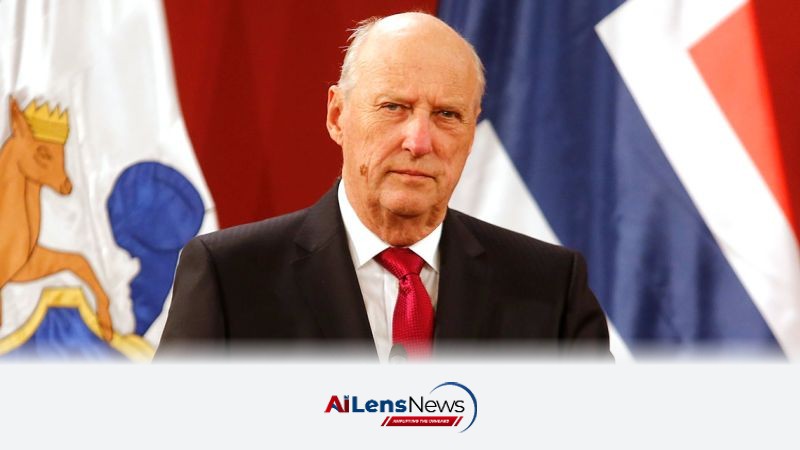



King Harald V, Norway's oldest monarch, has died at 89 after 35 years on the throne, succeeded by his son King Haakon VIII.
Washington DC, United States Aug 29, 2026 ALN: King Harald V of Norway, Europe’s oldest monarch, has died at the age of 89, after 35 years on the throne. His passing marks the end of an era for the Norwegian monarchy, which has seen significant changes and modernization during his reign.
He died on Friday just after 6:35 a.m., the Royal House of Norway announced on its website. Harald is succeeded as monarch by his son King Haakon VIII, who now faces the challenge of leading the royal family into a new chapter. The transition of power comes at a time when the Norwegian monarchy is navigating complex social dynamics and public expectations.
King Harald leaves behind his wife of 57 years, Queen Sonja, two children, and five grandchildren. His granddaughter Ingrid Alexandra now becomes heir to the Norwegian throne, marking a significant moment in the history of the royal family. As the first female heir apparent in Norwegian history, her ascension reflects a broader trend towards gender equality in monarchies around the world.
Harald’s death comes at a challenging time for Norway’s royal clan. His son Haakon’s wife, now Queen Consort Mette-Marit, has suffered health problems in recent years, drawing public attention and concern. Furthermore, Mette-Marit was thrust into the global spotlight this year when her past contact with the late sex offender Jeffrey Epstein came to light, raising questions about the royal family's associations. Not long after this revelation, her son from a previous relationship was convicted of rape and domestic violence and sentenced to four years in prison. These events have placed additional pressure on the royal family as they navigate public scrutiny and strive to maintain their reputation.
Norwegian Prime Minister Jonas Gahr Støre expressed the collective grief of the nation, stating that “a whole nation is in mourning” after Harald’s death, with the people of Norway “left with a deep sense of gratitude for a long life in the service of Norway.” The government declared a national period of mourning, allowing citizens to pay their respects and reflect on the contributions of their late monarch. Crowds gathered outside the royal palace in Oslo, underscoring the deep connection between the monarchy and the Norwegian people.
Tributes rolled in from across Europe following the announcement of King Harald's passing. Other royal houses in Sweden, Denmark, and the United Kingdom, as well as political leaders of various nations, expressed their condolences. Britain’s King Charles remarked that his family was mourning a “friend whose kindness, compassion and deep sense of duty echoed from across the sea and across the decades.” Denmark’s King Frederik and Queen Mary remembered Harald as a “fine man with a twinkle in his eye and a big heart,” highlighting the personal connections that transcended national boundaries.
In recent days, Harald's health had deteriorated significantly after he was admitted to the hospital with “fluid accumulation in the body,” due to a blood disorder. He later developed an infection, which ultimately contributed to his passing. His health struggles had been a concern for the royal family and the public, as they followed updates on his condition closely.
Harald was 53 years old when he ascended the throne in 1991, following the death of his father, King Olav V. His ascension marked a pivotal moment in Norwegian history, as he became a symbol of stability and continuity in a rapidly changing world. In accordance with their own wishes, Harald and Sonja held a consecration ceremony, which included traditions dating back to the Middle Ages, at Trondheim’s Nidaros Cathedral in central Norway on June 23, 1991. Following the ceremony, they conducted a 10-day tour of southern Norway, and later a 22-day tour of Norway’s four northernmost counties in 1992, showcasing their commitment to connecting with the Norwegian people.
Born on February 21, 1937, Harald was the youngest of three children but the only boy. At the time, Norway’s constitution stipulated that only male heirs could inherit the title, making his position particularly significant within the context of royal lineage. Harald was just three years old when German troops invaded Norway in 1940, forcing his family, along with members of the Norwegian government, to flee to neighboring Sweden. This early experience of displacement and turmoil would shape Harald's understanding of leadership and duty.
After a few months in Sweden, the family left their Scandinavian safe haven, and Harald was taken to Washington DC with his mother and elder sisters. Meanwhile, his grandfather – King Haakon VII – and his father, Olav, relocated to London until the end of the German occupation in 1945. This period of exile not only influenced Harald's formative years but also instilled in him a profound sense of national identity and the importance of service to his country. The experiences of war and displacement would later inform his approach to the monarchy, emphasizing compassion and unity in times of adversity.
Throughout his reign, King Harald was known for his dedication to public service, his efforts to modernize the monarchy, and his commitment to social issues, including the promotion of gender equality and environmental sustainability. He played a crucial role in maintaining the relevance of the Norwegian monarchy in contemporary society, often engaging with the public and addressing pressing issues facing the nation.
As Norway reflects on the legacy of King Harald V, there is a collective hope that his successor, King Haakon VIII, will continue to uphold the values of service, compassion, and modernity that defined Harald’s reign. The transition of power comes with both challenges and opportunities, and the future of the Norwegian monarchy will depend on its ability to adapt to the evolving expectations of the Norwegian people.
To learn more about the latest developments in World News & International Affairs, stay updated with our exclusive reports and analyses on AILensNews.

The death toll from devastating flash floods in central Nepal has reached 626, w…

Rescue operations continue in Nepal and China as the number of missing persons f…

Linda Kitchen initiates legal action against Singapore Airlines after her husban…

Rescue operations in Nepal and China face challenges as heavy rains hinder effor…

Rescue operations continue in Nepal as poor weather hampers efforts to locate th…