

More
Checking your session
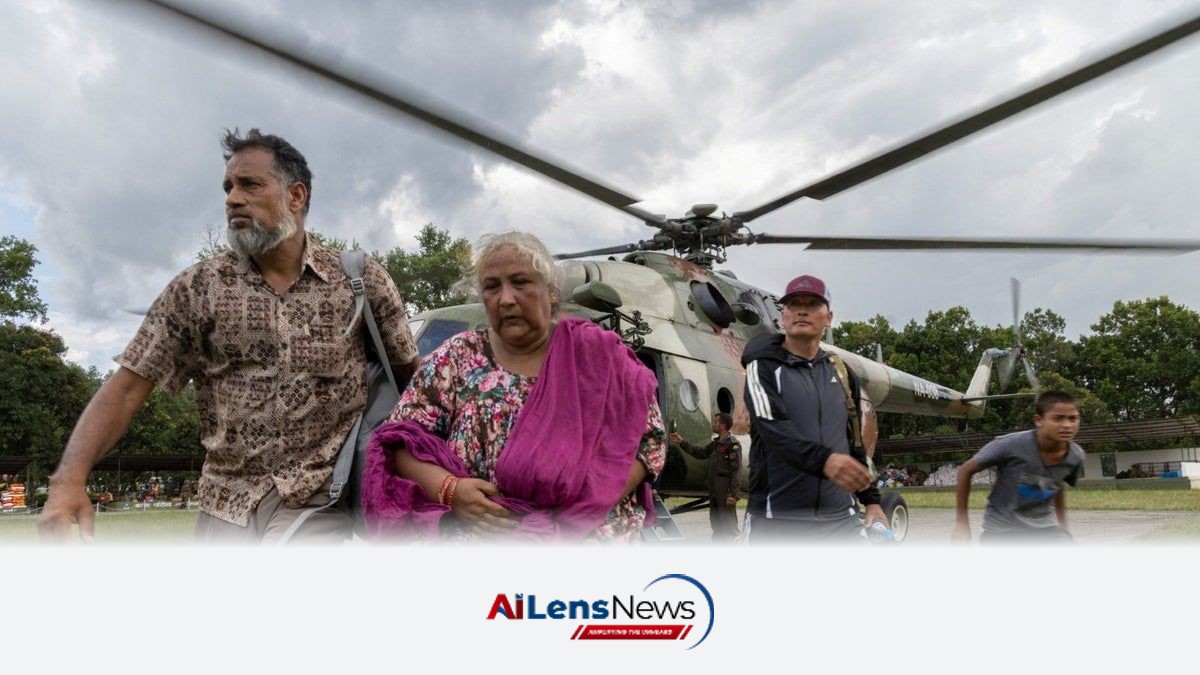



The death toll from the recent flash floods in Nepal and Tibet has risen to 626, with nearly 2,500 people still missing. Nepal seeks specialized foreign assistance.
London, United Kingdom Aug 29, 2026 ALN: The death toll from this week's Himalayan flash floods has risen to 626 in Nepal and Tibet combined, authorities said, as Kathmandu appealed for foreign technical assistance while insisting it did not need help with general search and rescue. This natural disaster has showcased the vulnerability of the region to extreme weather events, which have been increasingly linked to climate change and rapid glacial melt in the Himalayas.
Nearly 2,500 people remain unaccounted for across the two countries, authorities said on Saturday. The number missing in Nepal had nearly doubled to 1,924, as more local residents were added to the list, while Tibet's toll stood at 554. More than 3,700 people have been rescued in Nepal so far, and hundreds of those missing are foreign nationals who had been working, trekking, or traveling on pilgrimage in the region when the flood struck. The international community is closely monitoring the situation, given the number of foreign nationals involved and the potential for a larger humanitarian crisis.
Nepal's foreign minister, Shisir Khanal, told Reuters that the government needed foreign expertise in specialized areas where it lacks the necessary skills, including rescuing people trapped in flooded tunnels, DNA testing, and storing bodies for longer periods as hospitals struggle to cope with the number of dead. The overwhelming number of casualties and missing persons has put immense pressure on the local healthcare system, which is already strained due to limited resources.
"We have already made requests for such specialized services and technical assistance in areas where we don't have enough expertise and technical know-how," he said. This request underscores the challenges faced by Nepal, a nation that has historically struggled with natural disasters, including earthquakes and landslides, which have often overwhelmed its emergency response capabilities.
Britain, India, China, the United States, Japan, South Korea, Sri Lanka, and Bangladesh have all asked to send their own search-and-rescue teams, according to the Kathmandu Post. However, Mr. Khanal stated that Nepali rescuers were already handling that work. "We think there is no need for repetition in this," he said. This highlights a common tension in disaster response situations, where local authorities may feel that external assistance could complicate rather than aid the recovery efforts.
A British rapid response team was due to arrive in Kathmandu on Saturday, tasked with assisting relatives of the more than 30 British nationals missing in the disaster. This team is part of the UK’s wider response to the flooding, which includes £5 million of humanitarian support for relief and recovery efforts. The international response reflects a growing recognition of the need for coordinated efforts in the face of such disasters, particularly in regions that are prone to severe weather events.
Nepal has also asked India and China, the two larger neighbors between which it sits, to supply bailey bridges – portable, fast-assembly truss bridges that don’t need heavy machinery to install – to restore transport links after roughly two dozen bridges were destroyed in the flooding. The destruction of infrastructure not only hampers rescue efforts but also poses long-term challenges for recovery and rebuilding in the affected areas.
Mr. Khanal noted that many bodies had been recovered as far away as Chitwan and Nawalparasi, on the plains around 100 kilometers from the disaster zone, and that hospitals there had run out of refrigeration space to store them. This situation points to the logistical challenges faced by emergency services in the aftermath of a disaster, where the scale of the tragedy can overwhelm local capabilities.
The flood has caused extensive damage to schools, hospitals, hydropower plants, roads, and bridges, and officials have indicated that Nepal will need further foreign support during reconstruction. The long-term implications of such widespread destruction could affect not only the immediate recovery efforts but also the economic stability of the region, particularly in sectors reliant on infrastructure.
Rescue operations entered a fourth day on Saturday, hampered by poor weather that grounded helicopters. Brig Gen Raja Ram Basnet, an army spokesperson, told the AP that rescue teams remained focused on the Upper Trishuli-1 hydropower project in Rasuwa district, where more than 100 people are believed trapped in a tunnel filled with thick mud. The ongoing challenges faced by rescue teams highlight the precarious nature of operating in disaster zones, where conditions can change rapidly and complicate efforts.
Rescuers have used ropes and baskets to reach some of those trapped, he said, though the operation has been slowed by up to five feet of mud and a shortage of locations where helicopters can land. Teams have also had to relocate temporarily on at least one occasion after further flood warnings were issued. This situation illustrates the dangers faced by rescue personnel, who must navigate hazardous conditions while attempting to save lives.
The renewed flood risk stems from a lake that formed high in the mountains after Wednesday's initial collapse and began overflowing this week. Monitoring data from China's ministry of water resources showed the lake's water level had dropped by 10 meters from its peak by late Friday, suggesting the immediate risk may be easing. However, the potential for further flooding remains a concern, as the region's topography is prone to rapid changes following significant weather events.
Search teams also reached Gyirong Port, the border crossing on the Chinese side that was severely damaged in the flooding, with some rescuers reaching the area on foot, by raft, or via equipment lowered from drones. The use of technology in rescue operations reflects a growing trend in disaster response, where innovative solutions can help overcome logistical challenges and enhance the effectiveness of search and rescue efforts.
To learn more about the latest developments in World News & International Affairs, stay updated with our exclusive reports and analyses on AILensNews.

The death toll from devastating flash floods in central Nepal has reached 626, w…
Rescue operations continue in Nepal and China as the number of missing persons f…

Linda Kitchen initiates legal action against Singapore Airlines after her husban…

Rescue operations in Nepal and China face challenges as heavy rains hinder effor…

Rescue operations continue in Nepal as poor weather hampers efforts to locate th…